

Diarrhea in dogs is more than just an inconvenience — it can signal a serious gut imbalance, infection, or dietary sensitivity that needs attention before it spirals.
For pet parents in India, the problem is worse than most realise. Indian dogs face a unique combination of challenges that Western pet care guides simply don’t address: extreme summer heat that kills beneficial gut bacteria before supplements even reach your dog, monsoon seasons that trigger bacterial surges in water and food, and home-cooked diets that — while made with love — can disrupt gut flora during transitions.
The good news? Probiotics can genuinely fix most cases of dog diarrhea — if you pick the right one. And that “if” is doing a lot of heavy lifting, because not all probiotics are created equal. Some of the most popular brands in India use bacterial strains that may not even survive the journey from warehouse to your doorstep in Indian summer heat.
This guide covers everything: why your dog gets diarrhea, how probiotics actually fix it, which strains survive Indian conditions (and which don’t), a head-to-head comparison of the top probiotic supplements available in India, and exactly how to use them for the fastest recovery.
Also Read: Probiotics vs Prebiotics for Dogs: Understanding the Difference
Why Dogs Get Diarrhea: Common Causes in India
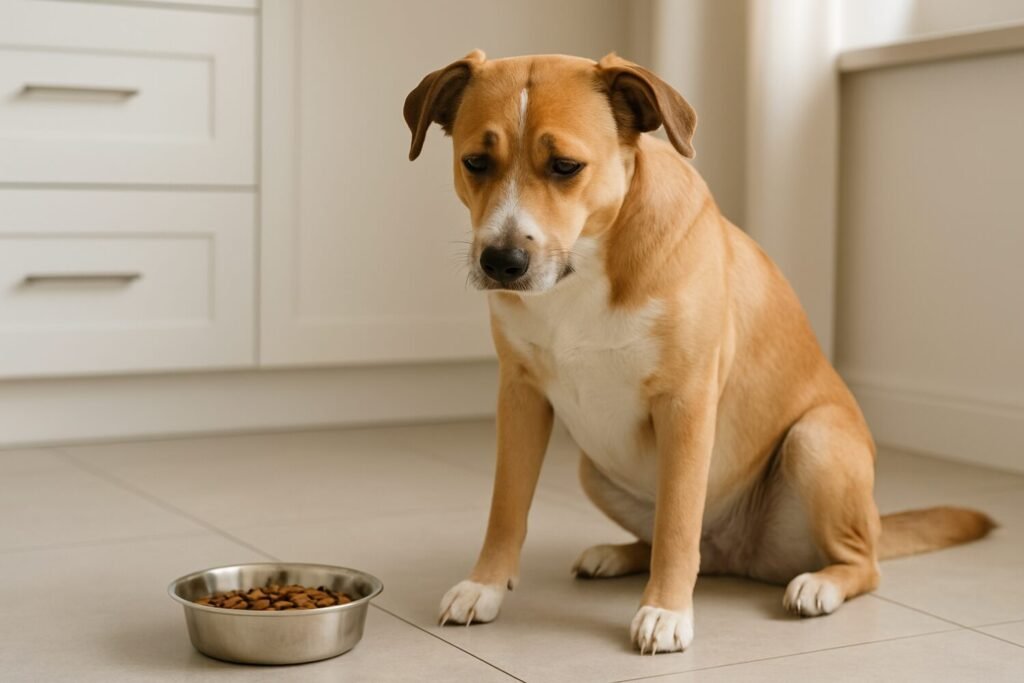
Diarrhea is a symptom, not a disease. Understanding the trigger helps you choose the right solution — because a probiotic that works for antibiotic-induced diarrhea may not be the best choice for monsoon-season gut infections.
Here are the most common causes Indian pet parents deal with:
Sudden Dietary Changes
Switching kibble brands, introducing new treats, or transitioning between commercial and home-cooked food can disrupt your dog’s gut bacteria overnight. The gut microbiome needs 7–14 days to adjust to a new diet. Abrupt changes don’t give it that time.
This is especially common in India where many pet parents switch between commercial dry food during weekdays and home-cooked rice, roti, or chicken on weekends — creating a constant cycle of gut adjustment.
Monsoon Season Contamination
This is India-specific and critically underestimated. During monsoon months (June–September), bacterial load in the environment spikes dramatically. Waterlogged streets, contaminated puddles, increased humidity — all of these create ideal conditions for harmful bacteria like E. coli and Salmonella to thrive.
Dogs that walk through monsoon water, drink from outdoor bowls, or eat anything off the ground during rains are at significantly higher risk of gut infections. This is why veterinary clinics across India see a 40–60% spike in diarrhea cases between July and September.
Medications — Especially Antibiotics
Antibiotics are lifesavers, but they don’t discriminate between good and bad bacteria. A course of antibiotics can wipe out your dog’s beneficial gut flora alongside the infection it’s treating, leaving the gut vulnerable to opportunistic pathogens.
Post-antibiotic diarrhea is one of the most common digestive complaints in Indian veterinary practice — and one of the most preventable with the right probiotic support.
Infections and Parasites
From parvovirus to giardia to common roundworms, infections are a frequent cause of diarrhea in Indian dogs. These require veterinary attention first, but probiotics play a critical supporting role in recovery by helping rebuild the gut flora that the infection destroyed.
Food Intolerances
Ingredients like dairy (paneer, milk), soy, wheat (roti/chapati), and certain spices can cause inflammation and chronic loose stools in sensitive dogs. Many Indian pet parents unknowingly feed these triggers daily as part of home-cooked meals.
Homemade Food Transitions
This deserves its own mention because it’s uniquely common in India. The shift from commercial food to home-cooked meals — or the reverse — is one of the biggest gut disruptors for Indian dogs. Home-cooked Indian food (rice, dal, chicken, vegetables) is nutritionally different from commercial kibble, and the gut needs time and the right bacteria to adapt.
Also Read: Top Digestive Issues in Dogs & How to Manage Them
How Probiotics Actually Fix Dog Diarrhea
Probiotics are live, beneficial microorganisms that restore balance to your dog’s gut microbiome. Think of your dog’s gut as a city with 100 trillion bacterial residents — during diarrhea, the “good citizens” are outnumbered by harmful invaders. Probiotics are reinforcements.
Here’s what the right probiotic does inside your dog’s gut:
Competitive Exclusion — Good bacteria physically occupy space on the gut lining, leaving no room for harmful bacteria like E. coli and Salmonella to attach. They literally crowd out the bad guys.
Gut Barrier Repair — Diarrhea damages the intestinal lining, making it “leaky” and allowing toxins to pass through. Probiotics help repair and strengthen this barrier, reducing inflammation and water loss (which is what makes stools loose).
Immune Modulation — Approximately 70% of your dog’s immune system lives in the gut. When gut flora is disrupted, immune function drops. Probiotics restore this immune-gut connection, helping your dog fight off infections faster.
Enzyme Production — Certain probiotic strains produce digestive enzymes that help break down food more efficiently. This improves nutrient absorption and reduces the undigested food that feeds harmful bacteria.
Toxin Binding — Some advanced probiotic formulas include ingredients like MOS (Mannan Oligosaccharides) that physically bind to pathogens and toxins, preventing them from attaching to the gut wall. This is a level of protection that basic probiotics don’t offer.
Supplements like Neobiotic DFM are formulated specifically for this multi-level gut repair — combining probiotics with pathogen binders and minerals for comprehensive digestive recovery.
But here’s what most pet supplement brands in India won’t tell you…
The Indian Heat Problem: Why Most Dog Probiotics May Not Work in India
This is the single most important section of this guide — and the reason most generic “best probiotic” articles miss the mark for Indian pet parents.
The Science: Lactobacillus vs Bacillus in Indian Conditions
Most dog probiotic supplements — including several popular brands in India — rely heavily on Lactobacillus strains (L. acidophilus, L. plantarum, L. casei, etc.). These are well-researched, effective bacteria.
There’s just one problem: Lactobacillus bacteria are fragile.
Lactobacillus strains are vegetative (non-spore-forming) bacteria. They are sensitive to heat, moisture, and stomach acid. Research shows that Lactobacillus viability drops significantly when stored above 30°C — and can lose 40–60% of viable organisms when exposed to temperatures above 40°C for extended periods.
Now consider the Indian reality:
- Summer temperatures in most Indian cities: 38–47°C
- Warehouse temperatures during peak summer: 35–45°C
- Inside a delivery truck crossing Rajasthan or Maharashtra in May: 50°C+
- Your mailbox or doorstep on a June afternoon: 40°C+
By the time a Lactobacillus-based probiotic reaches your dog in Indian summer, a significant portion of those “live cultures” may no longer be alive.
The Solution: Spore-Forming Probiotics
Bacillus strains — specifically Bacillus subtilis and Bacillus licheniformis — are fundamentally different. These bacteria form protective endospores: tough, dormant shells that can withstand:
- Temperatures exceeding 100°C (boiling water)
- Stomach acid (pH as low as 1.5)
- Extended shelf storage without refrigeration
- Indian summer heat during shipping and storage
When these spores reach the favourable environment of your dog’s gut, they “wake up” and become active, producing enzymes, competing with pathogens, and supporting the gut lining — exactly where and when they’re needed.
This is not a minor technical difference. It is the difference between a probiotic that works and one that might be delivering dead bacteria.
What This Means for Indian Pet Parents
When choosing a probiotic for your dog in India, the first question shouldn’t be “how many CFU?” or “how many strains?” — it should be:
“Are these bacteria alive when my dog eats them?”
If the product relies primarily on Lactobacillus strains and doesn’t specify cold-chain shipping or refrigerated storage, the answer in Indian conditions may be no.
Neobiotic DFM by GenextPet was formulated specifically with this Indian reality in mind. Its core probiotic strains — Bacillus subtilis (5 Million CFU) and Bacillus licheniformis (5 Million CFU) — are spore-forming bacteria that survive Indian heat, shipping, storage, and stomach acid. They arrive alive. They work.
| Feature | Lactobacillus Strains | Bacillus Spore-Forming Strains |
|---|---|---|
| Heat survival (40°C+) | Degrades significantly | Survives — spore protection |
| Stomach acid survival | Partial — many die | Near-complete survival |
| Shelf stability (Indian climate) | Requires refrigeration ideally | Stable at room temperature |
| Shipping in Indian summer | High risk of viability loss | No viability loss |
| Gut colonisation | Good when alive | Excellent — activates in gut |
| Research backing | Extensive | Strong and growing |
The bottom line: In cold-chain Western markets, Lactobacillus probiotics work perfectly well. In Indian conditions — with our heat, our shipping infrastructure, and our storage realities — spore-forming Bacillus strains are the more reliable choice.
What to Look for When Buying a Dog Probiotic in India
Not all probiotic supplements are equal. Here’s a checklist that separates effective products from marketing-heavy ones:
1. Heat-Stable Strains (Non-Negotiable in India)
Look for Bacillus subtilis, Bacillus licheniformis, Bacillus coagulans, or Saccharomyces boulardii (a probiotic yeast that also survives heat and antibiotics). If the label only lists Lactobacillus and Bifidobacterium strains without any spore-formers, reconsider — especially if you’re ordering online during summer months.
2. MOS or Prebiotic Support
MOS (Mannan Oligosaccharides) is a prebiotic fibre derived from yeast cell walls. It does something unique: it physically binds to pathogenic bacteria like E. coli and Salmonella, preventing them from attaching to your dog’s gut wall. This is active pathogen defense, not just passive “good bacteria” support.
Most competitor probiotics in India skip MOS entirely. It’s a significant differentiator.
3. Mineral Support (Zinc Especially)
Zinc is critical for gut lining repair. During diarrhea, dogs lose zinc through fluid loss, creating a deficiency cycle — low zinc weakens the gut lining, which worsens diarrhea, which depletes more zinc.
A probiotic that includes therapeutic-dose zinc (15–20mg+) addresses this cycle directly. Most standalone probiotics don’t include minerals at all.
4. CFU Count That’s Honest
At least 5–10 million CFU per serving for spore-forming strains, or 1–5 billion CFU for Lactobacillus strains. Be wary of brands claiming extremely high CFU counts without specifying whether those counts are “at time of manufacture” or “at time of consumption” — in Indian conditions, that difference can be enormous.
5. No Artificial Fillers
Avoid products with synthetic colours, artificial flavours, added sugar, or unnecessary preservatives. Your dog’s gut is already compromised — it doesn’t need additional irritants.
Red Flags When Buying
- Human probiotics repurposed for dogs — different strains, wrong dosages, potentially toxic additives (like xylitol)
- No CFU count on the label — if they don’t tell you how many bacteria, they’re hiding something
- “Proprietary blend” without strain names — you deserve to know exactly what your dog is consuming
- Unusually cheap pricing — quality probiotics require controlled manufacturing; rock-bottom prices usually mean rock-bottom quality
Neobiotic DFM: Full Composition Breakdown
Here’s exactly what’s inside Neobiotic DFM by GenextPet — and why each ingredient matters for your dog’s gut recovery:
| Ingredient | Amount | What It Does |
|---|---|---|
| MOS + Beta-glucan | 10 mg | MOS binds E. coli & Salmonella, preventing gut attachment. Beta-glucan activates immune cells in the gut lining — this is active pathogen defense. |
| Fermented Live Yeast Culture | 20 mg | Provides prebiotic substrate that feeds beneficial bacteria. Creates an environment where good bacteria thrive and harmful ones don’t. |
| Saccharomyces boulardii | 2.5 Million CFU | A probiotic yeast — not a bacterium. Unique advantage: survives antibiotics, so it works even during antibiotic treatment. Clinically proven to reduce antibiotic-associated diarrhea. |
| Bacillus subtilis | 5 Million CFU | Spore-forming probiotic. Survives heat, stomach acid, and Indian shipping conditions. Produces enzymes that help digest protein and fibre. Produces antimicrobial compounds that inhibit pathogens. |
| Bacillus licheniformis | 5 Million CFU | Spore-forming probiotic. Produces protease and amylase enzymes — helps your dog break down protein and carbohydrates more efficiently. Supports gut barrier integrity. |
| Zinc | 20 mg | Therapeutic dose for gut lining repair. Replenishes zinc lost during diarrhea. Supports immune function and enzyme activity in the digestive system. |
| Manganese | 20 mg | Essential cofactor for digestive enzymes. Supports antioxidant defense in the gut lining during inflammation. |
| Copper | 1 mg | Supports immune system function and red blood cell formation. Works synergistically with zinc for gut repair. |
What makes this formula different from everything else in India:
This isn’t just “bacteria in a bottle.” Neobiotic DFM combines three layers of gut defense: spore-forming probiotics that survive Indian conditions (Bacillus strains), an antibiotic-resistant probiotic yeast (S. boulardii) for use during medical treatment, and active pathogen binders (MOS + Beta-glucan) that physically remove harmful bacteria. On top of that, therapeutic-dose minerals (Zinc, Manganese, Copper) repair the gut lining that diarrhea has damaged.
→ Buy Neobiotic DFM | Free Shipping | Rated 4.56/5
-
Sale!

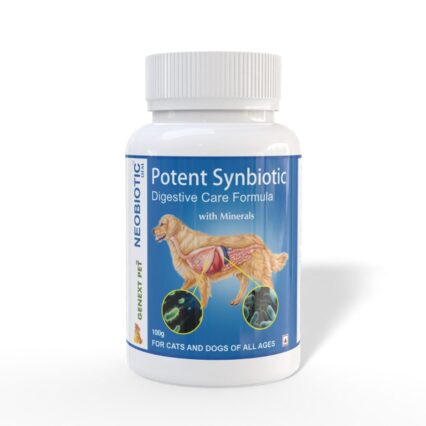
Neobiotic® DFM – Gut & Digestive Support for Dogs & Cats | 100g Powder
Original price was: ₹405.₹379Current price is: ₹379.
How Neobiotic DFM Compares to Typical Dog Probiotics in India
Most dog probiotic supplements available in India — whether priced at ₹500 or ₹900+ — follow a similar formula: multiple Lactobacillus strains, sometimes a Bacillus strain mixed in, and little else. Here’s how Neobiotic DFM stacks up against what you’ll typically find on the market:
| Feature | Neobiotic DFM (GenextPet) | Most Probiotics in India (₹500–900 range) |
|---|---|---|
| Price | ₹350-400 (100g) | ₹500–₹900+ per pack |
| Core Probiotic Type | Spore-forming Bacillus (heat-stable) | Primarily Lactobacillus-based (heat-sensitive) |
| Heat Stability (Indian Climate) | Excellent — Bacillus spores survive 40°C+ | Questionable — Lactobacillus may degrade during summer shipping & storage |
| MOS (Pathogen Binder) | Yes — actively binds E. coli & Salmonella | Rarely included in Indian formulas |
| Beta-glucan (Immune Activator) | Yes — activates gut immune cells | Rarely included |
| Antibiotic-Resistant Strain | Yes — S. boulardii survives antibiotics | Occasionally present, often not specified |
| Zinc for Gut Repair | Yes — 20mg therapeutic dose | Usually absent or in token amounts |
| Mineral Support | Zinc 20mg + Manganese 20mg + Copper 1mg | Typically none |
| Suitable For | Dogs + Cats | Varies — some are dog-only |
What This Comparison Tells You
Most dog probiotics in India are probiotic-only products — they give you bacteria and nothing else. Neobiotic DFM is a complete gut-support system that combines three layers of defense:
- Spore-forming probiotics that actually survive Indian heat and stomach acid
- Pathogen binders (MOS + Beta-glucan) that actively remove harmful bacteria — not just outcompete them
- Gut-repair minerals (Zinc, Manganese, Copper) that rebuild the intestinal lining damaged by diarrhea
When evaluating any dog probiotic, don’t just compare price tags or strain counts. Compare what the formula actually does inside your dog’s gut. A product with 12 strains that may be dead on arrival is less useful than a product with 3 heat-stable strains that are alive and working.
→ Buy Neobiotic DFM | 3-Layer Gut Protection Built for Indian Conditions
Probiotic vs Yogurt (Dahi): What’s Better for Indian Dogs?
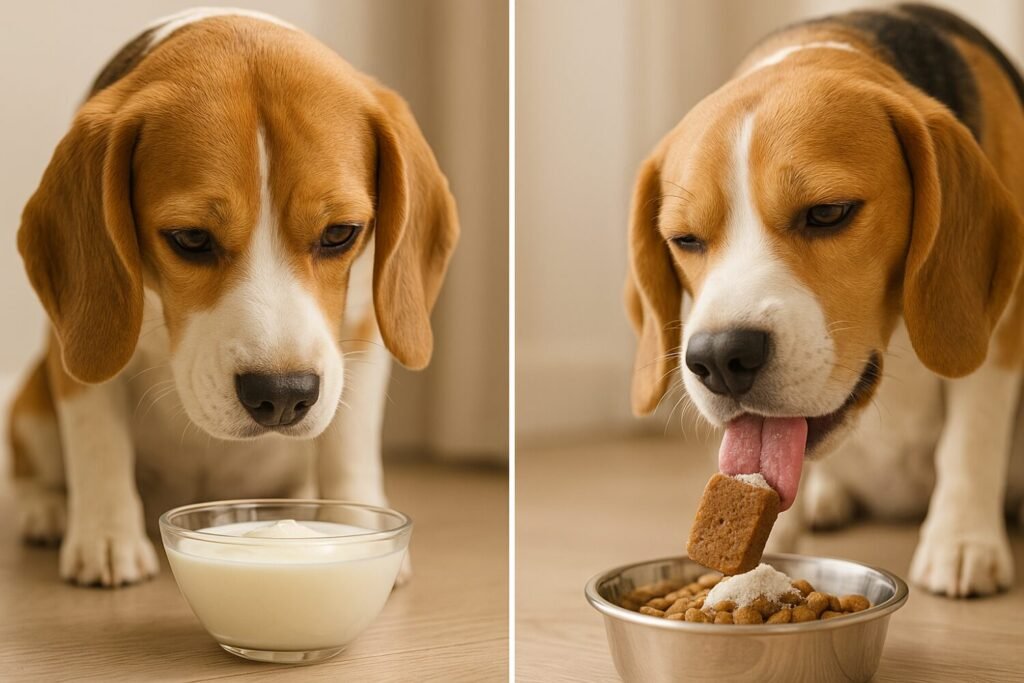
This question comes up constantly — and it’s a fair one, because Indian households almost always have dahi available.
| Feature | Dahi / Yogurt | Probiotic Supplement |
|---|---|---|
| Contains live cultures? | Yes, but low and variable amounts | Yes, in standardised, high concentration |
| Strain specificity | No — random strains from fermentation | Yes — targeted, research-backed strains |
| Dairy content | Yes — may upset lactose-intolerant dogs | Dairy-free options available |
| Heat stability | Must be refrigerated | Spore-forming options are shelf-stable |
| Consistency of dose | Variable every batch | Standardised per serving |
| Pathogen binding (MOS) | No | Available in advanced formulas |
| Mineral support | Minimal | Available (Zinc, Manganese, Copper) |
The practical answer: Indian dahi is actually better than Western commercial yogurt for dogs — it contains naturally fermented Lactobacillus cultures and is part of the traditional Indian diet. For a healthy dog with occasional mild loose stools, a spoonful of plain, unsweetened dahi is perfectly fine as a mild gut support.
But for clinical situations — active diarrhea, post-antibiotic recovery, monsoon gut infections, chronic digestive issues — dahi is a supplement to treatment, not a treatment itself. You need standardised, therapeutic-dose probiotics with targeted strains, pathogen binders, and gut-repair minerals.
Think of it this way: Dahi is maintenance. Neobiotic DFM is treatment.
Also Read: How to Improve Your Dog’s Gut Health Naturally
How to Use Probiotics: Dosage Guide for Indian Dogs
General Dosage Principles
- Always follow the product label — dosage is typically based on your dog’s weight
- Start slow — introduce at half the recommended dose for the first 5–7 days, then increase to full dose. This prevents initial gas or mild bloating as the gut adjusts
- Mix with food — probiotics work best when taken with a meal. Mix the powder into your dog’s regular food (kibble or homemade)
- Be consistent — probiotics work cumulatively. Irregular use produces irregular results
When to Use Probiotics: Scenario-Based Guide
During Active Diarrhea: Start immediately. Use the full recommended dose (or slightly higher, as per your vet’s advice) for 5–7 days. You should see improvement in stool consistency within 2–5 days. If diarrhea persists beyond 5 days with probiotic support, consult your veterinarian.
After Antibiotics: Start probiotics from Day 1 of the antibiotic course — not after. Saccharomyces boulardii (present in Neobiotic DFM) survives antibiotic treatment, so it can work alongside the medication. Continue for 2–3 weeks after the antibiotic course ends to allow full gut flora recovery.
During Monsoon Season (June–September): Use as a daily preventive supplement throughout the monsoon months. This is the highest-risk period for gut infections in Indian dogs. Daily probiotic support helps maintain gut barrier strength before problems start.
During Food Transitions: Begin probiotic supplementation 3 days before you start switching food, and continue for 2 weeks after the transition is complete. This gives the gut microbiome the support it needs to adapt to new dietary inputs.
Daily Maintenance (Sensitive Dogs): If your dog has a chronically sensitive stomach, daily probiotic use is safe and recommended. Consistent supplementation is more effective than reactive use after problems occur.
When Probiotics Aren’t Enough: The Enzyme Angle
Here’s something most probiotic guides don’t tell you: sometimes the problem isn’t bacteria — it’s enzymes.
If your dog’s diarrhea involves:
- Undigested food visible in stools
- Consistently large, pale, greasy stools
- Weight loss despite eating well
- Chronic loose stools that probiotics alone haven’t resolved
…the issue may be enzyme deficiency — specifically, a condition called EPI (Exocrine Pancreatic Insufficiency), where the pancreas doesn’t produce enough digestive enzymes to break down food properly.
In these cases, your dog needs digestive enzyme supplementation alongside probiotics. Probiotics fix the bacteria. Enzymes fix the digestion. Together, they address 90% of chronic gut issues in dogs.
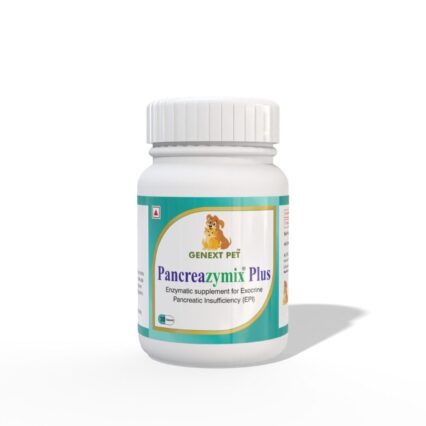
Pancreazymix Plus by GenextPet is a clinical-grade digestive enzyme supplement containing:
- Protease 54,000 U — breaks down protein
- Amylase 45,000 U — breaks down carbohydrates
- Lipase 9,000 U — breaks down fats
These are medical-grade enzyme potencies — significantly higher than the token enzyme amounts some brands mix into their probiotic blends.
Gut Reset Combo: For dogs with chronic digestive issues, the combination of Neobiotic DFM (₹342) + Pancreazymix Plus (₹599) provides complete digestive support — good bacteria rebuild the gut flora while clinical-grade enzymes ensure food is actually being digested and absorbed.
-
Sale!
Neobiotic® DFM – Gut & Digestive Support for Dogs & Cats | 100g Powder
Original price was: ₹405.₹379Current price is: ₹379.
-
Sale!
Pancreazymix® Plus – Digestive Enzyme Supplement for Dogs & Cats
Original price was: ₹630.₹599Current price is: ₹599.
Also Read: Post Surgery Care for Dogs: Nutrition & Recovery Tips
When to See a Vet: Diarrhea Warning Signs
Probiotics are effective for many cases of dog diarrhea, but some situations require immediate veterinary attention. Do not rely on supplements alone if:
- Diarrhea lasts more than 48 hours without improvement
- You see blood or mucus in the stool
- Your dog is lethargic, refusing food, or vomiting simultaneously
- It’s a puppy under 6 months or a senior dog over 10 years — dehydration risk is much higher
- Your dog has a fever (normal temperature for dogs: 38.3–39.2°C)
- The diarrhea started after your dog ate something potentially toxic
- Your dog is on medication and symptoms suddenly worsened
In these situations, your vet may prescribe specific treatment alongside probiotic support. Probiotics complement veterinary care — they don’t replace it.
Best Practices for Buying Probiotics Online in India
Buying supplements online in India requires some extra caution. Here’s how to protect yourself and your pet:
- Order directly from the brand website — you get genuine products, proper storage, and customer support. Marketplace sellers sometimes store supplements in non-climate-controlled warehouses.
- Check manufacturing and expiry dates — probiotics lose potency over time, especially in Indian storage conditions. Fresher is better.
- Prefer powder over capsule formats — powders mix easily into food and allow flexible dosing. Most dogs accept powder mixed into their regular meals without fuss.
- Choose pet-specific formulas — never use human probiotics for dogs. Human supplements may contain xylitol (toxic to dogs) or inappropriate strain ratios.
- Look for spore-forming strains — especially if you’re ordering during summer months (March–June). This is the single most important criterion for Indian buyers.
- Trust specialised pet supplement brands — brands that focus exclusively on pet health supplements (like GenextPet) invest more in formulation, quality control, and Indian-condition testing than general pharma companies that add pet products as an afterthought.
→ Buy Neobiotic DFM | Spore-Forming Probiotic Built for Indian Conditions
Also Read: Best Dog Breeds for Indian Families (2026): Complete Guide
Final Word
Dog diarrhea is stressful — for your pet and for you. But the solution doesn’t always need to be medical. A well-formulated probiotic supplement can restore gut balance, strengthen immunity, and prevent recurring episodes — if you choose the right one.
For Indian pet parents specifically, the choice comes down to one critical factor: does the probiotic survive Indian conditions?
Spore-forming Bacillus strains do. Generic Lactobacillus-only formulas may not.
Neobiotic DFM was engineered for this reality — heat-stable spores, pathogen-binding MOS, gut-repair minerals, and an antibiotic-resistant strain. It’s the most complete gut-support formula available in India at less than half the price of its nearest competitors.
Start simple. Read the label. Choose science over marketing. And when in doubt, trust your vet.
Also Read: Nucleotide for Dogs: Immunity & Gut Health Benefits
FAQ
Can I give my dog human probiotics?
Not recommended. Human probiotics contain strains and dosages formulated for the human gut, which differs from the canine microbiome. Some human supplements also contain xylitol, which is toxic to dogs. Always use a dog-specific probiotic formula.
How long do probiotics take to work for dog diarrhea?
Most dogs show improvement in stool consistency within 2–5 days of starting a quality probiotic. For chronic gut issues, consistent use for 2–4 weeks typically produces significant results. Severe cases or antibiotic recovery may take longer.
Are probiotics safe for puppies?
Yes, probiotics are generally safe for puppies when using a product labelled for dogs of all ages. For very young puppies (under 8 weeks), consult your veterinarian for dosage guidance. Neobiotic DFM is suitable for puppies, adult dogs, and senior dogs.
Can I give probiotics along with antibiotics?
Yes — and you should. Saccharomyces boulardii, one of the key strains in Neobiotic DFM, is a probiotic yeast that survives antibiotic treatment. Starting probiotic support from Day 1 of antibiotics prevents the gut flora destruction that causes antibiotic-associated diarrhea.
Should I stop feeding during diarrhea?
No. Fasting is generally not recommended for adult dogs with diarrhea. Instead, feed small, frequent portions of bland food (boiled chicken and rice) alongside probiotic supplementation. This provides the nutrition your dog needs for recovery while reducing gut workload.
Can probiotics be used daily as prevention?
Absolutely. Daily probiotic use is safe and beneficial, especially for dogs with sensitive stomachs, during monsoon season, or during dietary transitions. Consistent daily use is more effective than reactive use after problems start.
Which probiotic strains survive Indian heat?
Spore-forming strains — specifically Bacillus subtilis, Bacillus licheniformis, and Bacillus coagulans — survive temperatures above 40°C because they form protective endospores. Saccharomyces boulardii (a probiotic yeast) is also heat-stable. Lactobacillus strains are effective but may lose viability in Indian summer shipping and storage conditions.
How is Neobiotic DFM different from other dog probiotics in India?
Most dog probiotics in India rely on Lactobacillus strains that may lose viability in Indian heat. Neobiotic DFM uses spore-forming Bacillus strains (heat-stable), includes MOS pathogen binders and Beta-glucan immune activators, and provides therapeutic Zinc (20mg) for gut repair. Many popular alternatives priced at ₹800–900 offer probiotic strains alone without pathogen binders, immune activators, or mineral support. Compare compositions, not just brand names.
Can cats take Neobiotic DFM?
Yes. Neobiotic DFM is formulated for both dogs and cats. The dosage differs by body weight — follow the product label for cat-specific dosing guidelines.
Should I give probiotics during monsoon season?
Yes, this is one of the most important times for daily probiotic support. Monsoon season (June–September) brings increased bacterial contamination in the environment, higher humidity that promotes pathogen growth, and more gut infections in Indian dogs. Daily probiotic supplementation during these months acts as preventive gut protection.
What is MOS and why does it matter in a dog probiotic?
MOS (Mannan Oligosaccharides) is a prebiotic fibre derived from yeast cell walls. Unlike regular prebiotics that simply “feed” good bacteria, MOS actively binds to pathogenic bacteria like E. coli and Salmonella, preventing them from attaching to your dog’s gut wall. This is active pathogen defense — not passive support. Most competitor probiotics in India do not include MOS.