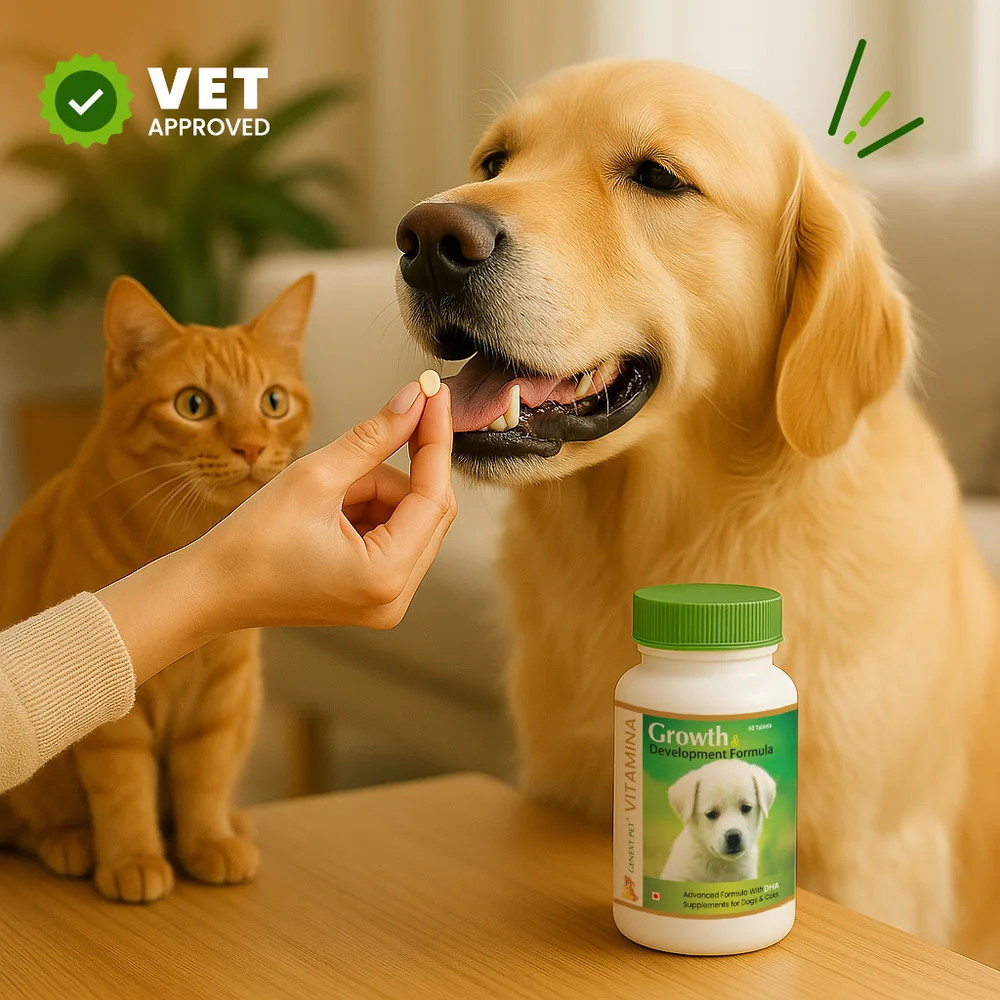

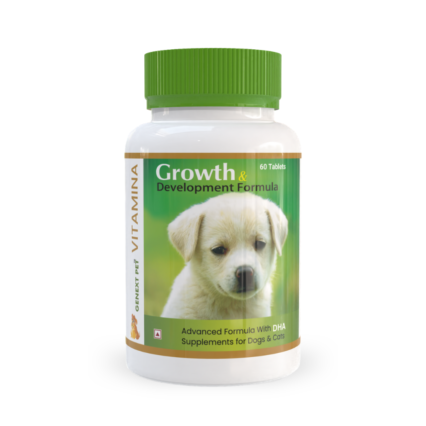
VITAMINA® – Multivitamin for Dogs & Cats | 60 Tabs
23 vitamins, minerals, DHA and taurine in one daily tablet, a top-up for home-cooked meals
₹567 – ₹1,557Price range: ₹567 through ₹1,557
- Secure Payment
- GMP Verified
- Cruelty Free
Share on:
Product Details
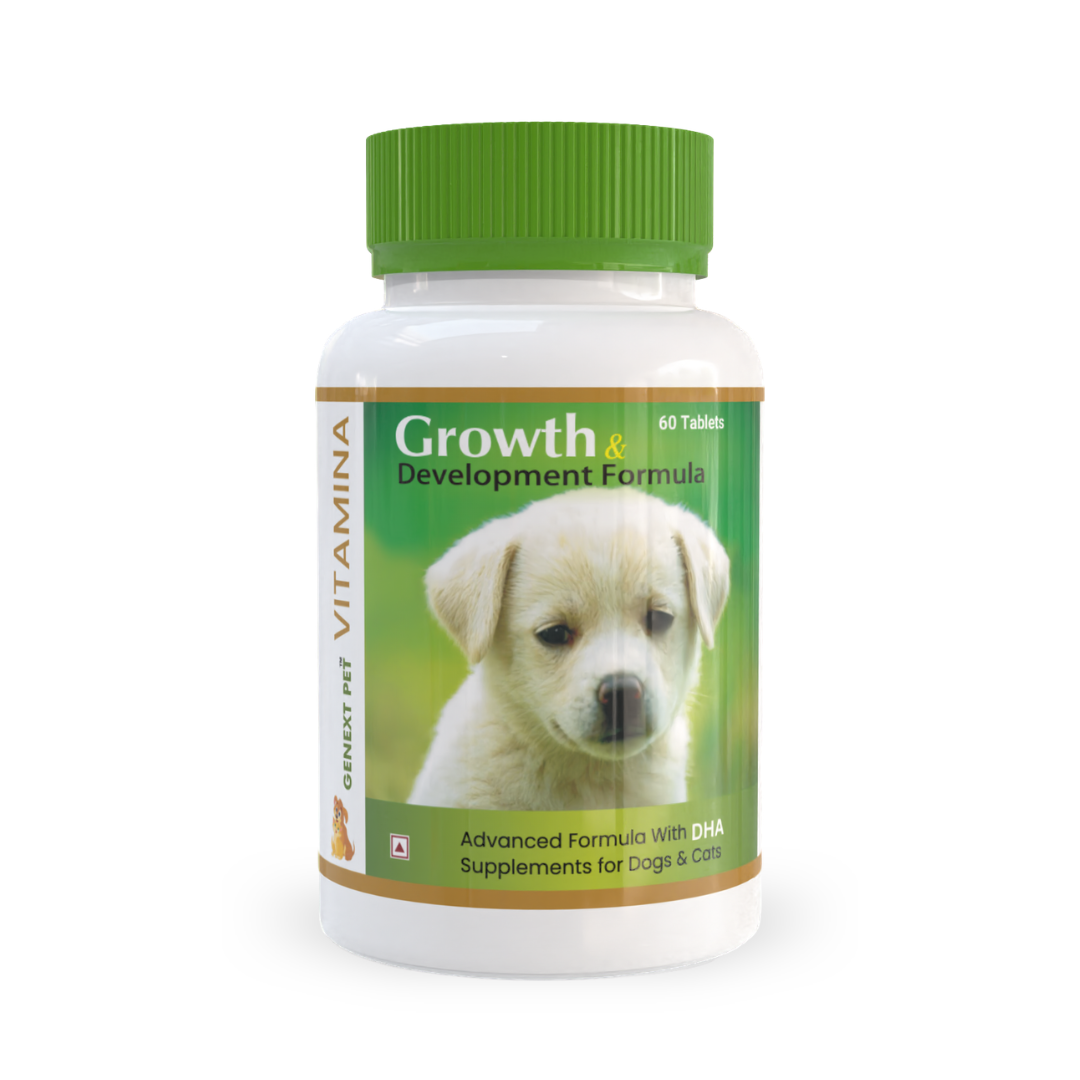
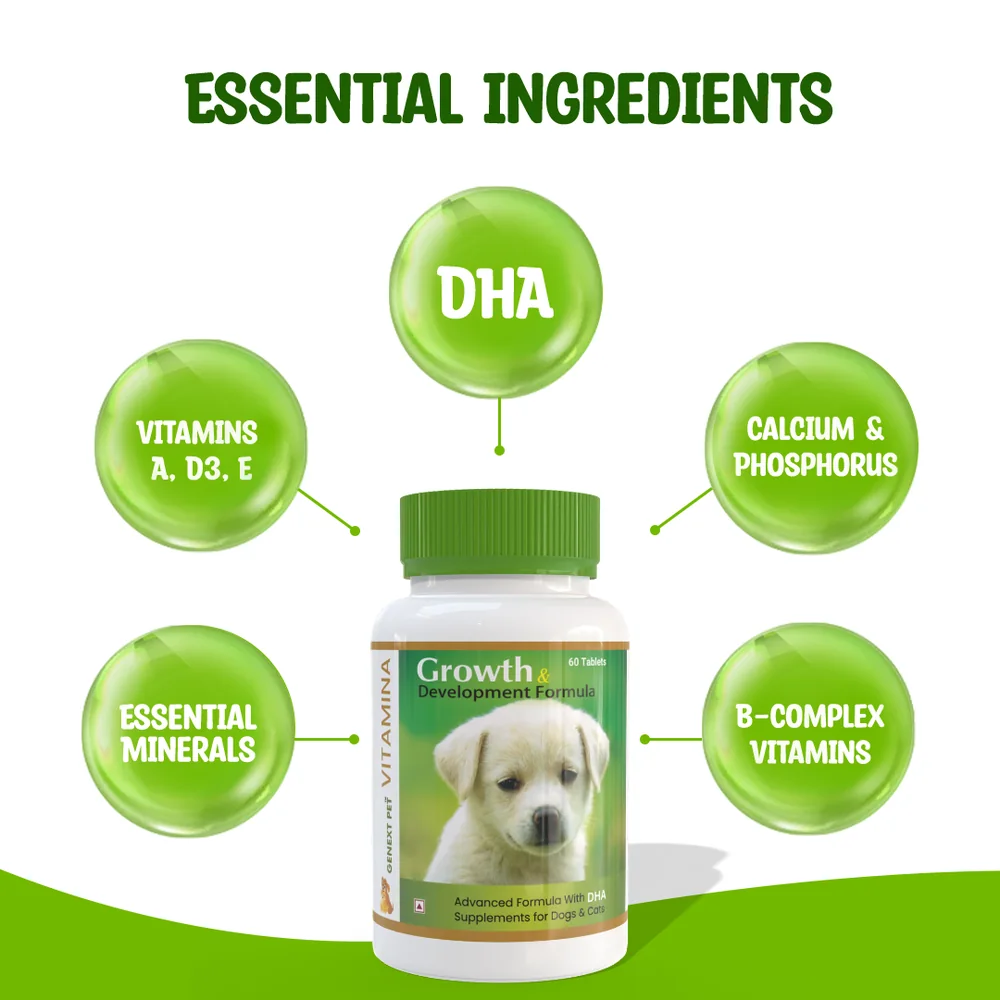
Vitamina is a daily multivitamin tablet for dogs and cats: vitamins A, D3, E, C and B-group, biotin, calcium, phosphorus, trace minerals, DHA and taurine, 23 nutrients in one tablet.
It is a top-up for pets whose meals are home-cooked or limited. It does not replace a balanced diet. Give it whole or crumble it over food.
- Pack60 tablets, 2.2 g each
- ForDogs, puppies, cats and kittens
- Nutrients23 per tablet
- DoseBy body weight, from ¼ tablet
- Made inIndia, by GenextPet
Ingredients & Their Benefits
Each tablet contains (label values, minimum):
| Vitamins | Per tablet | Minerals and more | Per tablet |
|---|---|---|---|
| Vitamin A | 1,200 IU | Calcium | 125 mg |
| Vitamin D3 | 50 IU | Phosphorus | 80 mg |
| Vitamin E | 10 IU | Copper | 3 mg |
| Vitamin C | 10 mg | Magnesium | 3 mg |
| Vitamin B1 | 2 mg | Zinc | 0.2 mg |
| Vitamin B6 | 0.04 mg | Manganese | 75 mcg |
| Vitamin B12 | 0.05 mcg | Iodine | 0.04 mg |
| Pantothenic acid | 2 mg | Cobalt | 10 mcg |
| Biotin | 150 mcg | DHA | 4.5 mg |
| Choline | 50 mcg | Taurine | 10 mg |
| Lysine / Arginine | 0.5 mg each | ||
| Linoleic acid | 0.12 mg |
What the key ingredients do
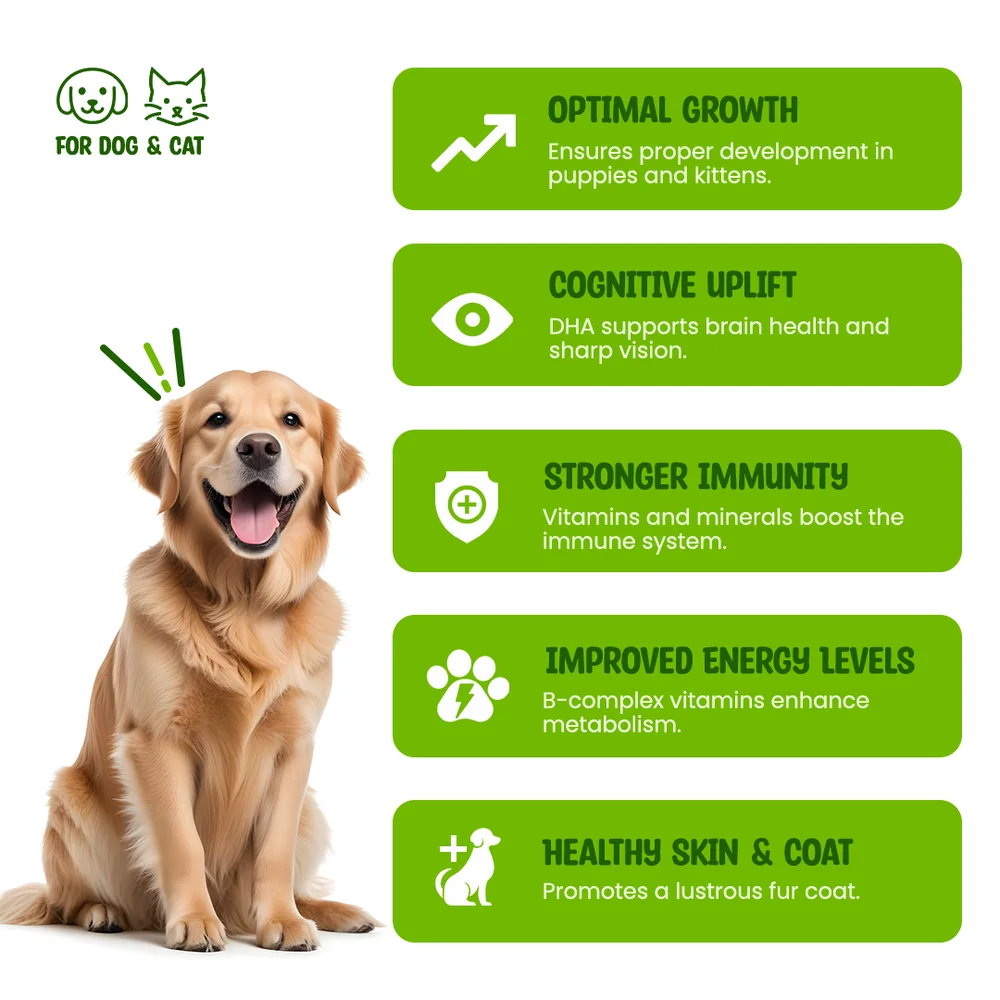
- Biotin, vitamin A, linoleic acid: skin and coat; biotin is the coat vitamin most owners look for.
- DHA: an omega-3 found in the brain and eyes, used heavily during growth.
- B-group vitamins: help the body turn food into energy.
- Vitamins D3 and E: bones and normal immunity; vitamin E is also an antioxidant.
- Taurine: an amino acid that cats must get from their food.
- Calcium, phosphorus and trace minerals: bones, teeth and everyday body functions.
What Vitamina does for your pet
- Tops up home-cooked meals. Adds a broad spread of vitamins and minerals that rice, roti, dal and chicken bowls can miss.
- Supports skin and coat. 150 mcg biotin per tablet, with vitamin A and linoleic acid.
- DHA for growing brains and eyes. Useful for home-fed puppies and kittens.
- Includes taurine for cats. An amino acid cats need from their diet.
- Easy for picky eaters. Crumble it over food, or give it as a treat.
Dosage & Directions
| Pet | Daily dose | 60-tablet bottle lasts |
|---|---|---|
| Puppy under 5 kg | ¼ tablet, twice a day | about 120 days |
| Dog up to 10 kg | 1 tablet | 60 days |
| Dog 10–20 kg | 1–2 tablets | 30–60 days |
| Dog over 20 kg | 2–3 tablets | 20–30 days |
| Cat up to 5 kg | ½ tablet | about 120 days |
| Cat over 5 kg | 1 tablet | 60 days |
How to give it
- With the main meal. Vitamins A, D and E are absorbed best with food that has some fat in it.
- Same time every day. It is easier to remember and keeps intake steady.
- Only one multivitamin. Do not combine Vitamina with another multivitamin or cod liver oil; vitamins A and D build up in the body.
- Missed a dose? Skip it and continue the next day.
- Storage. Keep the bottle closed, in a cool, dry place, away from children.
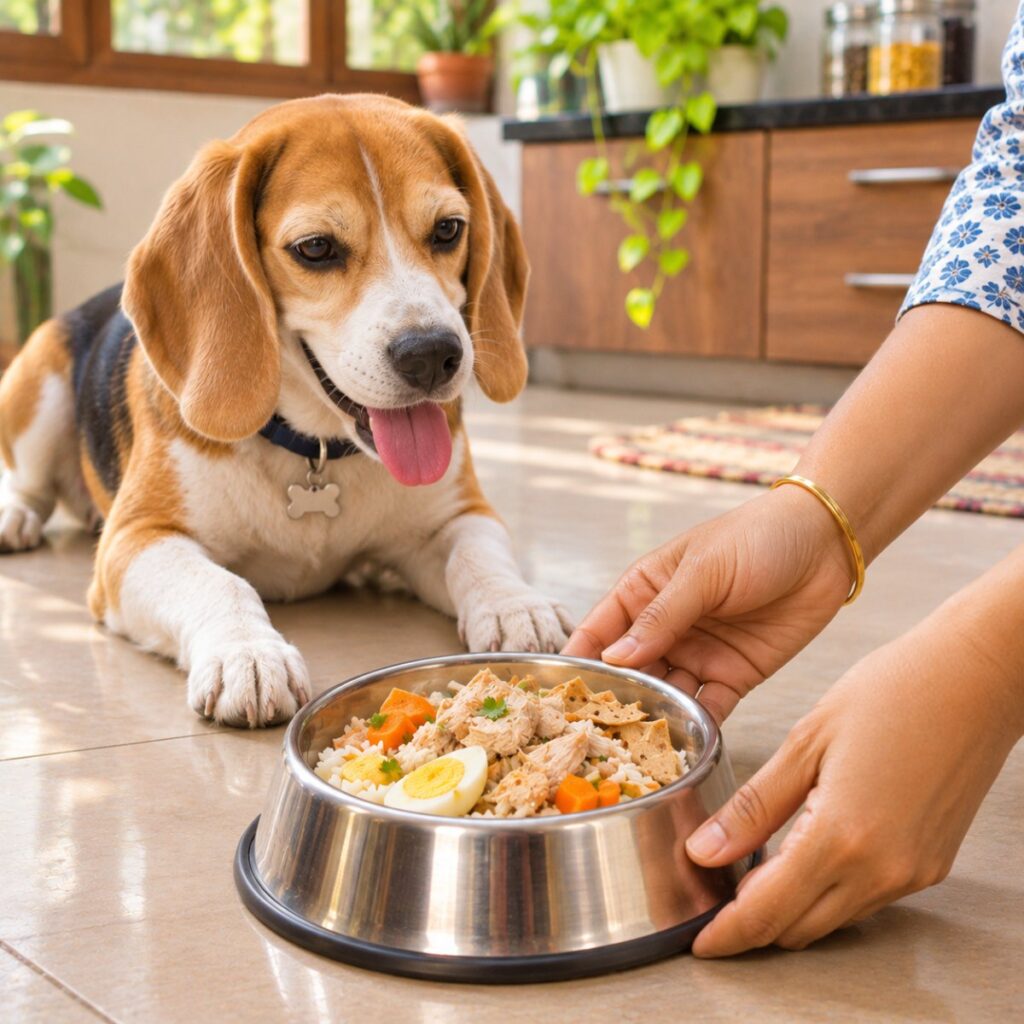
Does your pet really need a multivitamin?
Home-made diets are easy to get wrong. When UC Davis vets analysed 200 home-made dog food recipes from books and websites, 95% were short of at least one essential nutrient and 83% were short of several. The most worrying gaps were choline, vitamin D, zinc and vitamin E (UC Davis study of 200 home-made dog food recipes (JAVMA 2013)).
| Your pet eats | Does it need a multivitamin? |
|---|---|
| A complete commercial food (labelled “complete”) | No. Extra vitamins A and D can add up. |
| Home-cooked meals: rice, roti, dal, chicken, curd | Yes, as a daily top-up |
| Half packaged food, half home food | Often useful; ask your vet about the dose |
| Very little, because it is a picky eater | Useful while you work on the eating |
| A recipe written by a vet nutritionist | Use exactly what the recipe specifies |
Be realistic about what a tablet can do. A multivitamin makes everyday gaps smaller, but it cannot balance a diet on its own. In the UC Davis study, the recipes written by board-certified vet nutritionists were the ones that met requirements. If your pet eats only home food long-term, ask your vet for a balanced recipe and use Vitamina as the daily top-up.
Cats are stricter than dogs. They must get taurine and vitamin A ready-made from food (NRC, Nutrient Requirements of Dogs and Cats (2006)), so home-cooked fish-and-rice diets for cats are especially easy to get wrong. Ask your vet before feeding a cat mostly home food.
Getting the best from Vitamina
What to expect
| When | What you may notice |
|---|---|
| First 2–3 weeks | Steadier appetite and energy in pets whose diet was missing nutrients |
| 6–8 weeks | Coat changes show as new hair grows in: softer and shinier, less flaking |
| Ongoing | Keep it daily for as long as the diet stays home-cooked |
Check with your vet first if
- Your pet is on medicine, or has kidney or liver problems.
- Your puppy eats a complete puppy food. It already has the vitamins it needs.
- Your dog is a breed prone to copper build-up, such as Labrador, Doberman, West Highland White Terrier or Bedlington Terrier. Vitamina contains 3 mg copper per tablet.
- Appetite drops suddenly. A sudden change is a reason for a vet visit, not a vitamin.
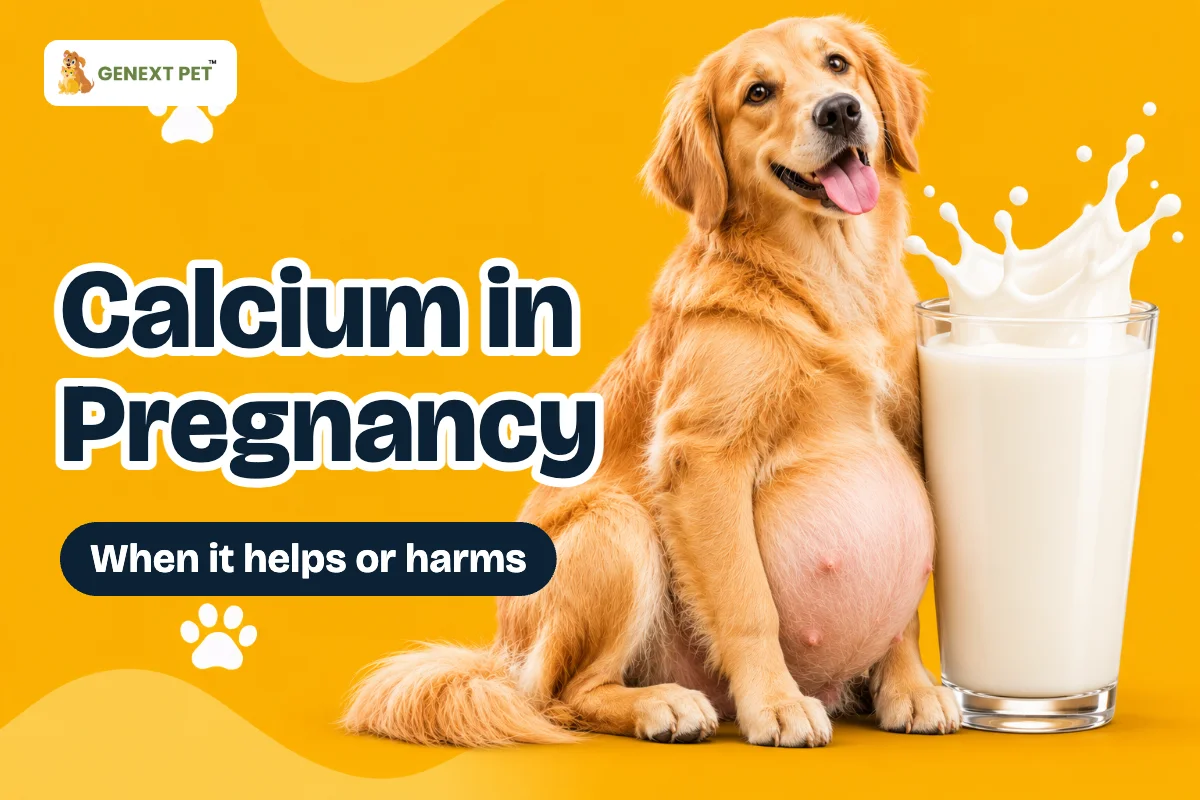
For home-fed puppies, the Growth Duo pairs Vitamina with CAL calcium. Not sure? Try the 30-second Supplement Finder.
Sources: UC Davis study of 200 home-made dog food recipes (JAVMA 2013); NRC, Nutrient Requirements of Dogs and Cats (2006).

Vitamina vs other multivitamins
What to check before you buy, and how Vitamina compares with many supplements on the market.
| What to check | Many other supplements | Vitamina |
|---|---|---|
| Every nutrient listed with its amount | ✕ Often a short list or “multi-nutrient blend” | ✓ 23 nutrients, each with its amount |
| Made for pets, not people | ✕ Often human tablets, with too much vitamin D or iron for a small dog | ✓ Made for dogs and cats |
| Coat nutrients included | ✕ Often no biotin | ✓ 150 mcg biotin per tablet |
| Cat-specific nutrient | ✕ Often no taurine | ✓ Taurine included |
| Dose by body weight | ✕ Often the same dose for a 5 kg and a 30 kg dog | ✓ From ¼ tablet to 3 tablets by weight |
FAQs
Does my dog need a multivitamin if it eats home food?
Does my dog need a multivitamin if it eats home food?
Usually yes, as a top-up. A study of 200 home-made recipes found 95% were short of at least one essential nutrient. Dogs on a complete commercial food usually don’t need one.
Can I give my dog a human multivitamin?
Can I give my dog a human multivitamin?
No. Human tablets are dosed for adults, can carry too much vitamin D or iron for a small dog, and some chewables contain xylitol, which is toxic to dogs.
Can puppies take Vitamina?
Can puppies take Vitamina?
Yes, if they eat home-cooked food. Puppies under 5 kg get ¼ tablet twice a day. On a complete puppy food, ask your vet first.
Can I give Vitamina and CAL together?
Can I give Vitamina and CAL together?
Yes, that is our Growth Duo for home-fed puppies. Give each at its own label dose. Vitamina has a little calcium (125 mg per tablet), CAL has 450 mg.
Will Vitamina improve my dog’s appetite?
Will Vitamina improve my dog’s appetite?
B-group vitamins help the body use food for energy, and pets whose diet was missing nutrients often eat more steadily. A sudden loss of appetite needs a vet check.
Can I give Vitamina to my cat?
Can I give Vitamina to my cat?
Yes. Cats up to 5 kg get ½ tablet a day, over 5 kg 1 tablet. It contains taurine, but a cat on mostly home food still needs a vet-checked diet.
Sorry, no reviews match your current selections

Get Pet Care Tips & Early Offers
Join our list for simple pet care tips, new launches and early access to offers. No spam, unsubscribe anytime.

Tried another brand before, puppy refused. This one mixed with food she takes happily.
Worth it.
Quality is excellent and matches the description. My pet responded well to VITAMINA®. Will buy again!
Tried another brand before, puppy refused. This one mixed with food she takes happily.
Dog refused other syrups, but accepts these tablets when hidden in food.