

India’s relationship with dogs has never been more complex than it is today. With rising urban pet ownership, a string of high-profile attack incidents, and repeated calls from animal welfare bodies and public safety authorities, the question of which dog breeds are banned – or restricted – in India has become one of the most searched and most misunderstood topics in the country’s pet industry.
If you are a current dog owner, a prospective buyer, or simply someone trying to understand the legal landscape in 2026, this guide covers everything you need to know: the complete list of restricted breeds, the legal framework that governs dog ownership in India, what you need to do if you already own one of these breeds, and how to be a responsible owner regardless of which breed shares your home.
Are Dog Breeds Actually Banned in India? The 2026 Legal Position
Let us address this clearly at the outset: as of 2026, India does not have a sweeping national law that makes it a criminal offence to own specific dog breeds. However, the central government – specifically the Ministry of Fisheries, Animal Husbandry and Dairying – issued an advisory in March 2024 recommending that 23 dog breeds be banned nationwide for import, breeding, and sale. Several state governments have since taken this further, either issuing their own notifications or directing municipal bodies to enforce restrictions.
The practical reality is this: dog ban notifications vary by state and municipality. What is a banned dog in one city may be a legal dog in another. That said, the central advisory carries significant weight, and nationwide enforcement has been tightening steadily.
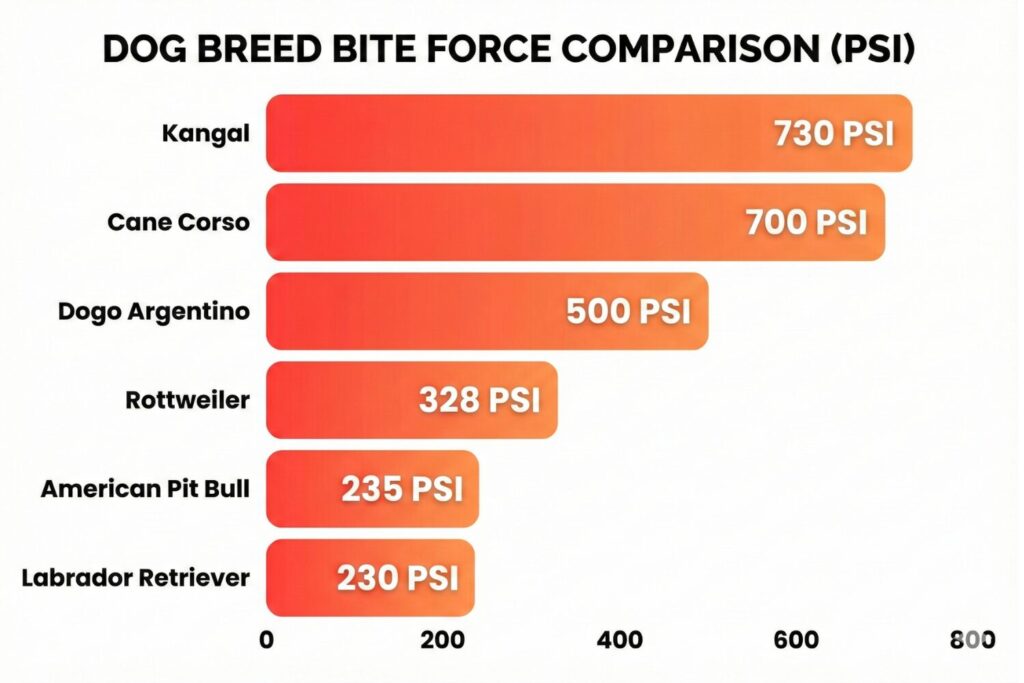
The breeds flagged are not banned because they are inherently evil. They have been classified as dangerous dog breeds based on their physical characteristics, bite-force data, incident histories, and perceived risks in densely populated urban environments in India. Understanding the distinction between a policy restriction and a moral judgement on the animal is essential before we proceed.
Why Was the Dog Ban Proposed?
The advisory came in the wake of multiple fatal and disfiguring dog attacks across India – including incidents involving pitbull dogs, rottweilers, and other large breeds – that received national media coverage. Pressure mounted on the government to act.
Alongside public safety concerns, animal welfare bodies raised flags about irresponsible breeding practices. Many breeders were importing and selling dangerous dog breeds in India – including dogo argentino, cane corso, and tosa inu – to buyers who had no experience managing high-drive, high-aggression breeds. Without proper training, space, or veterinary care, these dogs posed a genuine public safety risk, particularly in apartment settings.
The dog ban in India also reflects a broader reality: many Indian cities lack infrastructure for high-maintenance large breeds. Veterinary access for specialized breeds like the Caucasian Shepherd Dog or Tibetan Mastiff is limited outside metro areas. Municipal dog laws – including mandatory registration, leash requirements, and vaccination – were routinely ignored. The ban advisory was, in part, a policy response to a regulatory vacuum.
The Full List of Dog Breeds Banned or Restricted in India (2026)
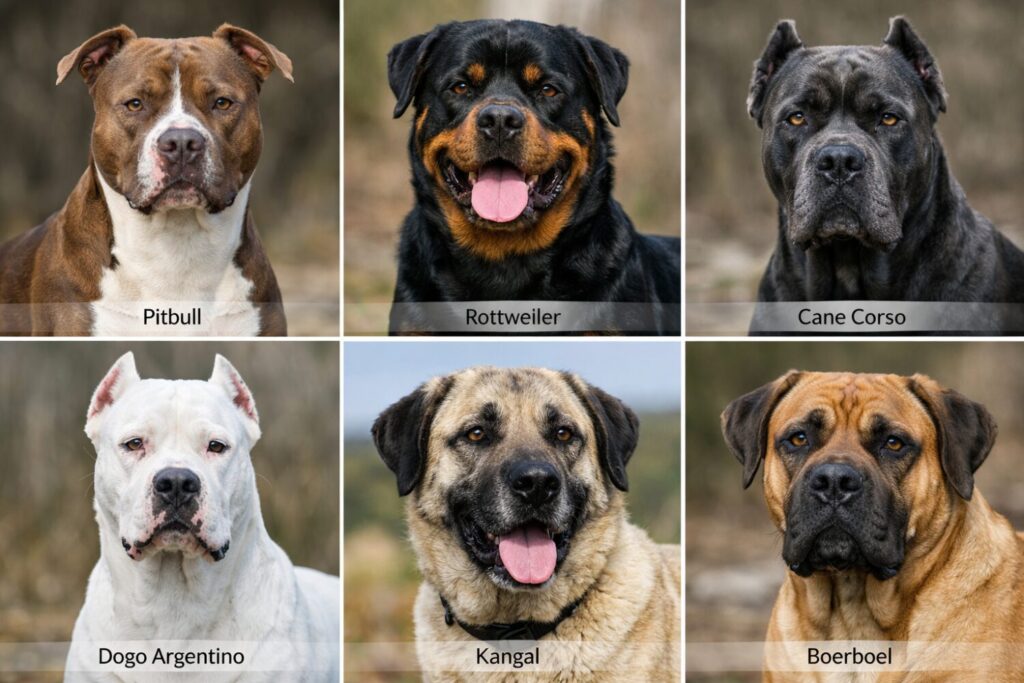
The following 23 breeds were named in the central government advisory. Several are already subject to import bans enforced by the DGFT (Directorate General of Foreign Trade). State-level enforcement continues to expand.
| Breed | Primary Concern | Status |
| Pitbull Terrier / American Pit Bull Terrier | High bite incidence, aggressive traits | Restricted — import/sale ban advisory |
| Rottweiler | Strength, attack history in India | Restricted — advisory; state bans in some regions |
| American Staffordshire Terrier | Related to the pit bull lineage | Restricted |
| Fila Brasileiro | Extreme guarding instinct, historically aggressive | Restricted |
| Dogo Argentino | Large hunting breed, high prey drive | Restricted |
| American Bulldog | Size and bite force concerns | Restricted |
| Boerboel | South African mastiff, a powerful guarding breed | Restricted |
| Kangal Dog | Turkish livestock guardian, extreme bite force | Restricted |
| Central Asian Shepherd (Alabai) | Territorial, not suited for dense urban areas | Restricted |
| Caucasian Shepherd Dog | Large, highly territorial | Restricted |
| South Russian Ovcharka | Aggressive guarding traits | Restricted |
| Tornjak | Large Balkan shepherd | Restricted |
| Sarplaninac | Yugoslav shepherd, protective and powerful | Restricted |
| Japanese Tosa / Tosa Inu | Bred for dog fighting | Restricted |
| Akita | Strong, independent, can be aggressive | Restricted |
| Mastiffs (various) | Includes Korean mastiff, Tibetan mastiff | Restricted (certain types) |
| Terrier (fighting types) | Bull terrier fighting lineages | Restricted |
| Wolf-Dog Hybrid / Wolf Hybrid | Part wild canid, unpredictable | Restricted |
| Bandog | Cross of mastiff and pit bull types | Restricted |
| Bully Kutta | Pakistani mastiff, large and powerful | Restricted |
| Cane Corso | Italian mastiff, territorial | Restricted |
| Presa Canario | Canarian mastiff, a guarding breed | Restricted |
| Czechoslovakian Wolfdog | Wolf-dog hybrid lineage | Restricted |
Note: “Restricted” means these breeds are subject to the central advisory against import, breeding, and commercial sale. State-specific rules govern ownership of existing animals. Always consult your local municipal authority for the current enforcement status in your area.
Pitbull in India: Legal Status, History, and What Owners Must Know
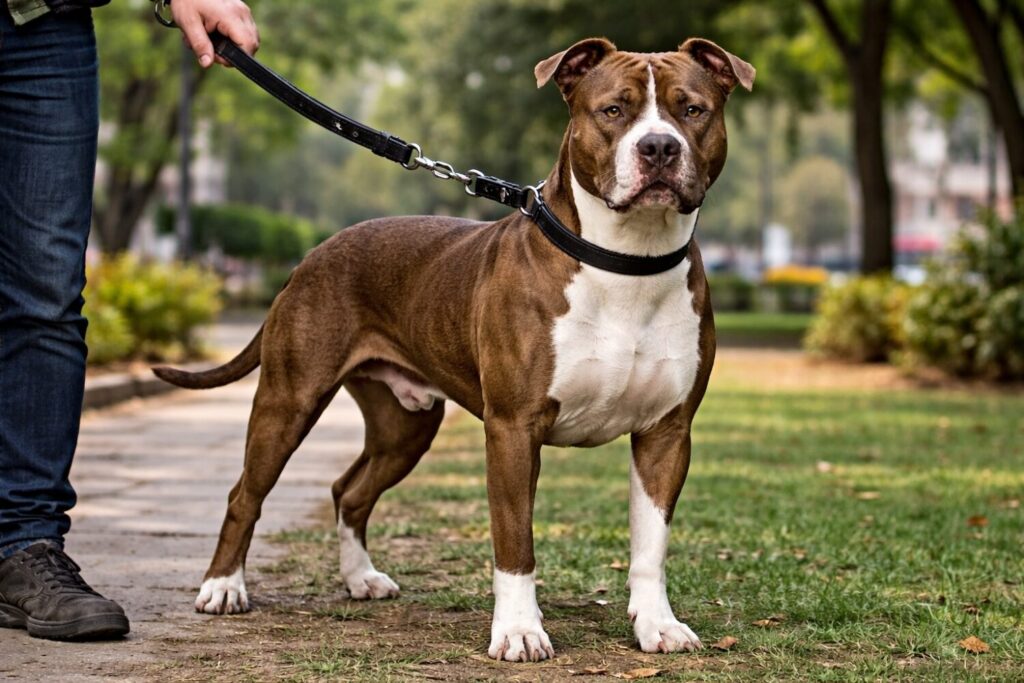
No breed has generated more controversy in the Indian dangerous dog debate than the pitbull. Searches for “is pitbull banned in India,” “pitbull dog ban in India,” and “pitbull dog price in India” run into the hundreds of thousands every month, reflecting both fear and fascination.
What Is a Pitbull?
The term “pitbull” is not a single breed but a category that encompasses the American Pit Bull Terrier, the American Staffordshire Terrier, and several related types. When Indians search for a pitbull dog or an American pit bull, they are often referring to the same animal.
Is Pitbull Banned in India in 2026?
Yes – the pitbull terrier (American Pit Bull Terrier) is included in the central government’s advisory list of restricted breeds. Multiple state governments have enacted pit bull bans. Breeding, importing, and selling pitbull puppies commercially is advised against at the central level.
If you already own a pitbull in India, you are not automatically a criminal. However, you are required to register the dog with your local municipal body, ensure it is vaccinated and, in most jurisdictions, sterilised, and keep it on a leash and muzzle in public. Failure to comply with dog-related rules and regulations can lead to fines and even the forced surrender of the animal.
The Reality of Pitbull Attacks in India
Pitbull dogs are involved in a disproportionate number of serious bite incidents in India. This is partly because they were irresponsibly bred by inexperienced breeders and sold at low prices to buyers who could not handle them. The pitbull dog price in India ranged from ₹15,000 to ₹80,000 at peak demand, attracting opportunistic breeders with no interest in temperament testing or health screening.
A black-and-white pitbull or a black pitbull puppy, however striking in appearance, requires an experienced handler, significant daily exercise, structured training, and consistent socialization. In most urban Indian households, these conditions cannot be met.
Rottweiler in India: Is It Banned? What Every Owner Needs to Know
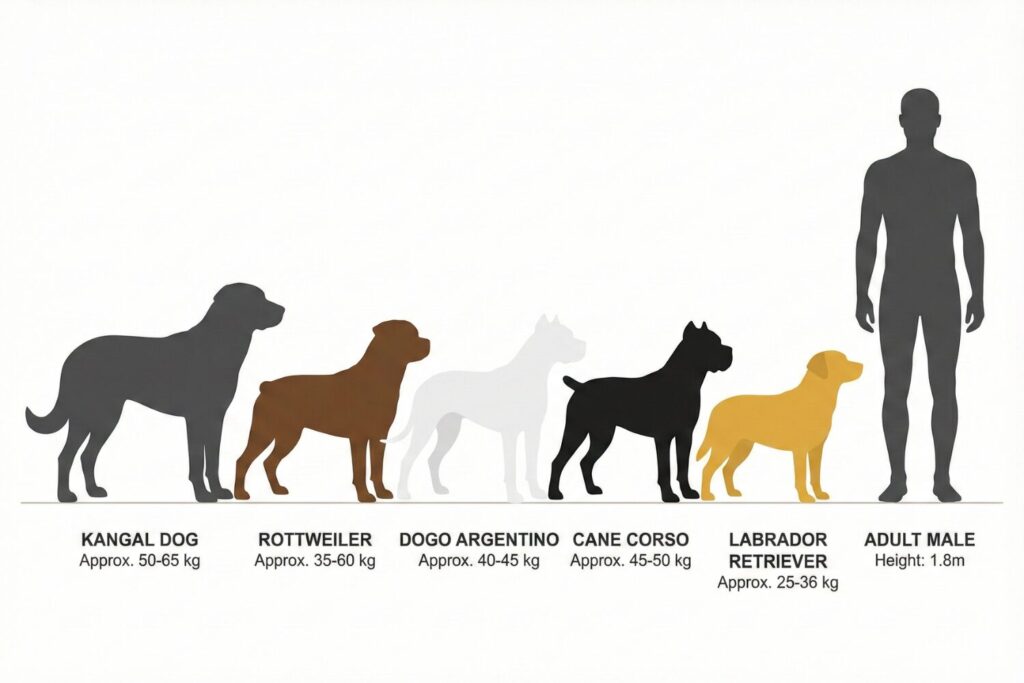
The Rottweiler is one of the most popular large dog breeds in India. Searches for Rottweiler, rottweiler price, and rottweiler dog price in India collectively run into hundreds of thousands per month. The breed’s robust build, loyalty, and imposing appearance have made it a favourite among security-conscious owners and large dog enthusiasts.
Is the Rottweiler Banned in India?
This is the most searched legal question in the Indian pet space. The direct answer: Rottweilers are included in the central government’s advisory. Rottweilers are banned in India; notification requirements vary by state. In some cities and housing societies, rottweilers are explicitly forbidden. In others, they are legal to own, provided they are properly licensed and comply with the law.
The Rottweiler temperament, when the breed is well-bred and adequately trained, is confident, calm, and intensely loyal. Rottweiler attacks in India are often linked to poor socialization, inadequate training, and irresponsible confinement – not inherent viciousness.
Rottweiler Prices Across India
Despite restrictions, rottweilers are still available from breeders in various cities. The price of a Rottweiler in Mumbai typically ranges from ₹18,000 to ₹60,000. The cost of a Rottweiler in Hyderabad is broadly similar. The rottweiler rate in India has moderated somewhat since the advisory on the ban, as demand from casual buyers has declined. A black rottweiler dog from a reputable breeder with proper health clearances commands a higher price than those sold in informal markets.
Cane Corso in India: The Blue Mastiff and Its Legal Standing
The cane corso – also spelled cane corso, kane corso, or can corso – is an ancient Italian working breed that has become one of the most discussed dogs in India’s restricted breed conversation. Searches for cane corso, cane corso price in India, and cane corso puppy price in India reflect genuine buyer interest even in a restricted environment.
Blue Cane Corso and Black Cane Corso
Two of the most sought-after colour variants are the cane corso blue (blue brindle cane corso) and the black cane corso – sometimes called black king corso. These colour variants carry a price premium in India, with cane corso price in Chennai, cane corso price in Punjab, and cane corso dog price in India varying significantly by bloodline.
The cane corso is territorial and powerful and requires an experienced owner. In India, where public spaces are dense and unfamiliar visitors are common, a cane corso without rigorous training and socialization poses a real risk.
Cane Corso Price in India (2026)
Despite the advisory, cane corso puppies remain available through breeders. The price of a Cane Corso puppy in India ranges from ₹50,000 to ₹1.5 lakh, depending on bloodline, colour, and city. However, buyers should be aware that purchasing a restricted breed may carry legal risk depending on their state’s enforcement status.
Dogo Argentino in India: The White Hunting Dog Under Scrutiny
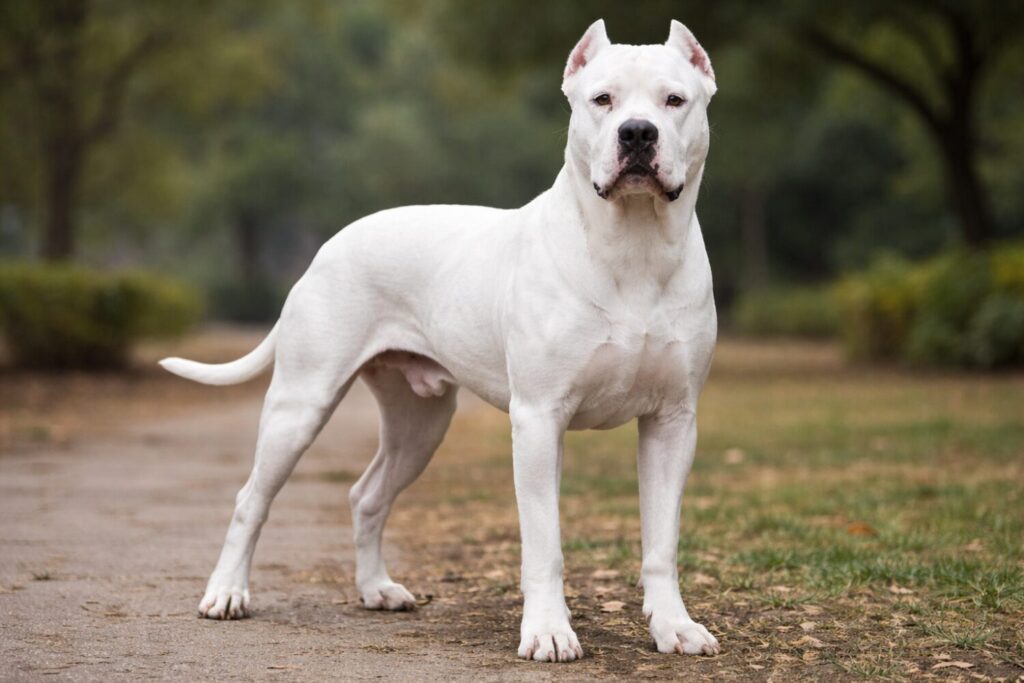
The dogo argentino – also referred to as argentino dogo, argentine dogo, or simply dogo – is a large, muscular, all-white hunting breed developed in Argentina. It is among the most visually striking of all restricted breeds and commands strong interest from Indian dog enthusiasts.
Is Dogo Argentino Dangerous?
The dogo argentino was selectively bred as a big-game hunting dog. It has a high prey drive, a confident temperament, and exceptional strength. Are dogo argentinos dangerous? In the wrong hands, yes. With experienced ownership, structured training, and adequate exercise, they can be stable companions. The advisory’s inclusion of the dogo in India’s restricted list reflects the breed’s potential for serious harm if mismanaged.
Dogo Argentino Price in India (City-Wise)
The price of a dogo argentino in India varies widely across the country. Broadly:
- Dogo argentino price in Kerala: ₹60,000 – ₹1.2 lakh
- Dogo argentino price in Punjab: ₹55,000 – ₹1 lakh
- Dogo argentino price in Delhi: ₹65,000 – ₹1.5 lakh
- Dogo argentino price in Bangalore: ₹60,000 – ₹1.2 lakh
- Dogo argentino price in Kolkata: ₹50,000 – ₹90,000
- Dogo argentino price in Mumbai: ₹70,000 – ₹1.5 lakh
- Dogo argentino price in Chennai: ₹55,000 – ₹1 lakh
- Dogo argentino price in Pune: ₹55,000 – ₹95,000
- Dogo argentino price in Hyderabad: ₹55,000 – ₹1.1 lakh
A black dogo argentino is extremely rare – the breed standard calls for an all-white coat – and any seller advertising black dogo argentino puppies should be approached with scepticism.

Other Notable Restricted Breeds: A Closer Look
Kangal Dog
The Kangal dog is a Turkish livestock guardian of extraordinary power. Searches for the Kangal dog and the term “Kangal” in India are remarkably high, driven by the breed’s reputation for wolf fighting. The Turkish Kangal dog holds one of the highest recorded bite forces of any dog breed in the world. The kangal dog price in India, when available, ranges from ₹80,000 to ₹3 lakh. The Kurdish Kangal and the Anatolian Shepherd Kangal are closely related breeds. Given its protective instincts and sheer size, the Turkish Kangal is firmly on the restricted list.
Boerboel
The boerboel – also called African boerboel – is a South African mastiff developed to protect farmsteads. Boerboel dogs are powerful, territorial, and intensely loyal to their family. Boerboel in India is rare, and the breed is on the restricted list. The boerboel’s inclusion reflects its raw physical capability rather than documented Indian incident data.
Fila Brasileiro
The fila brasileiro is a Brazilian mastiff with an extreme guarding instinct and a historical aversion to strangers, both selectively reinforced over generations. Fila brasileiros were explicitly bred to chase and restrain large animals – and escaped slaves. Their temperament makes them unsuitable for Indian urban environments. The Fila brasileiro price in India, where available, is substantial.
Japanese Tosa / Tosa Inu
The Japanese tosa – also known as the tosa inu – was developed specifically for dog fighting in Japan. Tosa inus are large, powerful, and extraordinarily stoic under pain — traits that made them successful in the fighting ring and dangerous outside it. The breed is also restricted in several countries outside India.
Wolf Dog / Wolf Hybrid
Wolf dog, wolfdog, and wolf hybrid – these terms refer to animals that are part domestic dog and part wolf. A wolfdog breed carries the unpredictability of wild canid genetics alongside the socialization capacity of dogs. Wolf dog puppies may appear manageable, but they mature into animals with instincts that no training programme can entirely suppress. Wolf dog price in India varies widely depending on the degree of wolf content. The Saarloos Wolfdog and the Czechoslovakian Wolfdog are the two most commonly discussed wolf dog breeds in India.
Presa Canario
The presa canario – also called canario – is a large Canarian mastiff with a history of use in dog fighting and livestock guarding. It is included in the restricted breed list.
Bandog
The bandog is not a standardised breed but a type, typically a cross between a mastiff (often an American bulldog or bullmastiff) and a pit bull type. The bandog in India is rare but present, and it is included in the advisory.
Akita
The Akita is a Japanese breed known for its incredible strength and independence. While the Akita is beloved worldwide, it has been included in the central advisory due to its robust build and international incidents.
Dangerous Dog Breeds in India: Myth vs. Reality
The phrase “most dangerous dog in India” generates significant search volume, but the data behind it is messier than headlines suggest.
The most dangerous dog in India is not a fixed title. Bite severity, bite frequency, and fatality data in India are poorly tracked. Strays – not restricted breeds – account for the vast majority of dog bites and deaths in India. Street dogs in India have been involved in far more bite incidents than pitbull dogs, rottweilers, or cane corsos combined.
The dangerous dog narrative in India is primarily shaped by media coverage, which tends to highlight incidents involving large, recognisable breeds. A rottweiler attack in India generates national coverage. Thousands of stray dog bites that occur weekly do not.
This does not diminish the genuine risk posed by poorly managed large breeds. But it is important to note that the top 10 dangerous dogs in India list circulating on social media is not based on comprehensive bite data. It is based on perception, breed-specific biases, and international precedents that may not map cleanly onto Indian conditions.
The most aggressive dog breeds in India, from a documented incident perspective, include not only restricted breeds but also certain Indian dog types kept as guard dogs in rural areas and never properly registered or trained.
Dogs Frequently Confused With Banned Breeds
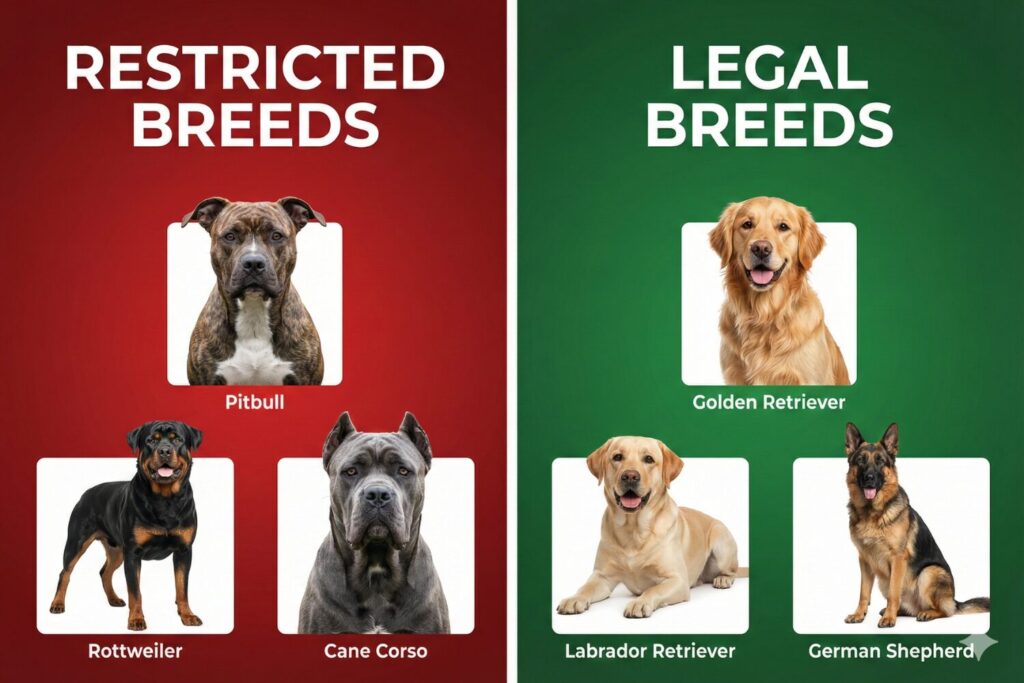
Several well-loved breeds in India are frequently – and incorrectly – confused with restricted breeds.
Is the German Shepherd Banned in India? No. The German Shepherd is not on the restricted list. German shepherds in Bangalore, Delhi, and across India are legally owned pets and serve in the Indian military and police. The German Shepherd breed is not banned in India. Indian army dog breeds include the German Shepherd prominently.
Is the Doberman Banned in India? No. The Doberman Pinscher is not banned. Dobermann India’s ownership is legal. Doberman dog price in India and Doberman dog price in Delhi remain active market queries precisely because the breed is popular and available. The black doberman and the European doberman are both legal. Indian doberman dog price and indian doberman puppy prices reflect a healthy, legal market. Is the Doberman banned in India? The answer is definitely no.
Is Husky Banned in India? No. Siberian huskies, including the black Siberian husky, the white Siberian husky puppy, and the all-white husky dog, are not banned. Is husky prohibited in India? It is a common misconception. Husky dog puppy price in India, Siberian husky cost, and how much does a husky cost in India are entirely valid purchase queries. A baby husky is legally available in India. Russian husky, husky toy types, black and white husky puppies, and pure husky dogs are all legal. However, huskies are not well-suited to India’s hot climate and require significant care.
Is the Tibetan Mastiff Banned in India? The Tibetan mastiff is on the advisory list for imported large mastiff types. Tibetan mastiff in India is a nuanced situation – the breed itself has some indigenous presence in Himalayan regions, but is restricted for commercial import and breeding.
Is the American Bully Banned in India? The American Bully is included in the restricted breeds advisory. Is the American Bully banned in India? It’s a frequently searched question, and the answer is yes – it falls under the pit bull-type restriction.
Wolf Dog Breeds: A Special Legal Category
Wolf dogs occupy a unique legal space. Animals that are part wild – including wolf hybrids, wolfdog hybrids, and wolfdogs – are regulated not only under dog laws but also, potentially, under the Wildlife Protection Act, 1972, in India. Keeping a pet wolf dog that has significant wolf content may constitute keeping a wild animal, which is illegal without appropriate permits.
The Saarloos Wolfdog and Czechoslovakian Wolfdog are recognised breeds in some countries, but in India, their wolf heritage places them in a grey legal zone. Wolfdog inquiries in India reflect buyer curiosity, but the legal risks are real, and ownership can invite regulatory action.
A timber wolf husky mix or wolf and husky mix may look similar to a pure Siberian husky, but carries different legal and behavioural implications. Large wolf dog breeds are generally not suitable for Indian domestic environments.
Rules and Regulations of Keeping a Dog in India (2026 Compliance Checklist)
Whether you own a golden retriever, a Labrador, or a restricted breed, these rules apply to all dog owners in India.
Municipal Registration
All dogs in India must be registered with their local municipal corporation. This applies to every breed – from a beagle to a bullmastiff.
Mandatory Vaccination
Anti-rabies vaccination is compulsory. A complete vaccination schedule covering distemper, parvovirus, hepatitis, and leptospirosis is standard practice and may be required for licensing in some municipalities.
Sterilisation Requirements
Several municipalities now mandate sterilisation of pets, particularly for restricted breeds. Check your local rules.
Leash and Muzzle Rules
In public spaces, dogs must be on leash. For large or powerful breeds – particularly those on the restricted list – muzzling in public is increasingly mandated or recommended.
Apartment/Society Rules
Many residential welfare associations (RWAs) in India have breed-specific bylaws. Even if your city does not ban a specific breed, your housing society may. Dogs and Indians not allowed signage – once a relic of colonial-era clubs – has been replaced by modern RWA notices specifically targeting large or restricted breeds.
Responsible Ownership Documentation
Keep vaccination records, registration certificates, and purchase documentation. If you own a restricted breed, having clear documentation of acquisition before the advisory came into effect may be relevant to your legal standing.
What If You Already Own a Restricted Breed?
If you currently own a pitbull, Rottweiler, cane corso, dogo argentino, or any other restricted breed, here is what the current advisories generally expect of you:
You are not required to surrender your dog immediately under the central advisory (as opposed to specific state orders). However, you must comply with all municipal registration requirements, ensure the dog is sterilised, never allow the dog unsupervised access to public spaces, use a leash and muzzle in common areas, and maintain current vaccination records.
If your state or municipality issues a specific breed ban order rather than an advisory, consult a legal professional. Some states have issued orders requiring that restricted breeds not be bred further – meaning your dog may be your last of that breed legally kept in that jurisdiction.
Rehoming is an option, but it must be done responsibly. Surrendering a restricted breed to a shelter or rescue is preferable to abandonment. Several breed-specific rescue groups in India accept rottweilers, pitbulls, and similar dogs.
Breeds That Thrive in India: Smart Alternatives
For prospective buyers seeking a legal, well-adapted companion, several breeds are excellent choices for Indian conditions.
The Labrador retriever – often spelled Labrador, Labrador, labra dog, or lab dog – remains the most popular dog breed in India for good reason. Labradors are adaptable, trainable, good with children, and widely available from responsible breeders.
The golden retriever is another exceptional choice. Golden retrievers (in all their variations) are patient, gentle, and remarkably well-suited to Indian family life when given adequate exercise and grooming. They are not on any restricted list.
The beagle and beagle dog are compact, friendly, and well-suited to apartment living. The beagle price in India and the beagle dog price in India reflect strong demand. A beagle puppy is manageable for first-time owners.
The Indian Spitz is an indigenous breed that adapts well to India’s climate. Local dog breeds in India and searches for dog breeds suitable for India consistently point to native and adapted breeds as wise choices.
The border collie is intelligent and energetic – ideal for active owners with space. The cocker spaniel and chihuahua are smaller-breed options suited to urban apartments.
The shih tzu, pug, and dachshund remain popular urban pets, though flat-faced breeds (shih tzu and pug) require extra care in India’s heat.
For those interested in large breeds that are not restricted, the Great Pyrenees, Irish Wolfhound, and Leonberger are options to explore with appropriate research. The bullmastiff – while significant – is not universally banned across all states, though buyers should check current local rules. Bullmastiff price in India and bullmastiff availability in India vary by region.
📌 Want to explore daily routines to keep your pet healthy and stress-free?
Read: Daily Pet Care Routine: Keeping Your Dog or Cat Happy & Healthy

Responsible Ownership and Preventive Health Care
Owning any dog in India – restricted breed or not – carries genuine responsibilities that go beyond legal compliance.
Large breeds, in particular, require structured nutritional support throughout their lives. High-growth puppies of breeds like rottweilers, labradors, and mastiffs are prone to skeletal issues if their calcium and phosphorus intake is not managed correctly. Brands like GenextPet offer calcium tablets explicitly formulated for Indian dogs, supporting healthy bone development in growing puppies and maintaining joint health in adults.
Digestive health is another frequently overlooked aspect of Indian dog ownership. Dietary changes, heat stress, and water quality can all disrupt gut flora, particularly in young or elderly dogs. GenextPet’s probiotics and digestive enzymes support stable digestion and nutrient absorption – important for large breeds that may be prone to bloat and gastric sensitivity.
Multivitamins and immunity support become especially relevant during India’s monsoon and summer seasons, when dogs are more susceptible to infections and heat-related stress. For puppies transitioning off maternal milk, weaning formulas that support early gut development can make a significant difference in long-term health outcomes.
Joint support becomes critical in heavy breeds – rottweilers, mastiffs, bullmastiffs – as they age. Preventive supplementation from middle age onward is far more effective than reactive treatment after degeneration has begun.
The principle here is straightforward: strong, responsible ownership includes proactive health management, not just meeting legal minimums.
-
Sale!

NEOCLEOTIDE® – Immune & Revital Support for Dogs & Cats | 100g Powder
Original price was: ₹405.₹379Current price is: ₹379.

-
Sale!
Glumaxx® – Advanced Joint Support for Dogs & Cats
Original price was: ₹1,440.₹1,339Current price is: ₹1,339.

Final Word: Legal Clarity, Responsible Ownership, and the Future of Dog Keeping in India
India’s approach to dangerous dog breeds is still evolving. The central advisory of 2024 and the state-level implementations that followed in 2025 and 2026 represent the most significant regulatory intervention in India’s pet industry in decades. The dog ban in India is not a definitive end state – it is the beginning of a more structured, accountable pet-ownership culture.
For prospective owners, the message is clear: choose a breed that is legal in your jurisdiction, suited to your lifestyle, and manageable with your experience level. A golden retriever or Labrador in a well-run home will bring more joy and safety to your family – and your neighbourhood – than a dogo argentino or cane corso in the wrong hands.
For existing owners of restricted breeds, compliance is not optional. Register your dog. Vaccinate. Sterilise if required. Use a leash and muzzle in public. Be the owner your dog deserves and your community needs.
For all dog owners, invest in your animal’s long-term health. Preventive care – proper nutrition, joint support, probiotics, and regular veterinary oversight – is not a luxury. It is the baseline of responsible ownership in 2026.
India loves dogs. The legal framework now requires this love to be expressed responsibly.
This article is intended for informational purposes only and does not constitute legal advice. Dog ownership laws in India are subject to change and vary significantly by state and municipality. Always consult your local municipal authority and a qualified legal professional for guidance specific to your situation.
FAQ: Dog Breeds Banned in India (2026)
Which dogs are banned in India in 2026?
The central government advisory lists 23 breeds, including pitbull terrier, Rottweiler, American Staffordshire terrier, Dogo argentino, Cane corso, fila brasileiro, boerboel, Kangal dog, tosa inu, wolf hybrid, bandog, and others. Enforcement varies by state.
Is a pitbull banned in India?
Yes, the American Pit Bull Terrier is included in the central advisory for restricted breeds. Several states have acted on pit bull ban notifications. Existing owners must comply with local registration and safety rules.
Is the Rottweiler banned in India?
Rottweilers are included in the central advisory. Whether Rottweiler bans in India vary by state implementation. Some states and housing societies have specific bans; others require registration and compliance measures.
Is the Doberman banned in India?
No. The Doberman Pinscher is not on the restricted list. Doberman ownership in India is legal. Is the Doberman prohibited in India? The answer is no.
Is the German Shepherd banned in India?
No. German Shepherd is allowed. German Shepherd in Bangalore and across India is a legal, popular breed. The idea that German Shepherds are banned in India is a common misconception.
Is husky banned in India?
No. Siberian huskies are not on the restricted list. The claim that huskies are prohibited in India is false. However, huskies require special care in India’s climate.
Is the American Bully banned in India?
Yes. The American Bully falls under the pit bull-type restriction in the central advisory.
Is the Tibetan Mastiff banned in India?
The Tibetan mastiff is on the restricted list for import and commercial breeding. Whether Tibetan mastiffs are banned in India for existing pets depends on your state’s specific notification.
Is the dogo argentino dangerous?
The dogo argentino has a high prey drive and significant strength. Are dogo argentinos hazardous in inexperienced hands? Yes. They require experienced ownership and are on India’s restricted list.
Can I keep a cane corso in India?
The cane corso is on the central advisory committee’s restricted list. In India, ownership of existing animals is subject to local enforcement. Purchasing new puppies commercially is not advisable, given the advisory.
What is the most dangerous dog in India?
No single breed holds this title definitively. Most dangerous dog in India, based on media-reported incidents, often points to pitbulls and rottweilers. Still, comprehensive data is lacking, and stray dogs account for far more total incidents.
Are wolfdog hybrids legal in India?
Wolf hybrids and wolfdog hybrids are restricted under the central advisory and may also fall under wildlife protection law. Wolf hybrid ownership in India carries significant legal risk.
What dogs are suitable for India?
Dog breeds suitable for India include Labrador retrievers, golden retrievers, beagles, Indian spitz, border collies, and other breeds adapted to the climate. Local dog breeds in India are naturally well-suited to the environment.
Is the Kangal dog banned in India?
Yes. The kangal dog is on the restricted list. Turkish Kangal dog ownership is not advisable under the current advisory. The price of a Kangal dog in India is mainly academic, given the restrictions.
Can I own a boerboel in India?
Boerboel is on the restricted list. In India, ownership of existing animals depends on local enforcement. New purchases and breeding are not advisable.
What are the rules for dog owners in India?
Rules and regulations of keeping a dog in India include mandatory municipal registration, anti-rabies vaccination, leash requirements in public, and increasingly, sterilisation mandates. Rules for dog owners in India are enforced at the state and municipal levels.
Is the bandog banned in India?
Yes, the bandog is on the restricted list. Bandog in India is rare but included in the advisory.
Is a Brazilian fila banned in India?
Yes. Fila brasileiro is on the restricted list. The Fila brasileiro price in India is moot, mainly due to restrictions.
Is the Presa Canario banned in India?
Yes. Presa canario is included in the restricted breed advisory.
Is it legal to keep a pitbull in India if I already have one?
Existing pitbull owners are generally not required to surrender their dogs under the central advisory, but must comply with all local registration, vaccination, sterilisation, and public safety requirements. Whether it is legal to keep a pitbull in India depends on the laws of your specific state. Consult your municipal authority.
What is the difference between a banned breed and a restricted breed in India?
In the Indian context, “banned” is colloquially used for breeds on the central advisory, but technically the advisory recommends restriction of import, sale, and breeding rather than outright criminalising ownership. Dog restrictions vary by state implementation.
Are any mastiff breeds allowed in India?
Several mastiff types are on the restricted list, including cane corso, boerboel, fila brasileiro, and others. The bullmastiff, while significant, is not universally restricted – check local rules. All mastiffs require experienced ownership and considerable space.
Why is the pitbull banned in India?
The pitbull’s inclusion on the restricted list reflects its involvement in severe attacks in India and internationally, its physical power, and concerns about irresponsible breeding practices by opportunistic sellers. The ban on pitbulls in India also relates to limitations in public health infrastructure.