
Digestive issues are among the most common health concerns dog owners face in India. From bloating and gas to constipation and sensitive stomachs, these problems cause discomfort and signal underlying health concerns.
Whether your dog is young or aging, on home-cooked meals or commercial food, it’s essential to understand the causes and management strategies for canine digestion problems – before they turn serious.
In this guide, we break down the most common digestive problems in dogs, how to identify the signs early, and what you can do to help your pet feel better – naturally and safely.
What Causes Digestive Problems in Dogs?
The digestive system of a dog is sensitive and can be easily thrown off balance by many factors:
- Sudden changes in diet
- Low-quality or contaminated food
- Eating human table scraps or garbage
- Bacterial infections
- Worm infestations
- Food intolerances (like lactose or grains)
- Overuse of antibiotics
- Stress, travel, or separation anxiety
In India, digestive issues often spike during monsoons and extreme summers, when humidity and spoiled food increase infection risks.
Most Common Digestive Issues in Dogs (and How to Recognize Them)
Let’s explore the top gut problems pet parents commonly face:
1. Dog Bloating (Abdominal Swelling)
Symptoms: Swollen belly, restlessness, heavy panting, trying to vomit, but nothing comes out.
Risks: Bloating can be a symptom of gastric dilatation-volvulus (GDV), a medical emergency.
Management:
- Avoid overfeeding or letting dogs gulp food too fast.
- Don’t allow intense exercise immediately after meals.
- Use slow-feeder bowls or split meals.
- Consult a vet if bloating is severe or recurring.
2. Gas and Flatulence
Symptoms: Frequent farting, gurgling stomach, occasional belching.
Common Causes: Swallowed air, poor-quality food, or fermentable ingredients like soy or dairy.
Management:
- Switch to a more digestible, grain-free diet.
- Avoid spicy human food leftovers.
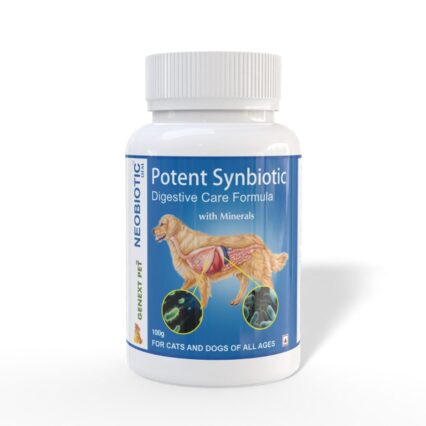
- Use supplements that contain probiotics and digestive enzymes like Neobiotic DFM to reduce gas buildup.
3. Constipation in Dogs
Symptoms: Straining during defecation, passing dry or hard stools, and infrequent bowel movements.
Causes: Low fiber, dehydration, lack of exercise, or ingesting hair/bones.
Management:
- Add natural fiber sources (pumpkin, psyllium husk).
- Ensure your dog drinks enough water.
- Daily walks help stimulate digestion.
- Probiotic blends may ease constipation naturally.
4. Diarrhea or Loose Motions
Symptoms: Runny or watery stool, defecation urgency, and possible vomiting.
Triggers: Infections, bad food, sudden dietary changes, parasites.
Management:
- Withhold food for 12–24 hours (water only).
- Slowly reintroduce bland meals like boiled rice and chicken.
- Administer vet-recommended probiotics to restore gut flora.
- Deworm regularly to rule out parasites.
5. Vomiting
Symptoms: Throwing up undigested food or bile.
It can be caused by: Indigestion, toxins, infections, or eating too fast.
Management:
- Small, frequent meals.
- Avoid abrupt diet switches.
- Use probiotic-enriched food toppers for gut support.
- Consult a vet if vomiting is frequent or bloody.
When Is It a Sensitive Stomach?
Some dogs are more prone to digestive distress due to breed, genetics, or past health issues.
Breeds like Beagles, Labradors, and Shih Tzus are known for having sensitive stomachs.
Symptoms include:
- Occasional vomiting
- Frequent gas
- Diarrhea after food changes
- Picky appetite
Tips for managing sensitive stomachs:
- Stick to consistent, digestible diets
- Introduce new food slowly over 5–7 days.
- Use gut-supportive supplements with probiotics, prebiotics, and enzymes like Neobiotic DFM.
Vet-Approved Ways to Improve Your Dog’s Digestive Health
Healthy digestion isn’t just about preventing problems but building gut resilience. Here’s what vets recommend for long-term management:
Daily Gut Support
Use a probiotic supplement designed for dogs. Look for:
- Multiple strains (Lactobacillus, Bifidobacterium, etc.)
- Prebiotics like MOS feed good bacteria.
- Digestive enzymes break down proteins, fats, and carbs.
Neobiotic DFM offers all three – making it a complete gut health solution for dogs and cats.
High-Fiber Additions
Fiber helps regulate stool and supports colon health. Add:
- Pumpkin
- Sweet potato
- Oats (in moderation)
Hydration & Exercise
Water keeps the digestive tract moving. Regular walks stimulate bowel activity.
Stress Management
Keep your pet’s routine stable. Changes in environment, loud noises, or loneliness can trigger digestive upsets.
Summary: How to Keep Digestive Troubles at Bay
Digestive problems in dogs can often be prevented with the proper diet, routine, and supportive supplements.
If your dog shows recurring signs of gas, constipation, bloating, or vomiting, don’t ignore them – early care goes a long way.
By building a healthy gut, you’re not just supporting digestion but boosting your dog’s immunity, energy, and overall well-being.
FAQs
What causes frequent gas in dogs?
Dogs often get gas from poor digestion, gulping food, or eating fermentable ingredients. Probiotics and slow feeders can help.
How do I know if my dog is constipated?
If your dog is straining, passing hard stools, or hasn’t pooped in over 2 days, it may be constipated.
Is it safe to give human curd for digestion?
Curd is okay occasionally, but it lacks multi-strain probiotics. Pet-specific supplements are safer and more effective.
Can I use home remedies for dog diarrhea?
Yes, bland foods like boiled rice and chicken, along with probiotics, help. But if symptoms persist over 24 hours, consult a vet.
Which GenextPet supplement is good for digestion?
Neobiotic DFM is formulated with probiotics, prebiotics, enzymes, and zinc, a comprehensive gut support for dogs and cats.
How long does it take for digestion to improve with supplements?
Mild improvements may be seen within 3–5 days. For long-term gut health, consistency is key.
About Author
Dr. Kevin Modi
Dr. Kevin Modi is a trusted voice in the Indian pet care space, with years of hands-on experience in pet wellness, gut health, and natural supplements. At GenextPet, he guides product formulation and ensures content accuracy, drawing from real-world insights and the latest research. His goal? To simplify pet health for every dog and cat parent.