
Your dog’s joints are aging faster than you think — and by the time you notice the limp, the damage is already well underway.
Joint problems are one of the most common health issues in Indian dogs, especially in breeds like Labradors, Golden Retrievers, German Shepherds, and Rottweilers that dominate Indian households. These breeds carry a genetic predisposition for hip dysplasia, elbow dysplasia, and progressive cartilage loss — problems that are made worse by India’s hard marble and tile floors, limited outdoor exercise space in apartments, and a climate that discourages long walks during peak summer months.
Glucosamine is the most researched and recommended supplement for canine joint health. But here’s what most guides don’t tell you: glucosamine alone isn’t enough. Joint problems involve cartilage loss, inflammation, poor lubrication, and oxidative damage — and glucosamine addresses only one of these four.
What your dog actually needs is a complete joint-support system.
This guide covers everything: how glucosamine works, how much to give based on your dog’s weight, natural dietary sources available in India, what makes a basic glucosamine supplement different from a complete joint formula, and how to choose the right one for your dog’s breed and condition.
What Is Glucosamine and How Does It Work?
Glucosamine is a naturally occurring amino sugar found in your dog’s cartilage — the firm, rubbery tissue that cushions the joints and prevents bones from grinding against each other.
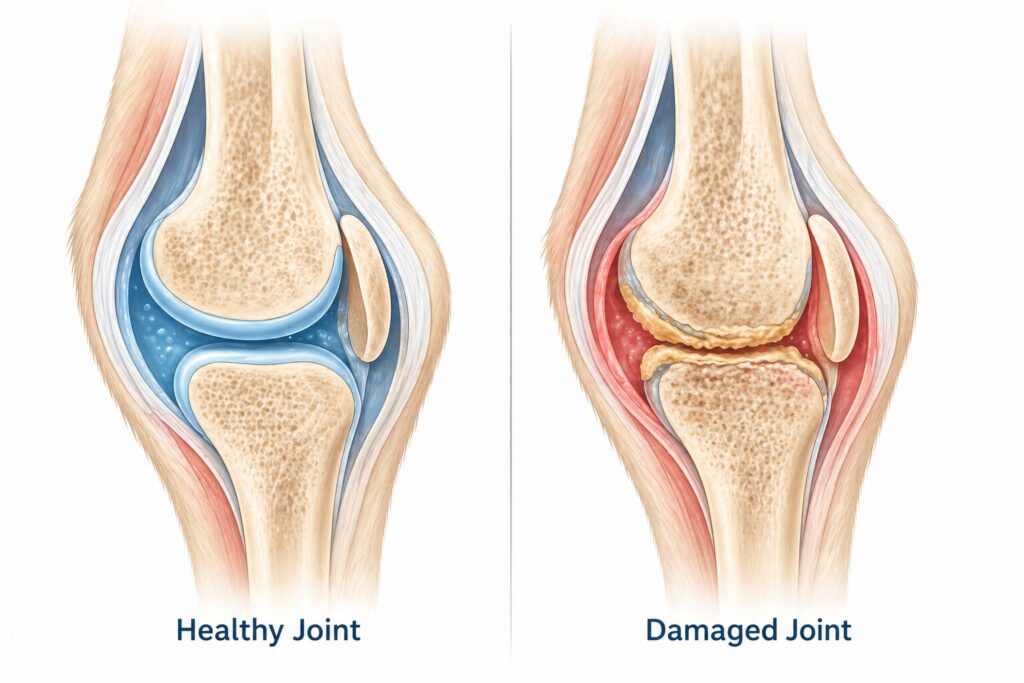
Think of cartilage as a sponge between two bones. When your dog is young, this sponge is thick, hydrated, and springy — absorbing shock with every step, jump, and run. Glucosamine is the raw material that keeps this sponge thick and functional. It stimulates the production of glycosaminoglycans (GAGs) and proteoglycans — the building blocks that give cartilage its structure and water-retaining ability.
As dogs age, their body produces less glucosamine naturally. The sponge starts to dry out, thin, and lose its shock-absorbing capacity. Eventually, bones begin to contact each other directly — causing pain, inflammation, stiffness, and the progressive condition we call osteoarthritis.
Supplementing glucosamine from external sources helps slow this degeneration by providing the raw material the body needs to maintain and repair cartilage.
An important note on forms: Glucosamine comes in two main forms — Glucosamine Hydrochloride (HCl) and Glucosamine Sulfate. Glucosamine HCl is more concentrated (approximately 99% pure glucosamine) and doesn’t require stabilisation with sodium or potassium chloride. Glucosamine Sulfate is slightly less concentrated and often contains added salts. For dogs, Glucosamine HCl is generally preferred because it delivers more glucosamine per milligram.
Signs Your Dog Needs Joint Support
Joint degeneration begins silently — most cartilage damage happens 1–2 years before any visible symptoms appear. By the time your dog starts limping, up to 60% of the cartilage in the affected joint may already be worn down.
Here are the warning signs every Indian pet parent should watch for:
Classic Signs:
- Limping or favouring one leg, especially after rest or sleep
- Difficulty climbing stairs or jumping onto the couch or bed
- Stiffness that’s worse in the morning but improves after moving around
- Hesitation or reluctance during walks or playtime
- Audible joint clicking or popping sounds
- Slower recovery after physical activity — takes longer to “bounce back”
- Behavioural changes — irritability when touched around hips or joints
India-Specific Signs:
- Slipping on marble or tile floors — this is extremely common in Indian homes. Smooth flooring provides no traction, forcing dogs to constantly strain their joints to maintain balance. If your dog has started avoiding tiled rooms or walking very cautiously on marble, it may be a joint issue, not a “habit”
- Reluctance to walk in summer heat — heat amplifies joint discomfort. Dogs with early joint problems often refuse walks during Indian summers not because of the heat alone, but because heat plus joint pain creates double discomfort
- Weight gain in apartment dogs — limited exercise space in Indian apartments leads to reduced activity, which causes weight gain, which increases joint load, which worsens joint problems. It’s a vicious cycle
Breed-Specific Advice for India: If you have a Labrador, Golden Retriever, German Shepherd, Rottweiler, or Doberman — don’t wait for symptoms. These breeds are genetically predisposed to joint problems. Start preventive joint support by age 4–5 years, before damage becomes visible.

Also Read: Best Dog Breeds for Indian Families (2026): Complete Guide
Glucosamine Dosage for Dogs (By Weight)
| Dog Weight | Daily Glucosamine HCl Dosage (Preventive) | Daily Dosage (Active Joint Issues) |
|---|---|---|
| Under 10 kg | 250–500 mg | 500 mg |
| 10–20 kg | 500–750 mg | 750–1000 mg |
| 20–30 kg | 750–1000 mg | 1000–1500 mg |
| 30+ kg | 1000–1500 mg | 1500–2000 mg |
Important: Always consult your veterinarian before starting supplements, especially if your dog has existing health conditions, is on medication, or is scheduled for surgery.
Scenario-Based Dosing Guide
Preventive Use (No symptoms yet, but high-risk breed): Standard dose daily. Begin by age 4–5 for large breeds. This is the most cost-effective approach — preventing cartilage loss is far cheaper than treating established arthritis.
Early Signs (Occasional stiffness, slight hesitation on stairs): Standard dose with a joint supplement that combines glucosamine with chondroitin and an anti-inflammatory like curcumin or Boswellia. Single-ingredient glucosamine may not be sufficient at this stage.
Active Arthritis or Hip Dysplasia: Higher end of dosage range, ideally with a complete joint formula that includes cartilage repair agents, anti-inflammatories, joint lubricants, and antioxidants. Consult your vet for personalised dosing.
Post-Surgery Recovery (ACL repair, hip surgery): Vet-guided dosage, typically at the higher range. Joint supplements support recovery but do not replace veterinary rehabilitation protocols.
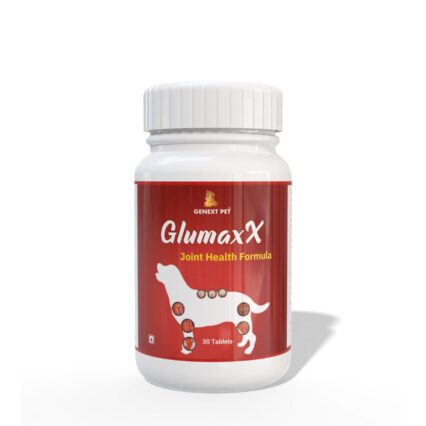
Glumaxx Joint Support by GenextPet provides 500mg Glucosamine HCl per tablet — making dosage calculation straightforward: 1 tablet for dogs under 20kg, 2 tablets for larger dogs, adjusted based on condition severity and veterinary guidance.
Natural Sources of Glucosamine for Dogs
If you want to support your dog’s joints through diet alongside supplementation, these natural sources provide glucosamine and related joint-supporting compounds:
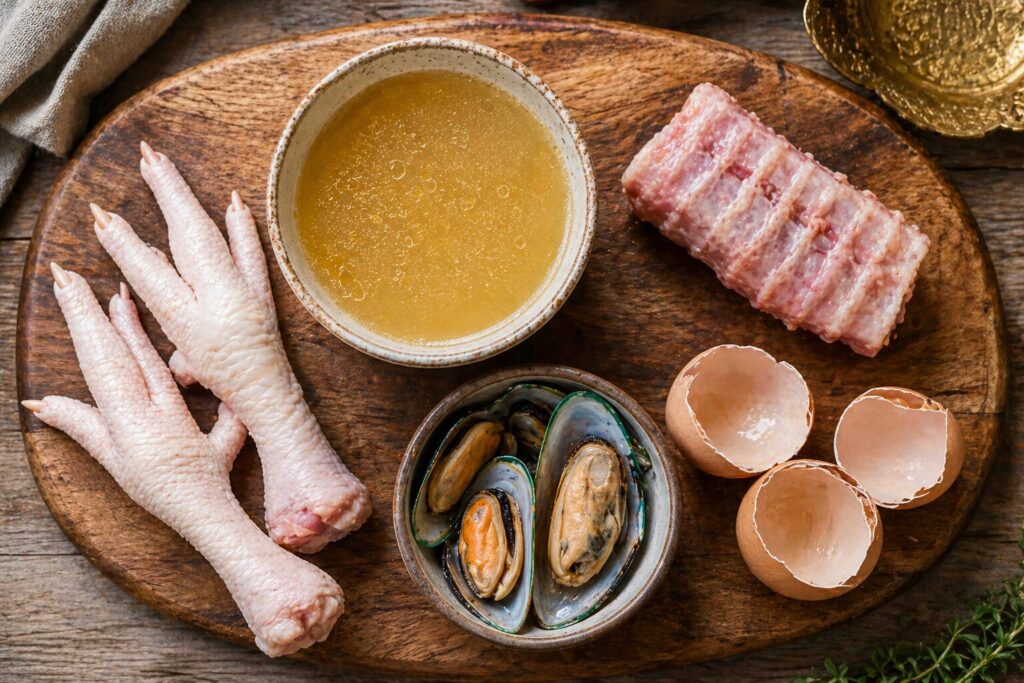
Chicken Feet — One of the richest natural sources of glucosamine and collagen. Easily available at Indian butcher shops for ₹30–50/kg. Can be given raw or slow-cooked. 2–3 chicken feet per day for a medium-sized dog provides meaningful supplemental glucosamine.
Bone Broth — Rich in glucosamine, chondroitin, collagen, and amino acids. Indian pet parents can make this easily: put chicken bones or goat bones in a pressure cooker with water and a splash of apple cider vinegar (helps extract minerals). Cook for 2–3 hours. Strain and cool. Add to your dog’s regular food.
Beef or Goat Trachea — Contains cartilage that’s naturally rich in glucosamine and chondroitin. Available at select butcher shops. Can be given as a chew or slow-cooked.
Green-Lipped Mussels — A natural anti-inflammatory and glucosamine source. Less commonly available in India but found in some specialty pet stores and online.
Eggshell Membrane — The thin membrane lining inside egg shells contains natural glucosamine, collagen, and hyaluronic acid. Available essentially free in every Indian household. Peel the membrane from inside the shell, dry it, and crumble it into food.
A Practical Note: While these natural sources are valuable, they typically don’t provide a therapeutic dose — the concentrated amount needed to actually repair damaged cartilage or reduce established inflammation. For dogs already showing joint issues, natural sources supplement treatment. They don’t replace a clinical-grade joint formula.
Also Read: Probiotics for Dogs with Diarrhea: Complete Guide — gut health improves nutrient absorption from joint supplements
Why Glucosamine Alone Isn’t Enough
This is where most joint care guides — and most basic joint supplements — fall short.
Joint problems in dogs aren’t caused by one thing, and they can’t be fixed by one ingredient. There are four distinct mechanisms at work in joint degeneration:
1. Cartilage Loss — The protective cushion between bones wears away. Fixed by: Glucosamine HCl + Chondroitin Sulfate + Type II Collagen
2. Chronic Inflammation — Damaged joints trigger inflammatory responses that cause pain, swelling, and further cartilage destruction. Inflammation doesn’t just result from joint damage — it accelerates it. Fixed by: Curcumin + Boswellia Serrata + Harpagophytum (Devil’s Claw) + Omega-3 fatty acids
3. Poor Lubrication — Synovial fluid (the lubricant inside joints) loses its viscosity with age. Without proper lubrication, even repaired cartilage wears down faster. Fixed by: Hyaluronic Acid — the primary component of synovial fluid
4. Oxidative Damage — Free radicals attack joint tissue, accelerating the aging and breakdown process. Fixed by: Vitamin C + Vitamin E + Selenium — antioxidants that protect joint tissue from oxidative stress
A glucosamine-only supplement addresses Problem 1 partially. Problems 2, 3, and 4 continue unchecked. This is like fixing a flat tyre while ignoring that the axle is bent, the oil is dry, and the engine is overheating.
The real question isn’t “should I give my dog glucosamine?” — the answer to that is almost always yes.
The real question is: “Am I giving a COMPLETE joint formula that addresses all four mechanisms?”
Glumaxx Joint Support: Full 14-Ingredient Composition
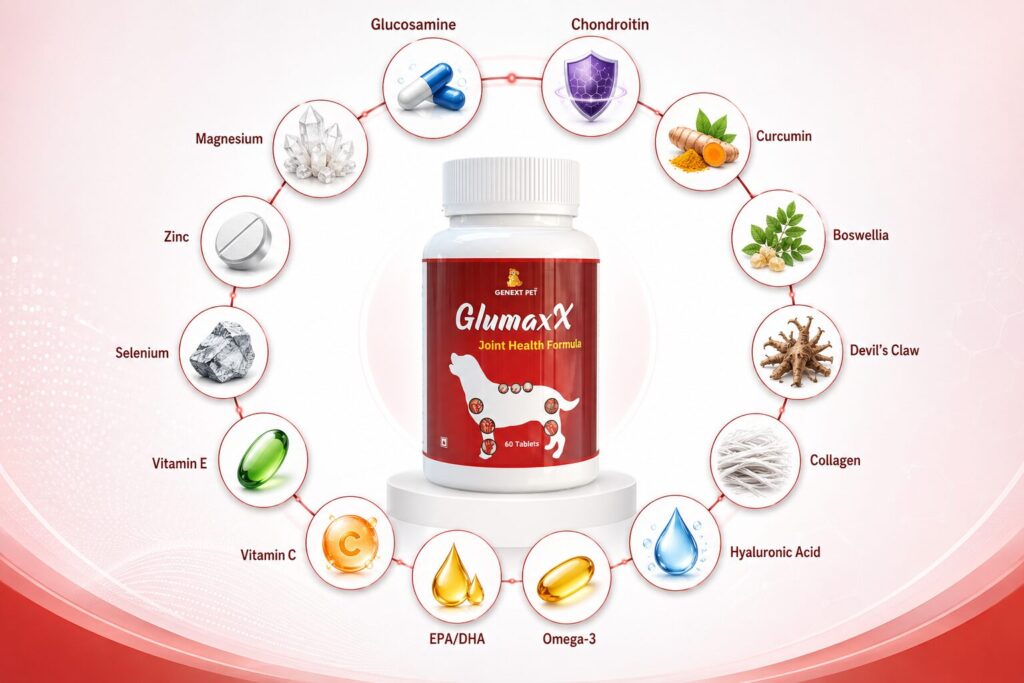
Glumaxx by GenextPet isn’t a glucosamine supplement. It’s a complete joint-support system that addresses all four mechanisms of joint degeneration in a single tablet.
Here’s exactly what’s inside — and why each ingredient matters:
Layer 1: Cartilage Repair
| Ingredient | Amount | Function |
|---|---|---|
| Glucosamine Hydrochloride | 500 mg | The primary building block for cartilage. HCl form for maximum absorption. Stimulates GAG and proteoglycan production. |
| Chondroitin Sulfate | 400 mg | Works synergistically with glucosamine. Prevents enzymatic breakdown of existing cartilage. Attracts water into cartilage tissue, keeping it hydrated and resilient. |
| Type II Collagen | 15 mg | The structural protein that gives cartilage its tensile strength. Provides the “framework” that glucosamine and chondroitin build upon. |
Layer 2: Anti-Inflammatory (Triple Herbal Action)
| Ingredient | Amount | Function |
|---|---|---|
| Harpagophytum Procumbens (Devil’s Claw) | 150 mg | A European herbal anti-inflammatory used for centuries in traditional medicine. Clinically studied for joint pain and stiffness reduction. |
| Boswellia Serrata Extract | 50 mg | Indian frankincense — an Ayurvedic anti-inflammatory. Inhibits 5-lipoxygenase, an enzyme that drives joint inflammation. |
| Curcuma Longa (Curcumin) | 50 mg | Turmeric extract. One of the most researched natural anti-inflammatories. Reduces NF-kB activation — a key driver of chronic joint inflammation. |
| Omega-3 Fatty Acids | 150 mg | Anti-inflammatory fatty acids that reduce joint swelling and pain. Most joint supplements don’t include Omega-3 — usually sold as a separate fish oil product. |
| EPA | 21 mg | Eicosapentaenoic acid — specific Omega-3 that targets inflammatory pathways in joint tissue. |
| DHA | 40 mg | Docosahexaenoic acid — supports overall anti-inflammatory response and cell membrane health. |
Layer 3: Joint Lubrication
| Ingredient | Amount | Function |
|---|---|---|
| Hyaluronic Acid | 70 mg | The primary component of synovial fluid — the lubricant inside joints. 70mg is a significantly higher dose than what most supplements offer (many include less than 10mg or skip it entirely). Reduces bone-on-bone friction. |
Layer 4: Antioxidant Protection
| Ingredient | Amount | Function |
|---|---|---|
| Vitamin C (Ascorbic Acid) | 35 mg | Essential for collagen synthesis. Also a potent antioxidant that protects joint tissue from free radical damage. |
| Vitamin E | 20 IU | Fat-soluble antioxidant. Protects cell membranes in joint tissue from oxidative damage. |
| Selenium | 10 mg | Trace mineral with powerful antioxidant properties. Works synergistically with Vitamin E. Supports the body’s natural anti-inflammatory response. |
| Zinc | 10 mg | Supports tissue repair and immune function. Plays a role in collagen synthesis and wound healing. |
| Magnesium Sulphate | 5 mg | Supports muscle relaxation around joints. Helps reduce muscle tension and cramping that often accompanies joint problems. |
Three Things No Other Joint Supplement in India Offers in One Tablet
1. TRIPLE Herbal Anti-Inflammatory — Curcumin + Boswellia + Devil’s Claw. Most supplements include one at best (usually just curcumin or just Boswellia). Glumaxx includes all three — each targeting different inflammatory pathways for comprehensive relief.
2. Hyaluronic Acid at 70mg — Most joint supplements in India either skip Hyaluronic Acid entirely or include token amounts below 10mg. At 70mg, Glumaxx provides a meaningful dose for actual joint lubrication improvement.
3. Omega-3 (150mg) Inside a Joint Supplement — Typically, pet parents need to buy a separate fish oil product for Omega-3 support. Glumaxx includes EPA and DHA directly in the joint formula — one less product to buy and administer.
14 active ingredients. 4 layers of joint support. One tablet per day.
-
Sale!

Glumaxx® – Advanced Joint Support for Dogs & Cats
Original price was: ₹1,440.₹1,339Current price is: ₹1,339.
How to Choose a Joint Supplement: 7-Point Checklist
Before buying any joint supplement for your dog, check the label for these seven criteria. A product that meets all seven is providing complete joint support. Anything less is a partial solution.
1. Glucosamine HCl (not Sulfate) — HCl is more concentrated and better absorbed. Check the form, not just the name.
2. Chondroitin Sulfate — Must be paired with glucosamine. They work synergistically — glucosamine builds new cartilage, chondroitin prevents breakdown of existing cartilage.
3. At Least One Herbal Anti-Inflammatory — Boswellia, Curcumin, or Harpagophytum. Without anti-inflammatory support, you’re rebuilding cartilage while inflammation continues destroying it.
4. Hyaluronic Acid — The most overlooked joint ingredient. Without it, even repaired cartilage wears down faster due to poor lubrication.
5. Omega-3 / EPA / DHA — Additional anti-inflammatory and joint-membrane support. If it’s not in the joint supplement, you’ll need to buy a separate fish oil product.
6. Collagen (Type II specifically) — Provides structural framework for cartilage. Without it, glucosamine and chondroitin have less to build upon.
7. Antioxidants (Vitamin C, Vitamin E, Selenium) — Protect repaired joint tissue from free radical damage. Without antioxidant support, new cartilage is vulnerable to the same oxidative stress that damaged the old cartilage.
Count how many of these your current joint supplement has. If it’s fewer than five, your dog is getting incomplete joint support — you’re addressing some problems while leaving others unchecked.
Glumaxx checks all seven.
Complete Joint Formula vs Basic Glucosamine Supplement
When shopping for joint supplements, you’ll find a wide price range — from ₹400 to ₹2,600+. The difference isn’t just branding. It’s what’s inside.
| Feature | Complete Joint Formula | Basic Glucosamine Supplement |
|---|---|---|
| Active ingredients | 10–14 | 3–5 |
| Cartilage repair | Glucosamine + Chondroitin + Collagen | Glucosamine only (or + Chondroitin) |
| Anti-inflammatory | Multiple herbals (Curcumin + Boswellia + Devil’s Claw) | None, or single ingredient |
| Joint lubrication | Hyaluronic Acid (50–70mg) | Usually absent |
| Omega-3 included | Yes (EPA + DHA) | No — need separate fish oil |
| Antioxidant protection | Vitamin C + E + Selenium | Minimal or none |
| Price per bottle | ₹2,000–2,600 | ₹400–1,000 |
| Additional products needed | None — all-in-one | Fish oil (₹500-800) + anti-inflammatory (₹400-600) |
| Effective monthly cost | ₹2,000–2,600 | ₹1,300–2,400 (bottle + extras) |
The bottom line: A basic supplement looks cheaper per bottle — but to get equivalent coverage, you often need 2–3 separate products (glucosamine + fish oil + anti-inflammatory). When you add up the total monthly cost, a complete formula frequently costs the same or less — while being simpler to administer (one product vs three).
Breed-Wise Joint Risk Guide for Indian Dogs
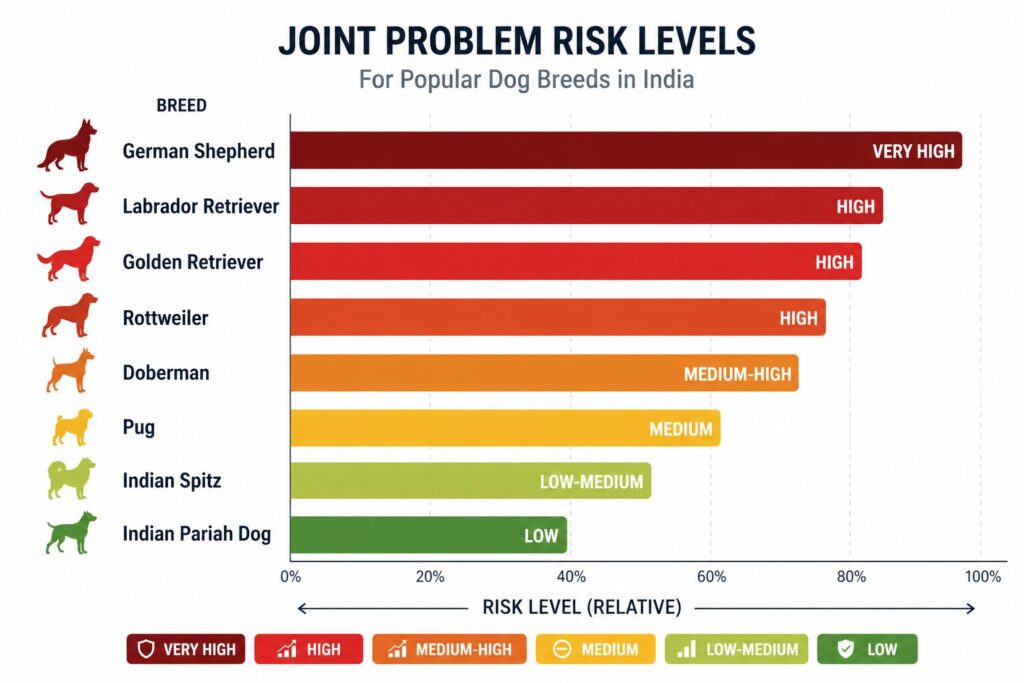
Not all dogs face the same joint risks. Here’s a breed-specific guide for the most popular breeds in India — including when to start preventive joint support:
| Breed | Joint Risk Level | Common Issues | When to Start Glucosamine |
|---|---|---|---|
| German Shepherd | 🔴 VERY HIGH | Hip dysplasia (genetic), degenerative myelopathy | Age 3–4 years |
| Labrador Retriever | 🔴 HIGH | Hip dysplasia, obesity-related joint stress, elbow dysplasia | Age 4–5 years |
| Golden Retriever | 🔴 HIGH | Hip + elbow dysplasia, cruciate ligament issues | Age 4–5 years |
| Rottweiler | 🔴 HIGH | Weight-related joint stress, osteochondritis | Age 3–4 years |
| Doberman | 🟠 MEDIUM-HIGH | Active breed, joint wear from high activity | Age 5 years |
| Pug | 🟡 MEDIUM | Patellar luxation (kneecap displacement) | Age 4–5 years (monitor) |
| Beagle | 🟡 MEDIUM | Intervertebral disc disease, moderate joint wear | Age 6 years |
| Indian Spitz | 🟢 LOW-MEDIUM | Generally healthy joints, age-related wear | Age 7 years |
| Indian Pariah Dog | 🟢 LOW | Naturally robust joint structure, age-related only | Age 8+ years |
A Note on Indian Flooring: Indian homes predominantly use marble, granite, or vitrified tile flooring — all extremely smooth and hard surfaces. Large breed dogs living on these surfaces experience significantly more joint stress than dogs on carpet or wooden floors. If you have a large breed dog on hard Indian flooring, consider starting joint support 1 year earlier than the ages listed above.
Also Read: Dog Breeds Banned in India: Full Legal Guide — includes Rottweiler and Doberman breed information
Don’t Forget the Bones: Why Joint Support Needs Bone Support
Joints don’t exist in isolation — they depend on the bones they connect. If the bones underneath are weak or poorly mineralised, even perfect cartilage won’t prevent skeletal problems.
This is especially important for:
- Growing puppies and adolescent dogs (rapid bone development)
- Pregnant and lactating dogs (calcium depletion)
- Senior dogs (bone density loss with age)
- Large breeds on Indian flooring (constant joint and bone stress)
GenextPet CAL provides the bone-support complement to Glumaxx’s joint protection:
- Chelated Calcium 450mg — chelated form absorbs 2–3x better than regular calcium carbonate
- Phosphorus 270mg — optimised Ca:P ratio for actual bone mineralisation
- Vitamin D3 2500 IU — ensures calcium deposits into bones rather than soft tissues (most competitors use 200–500 IU)
- Zinc 30mg — therapeutic dose for bone cell activity and immune support
Glumaxx protects the joints. CAL strengthens the bones underneath. Together, they provide complete skeletal support.
Joint + Bone Combo: Glumaxx + GenextPet CAL = comprehensive skeletal protection for your dog.
How Long Until You See Results?
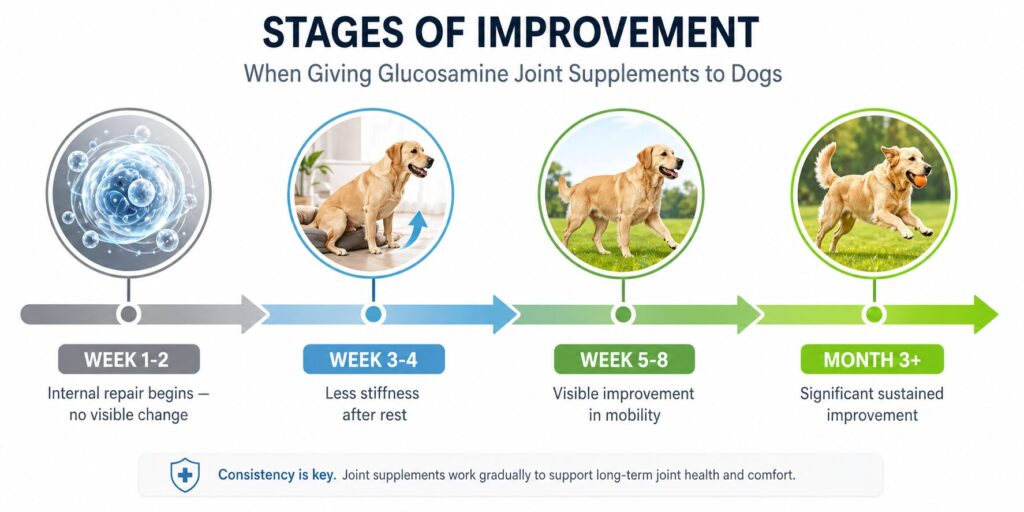
Joint supplements are not painkillers — they don’t provide instant relief. They work by rebuilding and protecting joint tissue over time. Setting realistic expectations helps you stay consistent long enough for the supplement to actually work.
Week 1–2: Internal Repair Phase Glucosamine and chondroitin begin stimulating cartilage repair at the cellular level. Anti-inflammatory ingredients start reducing joint inflammation. No visible improvement yet — this is normal and expected.
Week 3–4: Early Signs Subtle improvements: your dog may be slightly less stiff after waking up, slightly more willing to go for walks. These changes can be easy to miss — pay attention to morning behaviour.
Week 5–8: Visible Improvement Most dogs show noticeable improvement by this point: better mobility, easier stair climbing, more interest in play, less reluctance during walks. The combination of reduced inflammation and early cartilage repair creates compounding benefits.
Month 3+: Sustained Results Consistent, significant improvement. Cartilage repair is an ongoing process — continued daily supplementation maintains the gains. Most vets recommend long-term or permanent supplementation for dogs with established joint issues.
If no improvement after 8 weeks of consistent daily use, consult your veterinarian. The issue may require medical intervention — X-rays, anti-inflammatory medication, physiotherapy, or in severe cases, surgical options — beyond what supplementation alone can address.
Side Effects: What to Expect
Glucosamine and joint supplements are generally very safe and well-tolerated by dogs. Rare side effects, when they occur, are typically mild and temporary:
- Mild digestive upset (soft stool or gas) during the first week — usually resolves as the body adjusts
- Slight appetite changes — more common when given on an empty stomach. Always give with food
- Allergic reactions — extremely rare. If you notice facial swelling, hives, or breathing difficulty, stop immediately and contact your vet
Glucosamine is not recommended for dogs with known shellfish allergies (most glucosamine is derived from crustacean shells), dogs on blood-thinning medications (glucosamine may have mild anticoagulant effects — consult your vet), and diabetic dogs (glucosamine is an amino sugar — monitor blood sugar levels).
Also Read: Post Surgery Care for Dogs: Nutrition & Recovery Tips
Final Word
Joint health isn’t something you address when the limp appears — by then, the damage has a significant head start. The most effective approach is preventive: start joint support early, choose a complete formula over a single ingredient, and maintain consistency.
Glucosamine is the foundation. But a foundation alone doesn’t build a house. Your dog’s joints need cartilage repair, inflammation control, proper lubrication, and oxidative protection — all working together, every day.
Glumaxx Joint Support delivers all four in a single daily tablet: 14 active ingredients including the only triple herbal anti-inflammatory combination, 70mg Hyaluronic Acid, and built-in Omega-3 — so you don’t need three separate bottles to give your dog what one complete formula provides.
Start with the right formula. Start before symptoms demand it. Your dog’s joints will thank you.
Also Read: How to Boost Your Dog’s Immune System Naturally
FAQ
What is the best joint supplement for dogs in India?
The best joint supplement should cover all four mechanisms of joint health: cartilage repair (glucosamine + chondroitin + collagen), anti-inflammatory action (herbal compounds like curcumin and Boswellia), joint lubrication (hyaluronic acid), and antioxidant protection (vitamins C, E, selenium). A supplement with 10–14 active ingredients covering all four areas provides more complete support than a 3-ingredient glucosamine-only product.
Is Glucosamine HCl better than Glucosamine Sulfate for dogs?
Yes. Glucosamine HCl is approximately 99% pure glucosamine, while Glucosamine Sulfate contains additional sodium or potassium chloride salts used as stabilisers, making it less concentrated per milligram. For dogs, HCl delivers more active glucosamine per dose.
Can glucosamine help with hip dysplasia in Labradors?
Glucosamine supplementation can help manage hip dysplasia symptoms by supporting cartilage repair and reducing joint inflammation — but it works best as part of a complete joint formula that also addresses inflammation and lubrication. It doesn’t reverse the structural malformation, but it can significantly improve comfort and mobility when started early. For Labradors, starting preventive joint support by age 4–5 is recommended.
Why do most joint supplements not include Hyaluronic Acid?
Hyaluronic Acid is more expensive to include at meaningful doses than basic glucosamine or chondroitin. Many brands skip it to keep costs down, or include token amounts below 10mg that provide little functional benefit. At 70mg, you need enough to actually influence synovial fluid viscosity — which is why it’s uncommon in budget formulations.
What is Harpagophytum or Devil’s Claw in dog supplements?
Harpagophytum procumbens (Devil’s Claw) is a plant native to southern Africa with a long history of use in European herbal medicine for joint pain and inflammation. It contains harpagoside, a compound with clinically studied anti-inflammatory properties. In joint supplements, it provides an additional anti-inflammatory mechanism alongside curcumin and Boswellia.
Should I start glucosamine before my dog shows symptoms?
Yes, and this is one of the most important takeaways from this guide. Most cartilage damage occurs 1–2 years before visible symptoms like limping appear. Starting preventive supplementation by age 4–5 in large breeds (or earlier in very high-risk breeds like German Shepherds) can significantly slow cartilage degeneration before it becomes clinically significant.
Can I give Glumaxx along with GenextPet CAL?
Yes, they’re complementary. Glumaxx protects joints (cartilage, synovial fluid, inflammation) while CAL strengthens the bones underneath (chelated calcium, vitamin D3, phosphorus). Using both provides comprehensive skeletal support — especially important for large breeds, senior dogs, and pregnant or lactating dogs.
Can I give my dog human glucosamine tablets?
Not recommended. Human supplements may contain coatings, fillers, or sweeteners (like xylitol) that are toxic to dogs. They may also contain dosages inappropriate for canine physiology. Always use a supplement specifically formulated for dogs.
Is glucosamine safe for puppies?
Glucosamine is generally safe for puppies but is usually not needed unless recommended by a veterinarian — typically in large breed puppies showing early signs of developmental joint issues or those with a family history of hip dysplasia. For growing puppies, a calcium supplement like GenextPet CAL is usually more appropriate than a joint-specific supplement.
Should glucosamine be taken long-term?
Yes, especially for senior dogs and those with chronic joint conditions like osteoarthritis or hip dysplasia. Joint supplement benefits are cumulative and maintenance-dependent — stopping supplementation can lead to gradual regression of improvements within 4–6 weeks.
Can I combine glucosamine with fish oil?
Yes — Omega-3 fatty acids in fish oil enhance glucosamine’s effects by providing additional anti-inflammatory support and improving joint flexibility. However, if your joint supplement already includes Omega-3, EPA, and DHA (as Glumaxx does), a separate fish oil product may not be necessary. Check your supplement’s label before doubling up.
How much does a quality joint supplement cost in India?
Basic glucosamine-only supplements range from ₹400–1,000. Complete multi-ingredient joint formulas range from ₹2,000–2,600. However, if a basic supplement requires adding separate fish oil (₹500–800) and anti-inflammatory products (₹400–600) to get equivalent coverage, the effective monthly cost often matches or exceeds a complete formula — with more complexity and more products to administer.