
Quick answer
Fish oil gives dogs two omega-3 fats, EPA and DHA. It is most useful for dry, itchy skin and dull coats, and for joint stiffness alongside your vet’s treatment. What matters is the amount of EPA + DHA, not the amount of oil. Vets commonly use doses in the range of 50 to 220 mg EPA + DHA per kg of body weight a day depending on the reason, starting low. Too much can cause loose stools, weight gain and bleeding problems, so ask your vet for the dose, especially before surgery or if your dog takes other medicines.
Fish oil is one of the most researched supplements for dogs, and also one of the easiest to get wrong: the number on the front of the bottle is usually the oil, not the omega-3 inside it. This guide explains what fish oil does, how much to give, what to avoid and how to read a label.
What Omega-3 Does for Dogs
| Use | How it may help | Notes |
|---|---|---|
| Skin and coat | Supports the skin barrier; less dryness and scaling | Takes 6 to 8 weeks to see a change in the coat |
| Joint stiffness | EPA helps calm the inflammation in stiff joints | Higher doses; used alongside vet treatment |
| Kidney and heart support | Part of some vet-prescribed plans | Only under a vet’s care |
| Brain and eyes in puppies | DHA is used heavily during growth | Complete puppy foods already include DHA |
How Much Fish Oil to Give
Therapeutic doses of EPA + DHA used for dogs range from about 50 to 220 mg per kg of body weight a day, with the higher end used for joint problems (Raditic and Gaylord, Today’s Veterinary Practice, 2020). The same article quotes the US National Research Council safe upper limit for dogs of 280 mg EPA + DHA per 100 kcal of food eaten.
| Dog weight | EPA + DHA at 50 mg/kg (lower end) | EPA + DHA at 100 mg/kg |
|---|---|---|
| 5 kg | 250 mg | 500 mg |
| 10 kg | 500 mg | 1,000 mg |
| 20 kg | 1,000 mg | 2,000 mg |
| 30 kg | 1,500 mg | 3,000 mg |
These figures show how the arithmetic works; they are not a prescription. Your vet will set the dose for your dog’s condition, weight and diet. Start with half the target for the first week to avoid loose stools.
How to Read a Fish Oil Label
- Look for EPA and DHA in mg per capsule or per ml. A “1,000 mg fish oil” capsule often has only about 300 mg EPA + DHA.
- Plain fish oil, not cod liver oil. Cod liver oil also carries vitamins A and D, which build up in the body at the doses needed for omega-3.
- Made for pets, or a plain human fish oil with no added flavours, xylitol or other vitamins. Ask your vet before using a human product.
- Fresh, not fishy-rancid. Omega-3 oils go off with heat and light; keep them closed, cool and away from sunlight, which matters in Indian summers.
- Vitamin E is often added to protect the oil from going rancid.
Side Effects and Who Should Be Careful
- Loose stools, fishy breath and vomiting, mostly when starting at a high dose.
- Weight gain: oil is calorie-dense, so trim food a little if needed.
- Effects on blood clotting: stop before surgery if your vet advises, and ask first if your dog takes blood thinners or painkillers.
- Slower wound healing and changes in immune function have been reported at high doses.
Side effects listed in Today’s Veterinary Practice.
Fish at Home Instead of Capsules?
Cooked, deboned oily fish such as sardines or mackerel adds some omega-3, but the amount varies and it is hard to reach a therapeutic dose. Never feed raw fish regularly or fish with bones. For skin and coat in a healthy dog, a fish meal once or twice a week is fine; for a dose your vet sets, capsules or measured oil are more reliable.
A Note on GenextPet Products
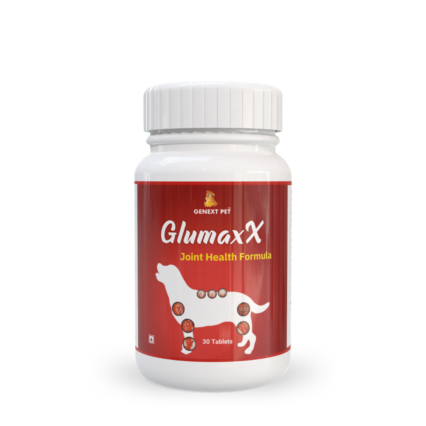
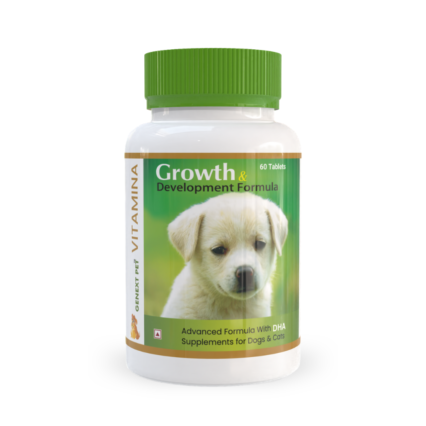
GenextPet does not sell a fish oil. Our Vitamina multivitamin contains a little DHA (4.5 mg per tablet) to support home-cooked diets, which is far below a fish oil dose; it is not a substitute for fish oil. Glumaxx joint tablets include omega-3 alongside glucosamine and chondroitin; if your vet recommends separate fish oil as well, tell them about Glumaxx so the totals are counted.
Final Word
Fish oil is a useful, well-studied supplement for dogs’ skin and joints when the dose is right. Count EPA + DHA, not oil; choose plain fish oil over cod liver oil; start low; and let your vet set the dose, especially for joint problems or if your dog is on other medicines.
Frequently Asked Questions
Is fish oil good for dogs?
For many dogs, yes, particularly for dry skin, dull coats and joint stiffness. The benefit depends on getting enough EPA and DHA.
How much fish oil should I give my dog?
Vets commonly use 50 to 220 mg of EPA + DHA per kg of body weight a day depending on the reason. Ask your vet for your dog’s dose and start low.
Can I give my dog human fish oil capsules?
Plain fish oil capsules without added vitamins, flavours or xylitol are sometimes used, but check the EPA + DHA per capsule and ask your vet first.
Is cod liver oil the same as fish oil for dogs?
No. Cod liver oil also contains vitamins A and D, which can build up to harmful levels at the doses needed for omega-3.
How long does fish oil take to work in dogs?
Coat changes usually take 6 to 8 weeks. Joint benefits, if any, also take several weeks.
What are the side effects of fish oil in dogs?
Loose stools, fishy breath, vomiting, weight gain and effects on blood clotting, mostly at high doses.
Sources
About Author
Dr. Kevin Modi
Dr. Kevin Modi is a trusted voice in the Indian pet care space, with years of hands-on experience in pet wellness, gut health, and natural supplements. At GenextPet, he guides product formulation and ensures content accuracy, drawing from real-world insights and the latest research. His goal? To simplify pet health for every dog and cat parent.