Calcium for Puppies: When They Need It, When It Harms, and Large-Breed Rules

Quick answer
A puppy eating a complete puppy food does not need extra calcium, and adding it can harm bone growth, especially in large breeds like Labradors, German Shepherds and Great Danes. A puppy on home-cooked food (rice, dal, chicken, curd) often does need calcium, because meat and rice are low in it, but it must come with phosphorus in the right ratio and at a measured dose. Ask your vet before starting, and never stack calcium on top of a complete puppy food.
“Calcium for strong bones” is one of the most common recommendations Indian puppy owners hear, often from a pet shop. For some puppies it is right. For others, particularly large breeds on puppy food, it can cause the very bone problems it is meant to prevent. This guide explains the difference.
Does My Puppy Need Calcium?
| What your puppy eats | Extra calcium? | Why |
|---|---|---|
| Complete puppy food (“complete and balanced for growth”) | No | Already has calcium and phosphorus in the right balance. |
| Large-breed puppy food | No, never | Formulated with controlled calcium on purpose. |
| Mostly home-cooked food | Usually yes | Meat, rice and roti are low in calcium; the diet needs balancing. |
| Half puppy food, half home food | Ask your vet | Depends on the share of each. |
| Milk replacer (under 4 weeks) | No | The replacer already contains calcium. |
Why Too Much Calcium Harms Growing Puppies
Puppies, especially large and giant breeds, absorb a lot of the calcium they eat and cannot simply excrete the excess. Too much calcium during growth is linked with abnormal bone and cartilage development. Studies in Great Danes and other large breeds found severe skeletal problems in some puppies fed excess calcium, particularly when phosphorus was low, while small breeds were less affected (Dobenecker, British Journal of Nutrition, 2011).
- Large and giant breeds (adult weight about 30 kg or more) are most at risk.
- Calcium given without enough phosphorus is the riskier combination.
- Fast growth from overfeeding adds to the risk; keep puppies lean.
Calcium and Phosphorus: The Balance Matters
Bone is built from calcium and phosphorus together. Feeding guides for home-cooked diets aim for a calcium to phosphorus ratio between about 1:1 and 2:1. Plain calcium (eggshell powder, chalk-like calcium carbonate, calcium syrup alone) pushes the balance in one direction and is hard to measure at home.
Signs a Home-Fed Puppy May Be Short of Calcium
- Bowed or bent legs, swollen joints, limping.
- Reluctance to walk or play, pain when picked up.
- Slow growth compared with littermates.
These signs have other causes too, including injuries and too much calcium. A vet examination, sometimes with an X-ray, is the only way to tell.
How to Give Calcium Safely to a Home-Fed Puppy
- Ask your vet to check the diet first, ideally with a balanced recipe.
- Use a product that gives calcium and phosphorus together, with the amount per tablet printed.
- Give the label dose for puppies, split across meals; never double up.
- Do not combine two calcium products, or calcium with a lot of milk, paneer or bone broth, without counting the total.
- Stop and ask your vet once you move the puppy onto a complete food.
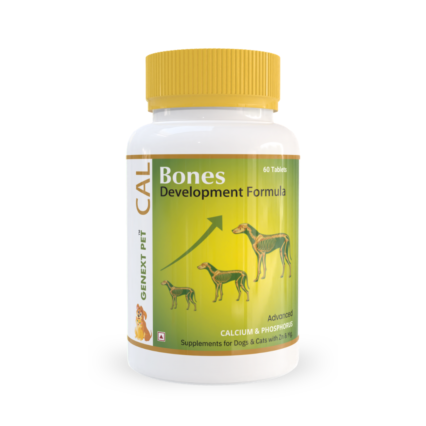
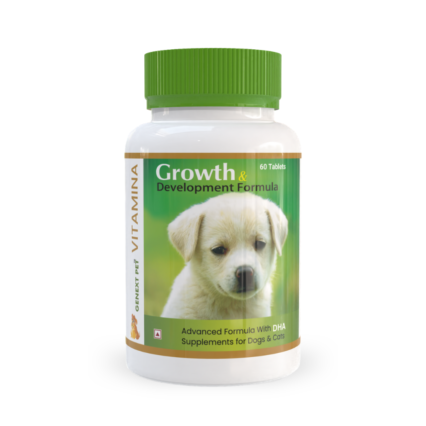
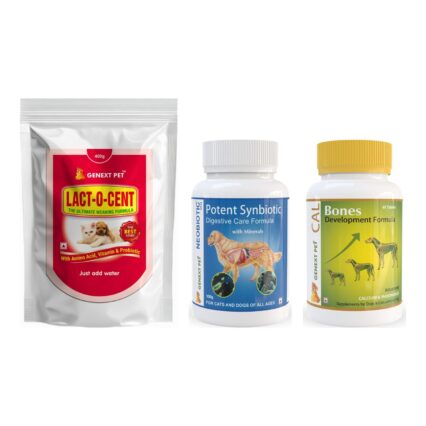
GenextPet CAL gives 450 mg calcium with 270 mg phosphorus and vitamin D3 per tablet (about 1.7 to 1). The label dose for a puppy on home food is ½ tablet twice a day. For large-breed puppies, use it only with your vet’s agreement. Home-fed puppies also tend to need vitamins; the Growth Duo pairs CAL with the Vitamina multivitamin. Read our full guide to calcium tablets for dogs.
Myths Indian Puppy Owners Hear
| Myth | Fact |
|---|---|
| “Calcium makes bones stronger, so more is better.” | Excess calcium can damage developing bones in large breeds. |
| “Give milk every day for calcium.” | Many puppies digest lactose poorly, and milk alone does not balance a diet. |
| “Cooked bones are a natural calcium source.” | Cooked bones splinter and can injure the gut. Never feed them. |
| “Calcium syrup is gentler than tablets.” | The form matters less than the dose and the calcium to phosphorus balance. |
Final Word
Calcium for puppies is not good or bad; it depends on the food. Puppies on a complete puppy food need none. Puppies on home-cooked food usually need calcium with phosphorus at a measured dose. Large-breed puppies need the most care, and a vet should be part of the decision.
Frequently Asked Questions
Should I give calcium to my puppy?
Not if your puppy eats a complete puppy food. Puppies on home-cooked food often need calcium with phosphorus at a measured dose; ask your vet first.
At what age can I give calcium to my puppy?
Only once the puppy is weaned and eating home food that your vet agrees needs balancing. Puppies on milk replacer or puppy food do not need it.
Is calcium bad for Labrador puppies?
Extra calcium on top of a complete puppy food can harm large-breed puppies like Labradors. On a home-cooked diet, follow your vet’s advice on dose.
Can I give my puppy milk for calcium?
A little is fine if it does not cause loose stools, but milk does not balance a home diet and many puppies digest lactose poorly.
What are the signs of too much calcium in puppies?
Limping, swollen or painful joints and abnormal leg growth. These overlap with signs of too little calcium, so a vet check is needed.
Is eggshell powder safe for puppies?
It provides calcium without phosphorus and is hard to measure. Use it only if your vet gives you an exact amount.
Sources
About Author
Dr. Kevin Modi
Dr. Kevin Modi is a trusted voice in the Indian pet care space, with years of hands-on experience in pet wellness, gut health, and natural supplements. At GenextPet, he guides product formulation and ensures content accuracy, drawing from real-world insights and the latest research. His goal? To simplify pet health for every dog and cat parent.