
Your puppy’s first twelve months will determine the next twelve years. That is not an exaggeration — it is biology.
Ninety percent of your dog’s adult bone density is established in the first year. Their immune system is primed or compromised during the first vaccination window. Their gut microbiome — the bacterial ecosystem that controls digestion, immunity, and even temperament — is colonised during the first weeks of life. The coat quality your dog will carry for life begins forming during adolescence.
Get the first year right, and you build a foundation for a healthy, active, resilient adult dog. Get it wrong, and you spend the next decade managing problems that could have been prevented.
For Indian pet parents specifically, this matters even more. Most puppies in India come home at 45–60 days — often 2–3 weeks earlier than the internationally recommended 8 weeks. These puppies miss critical weeks of their mother’s antibodies and natural gut colonisation. The gap must be filled deliberately, or it shows up later as chronic health issues, weak bones, poor immunity, and digestive problems that never quite resolve.
This guide gives you the complete month-by-month roadmap: what physical and behavioural milestones to expect, expected weight ranges by breed size, how much and how often to feed, when vaccinations are due, and exactly which nutritional support matters at each stage.

Puppy Weight Chart by Month and Breed Size
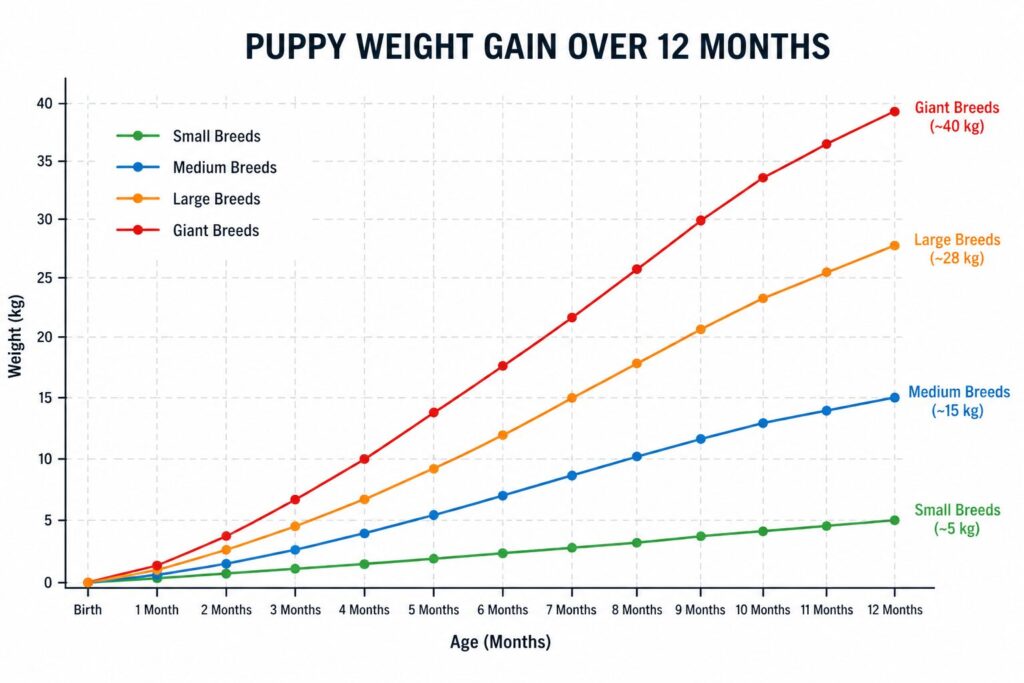
This is the reference table every puppy parent needs. These are approximate expected weight ranges — individual puppies may vary based on genetics, nutrition, and health. If your puppy consistently falls 15–20% below these ranges, consult your veterinarian.
Expected Weight by Month (Approximate)
| Age | Small Breeds (Pom, Shih Tzu, Pug) | Medium Breeds (Beagle, Spitz, Cocker) | Large Breeds (Labrador, Golden, Doberman) | Giant Breeds (GSD, Rottweiler, Great Dane) |
|---|---|---|---|---|
| Birth | 100–200 g | 200–350 g | 300–500 g | 400–700 g |
| 1 Month | 0.5–1 kg | 1–2 kg | 2–3.5 kg | 3–5 kg |
| 2 Months | 1–2 kg | 2.5–4 kg | 5–8 kg | 7–12 kg |
| 3 Months | 1.5–3 kg | 4–7 kg | 10–14 kg | 14–20 kg |
| 4 Months | 2–4 kg | 5.5–9 kg | 14–20 kg | 20–28 kg |
| 5 Months | 2.5–4.5 kg | 7–11 kg | 18–25 kg | 25–35 kg |
| 6 Months | 3–5 kg | 8–13 kg | 22–29 kg | 30–40 kg |
| 8 Months | 3.5–5.5 kg | 9–15 kg | 25–32 kg | 35–48 kg |
| 10 Months | 3.5–6 kg | 10–16 kg | 27–34 kg | 38–52 kg |
| 12 Months | 3.5–6.5 kg | 10–17 kg | 28–36 kg | 40–55 kg |
| Adult Weight | 3–7 kg | 10–18 kg | 28–38 kg | 40–65 kg |
Note: Large and giant breeds continue growing until 18–24 months. The 12-month weights above are not their final adult weights.
How to Weigh Your Puppy at Home
The bathroom scale method works perfectly: step on the scale and note your weight. Then pick up your puppy and step on again. Subtract the first number from the second. Weigh weekly during the first 6 months, then monthly.
Is My Puppy Underweight?
Use the rib check: place your hands on your puppy’s ribcage with light pressure. You should be able to feel the ribs without pressing hard, but they should not be visually prominent. If ribs are easily visible, your puppy may be underweight. If you cannot feel ribs even with moderate pressure, your puppy may be overweight.
An important note for India: Puppies purchased from backyard breeders or pet shops (rather than reputable breeders) may weigh 10–20% less than breed standards due to poor early-life nutrition, inadequate weaning, or early separation from the mother. These puppies are not naturally small — they have had a nutritional deficit that can be corrected with proper feeding and supplementation during the first year.
Also Read: Best Dog Breeds for Indian Families (2026): Complete Guide
Month 0–2: Birth to Weaning — The Foundation Period
Week 0–2: Newborn Stage
During the first two weeks, your puppy is entirely dependent on its mother. Eyes and ears are sealed shut. The puppy cannot regulate its own body temperature, cannot walk, and sleeps 90% of the time. The only nutrition source is mother’s milk, which provides colostrum — rich in antibodies that prime the immune system.
What to do: Nothing nutritional. Keep the whelping area warm (29–32 degrees Celsius for newborns), clean, and quiet. Ensure the mother is well-fed and hydrated. Monitor that all puppies are nursing — a puppy that consistently fails to nurse needs veterinary attention.
Weight milestone: A healthy puppy should double its birth weight within the first 7–10 days.
Week 3–4: Weaning Begins
This is the first critical nutritional transition. Teeth begin erupting. Eyes and ears open. The puppy starts attempting to walk — wobbly and uncoordinated at first, then with increasing confidence. The digestive system begins preparing for solid food.
Weaning is not about suddenly switching from milk to kibble. It is a gradual process where the puppy transitions from mother’s milk to a complete weaning formula, and eventually to softened solid food over a period of 3–4 weeks.
This transition window is where many Indian puppies fall behind. If the mother’s milk is insufficient, if the litter is large, or if the puppy is orphaned — the nutritional gap must be filled with a formula that replicates what mother’s milk provides: proteins, fats, amino acids, minerals, vitamins, and crucially, probiotics for gut colonisation.
Week 5–8: Full Weaning
By week 5–6, puppies should be eating solid food supplemented with weaning formula. By week 8, most puppies are fully weaned.
The Indian reality: Most breeders in India separate puppies from their mother at 45 days (about 6.5 weeks) — earlier than the recommended 8 weeks. This means the puppy misses 1.5–2 weeks of mother’s antibodies, natural gut flora transfer, and social learning from the litter. These are not trivial weeks — they are when the immune system receives its last natural training from the mother.
For puppies separated early, a complete weaning formula is not optional — it is essential to fill the gap that early separation creates.
Nutrition at This Stage: Why Complete Weaning Formulas Matter
Regular milk — whether cow, buffalo, or packaged — is not a substitute for a proper weaning formula. Dog milk has a fundamentally different composition from bovine milk: higher fat, higher protein, different mineral ratios, and specific antibodies that bovine milk does not contain.
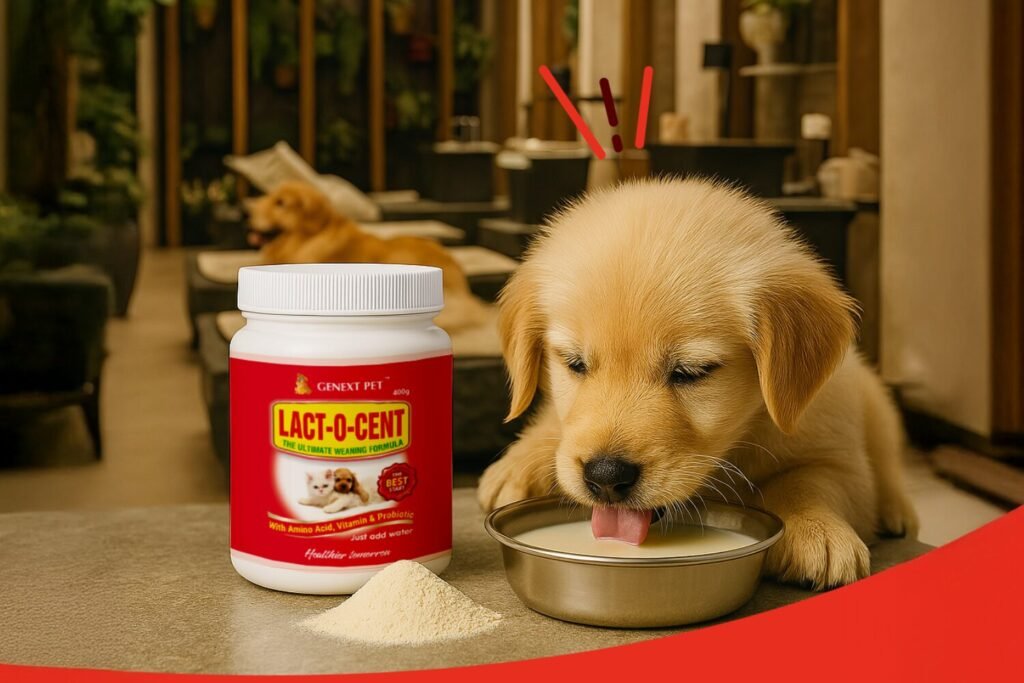
Lact-O-Cent by GenextPet was formulated to fill this exact gap. Here is what makes it different from basic puppy milk replacers:
Complete Amino Acid Profile: Lysine (1,200 mg), Methionine (2,800 mg), Arginine (2,400 mg), and Taurine (40 mg). These are not random additions — Methionine at 2,800 mg supports liver function and muscle development. Taurine is essential for heart and brain development. Most basic milk replacers provide calories but skip these targeted amino acids.
Comprehensive Mineral Support: Calcium 6,000 mg and Phosphorus 2,520 mg in an optimised ratio for bone development. Iron 20 mg for red blood cell formation. Magnesium 1,120 mg for enzymatic functions. Potassium 1,200 mg for heart and muscle development.
Full Vitamin Coverage: Vitamin D3 at 12,000 IU — a dose that ensures calcium actually deposits into developing bones rather than being wasted. Vitamin E at 400 mg for antioxidant protection. Vitamin C at 800 mg for immune support and collagen formation. Biotin, Vitamin K, Folic Acid, Inositol, and Choline — the complete spectrum.
Built-in Probiotic: Saccharomyces boulardii (20 x 10 to the power 6 CFU) — begins gut colonisation from the earliest stage, establishing the bacterial foundation that will support digestion and immunity for life.
No other weaning formula in India provides this level of comprehensive nutrition — most offer basic milk replacement without the amino acids, vitamin density, or probiotic support that Lact-O-Cent includes.
-> Lact-O-Cent (400g) | Complete Weaning & Growth Formula
Also Read: Calcium Supplementation for Pregnant Dogs: Complete Guide
Month 2–3: Socialisation, Vaccinations & Food Transitions
This is one of the busiest months in your puppy’s life — and yours.
What Is Happening Developmentally
Your puppy is now alert, curious, and increasingly interactive. Socialisation is at its peak — the experiences your puppy has between weeks 8 and 14 shape their temperament for life. This is when they learn to be comfortable with other dogs, humans, children, different environments, sounds, and surfaces.
Energy levels skyrocket. Play becomes rougher and more coordinated. Bite inhibition is being learned through play (those sharp puppy teeth serve a developmental purpose). Basic training — sit, come, potty training — should be actively underway.
Vaccinations Begin
In India, the standard puppy vaccination schedule typically begins at this stage:
6–8 weeks: First DHPP vaccine (Distemper, Hepatitis, Parvovirus, Parainfluenza)
10–12 weeks: Second DHPP booster
14–16 weeks: Third DHPP booster + Rabies vaccine
Deworming: Every 2 weeks until 12 weeks, then monthly until 6 months
Vaccinations are essential — but they temporarily stress the immune system. The puppy’s body is learning to recognise and fight specific pathogens, which diverts immune resources. This is why some puppies show mild lethargy or reduced appetite for 1–2 days after vaccination.
The Food Transition Problem
This is also when most Indian pet parents switch their puppy from the breeder’s food to their own chosen brand or home-cooked food. This dietary transition — combined with the stress of a new home and vaccination — creates a perfect storm for digestive upset.
Diarrhea during month 2–3 is extremely common in Indian puppies. It is usually not serious, but it depletes nutrients and disrupts gut flora at a time when the puppy needs both desperately.
Nutrition at This Stage
Two nutritional priorities dominate this period:
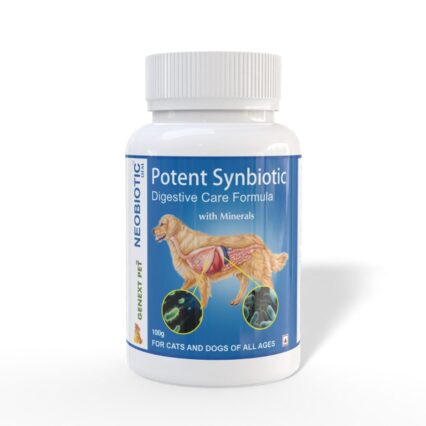
Gut Support During Food Transition: Neobiotic DFM provides spore-forming Bacillus strains that survive Indian heat and stomach acid, MOS that binds harmful bacteria, and Beta-glucan for immune activation — exactly what a puppy’s transitioning gut needs. Unlike Lactobacillus-based probiotics, Neobiotic’s Bacillus spores do not lose viability during Indian summer shipping.
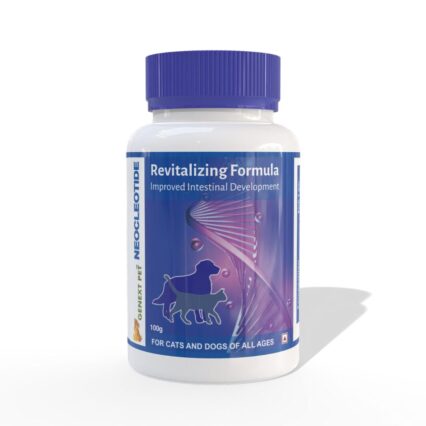
Immune Support During Vaccination: Neocleotide provides nucleotides — the building blocks of DNA and RNA — that support rapid immune cell production. When the immune system is working overtime to respond to vaccines, nucleotides provide the raw material for faster, stronger immune responses. MOS at 110 mg adds pathogen-binding defense.
Also Read: Probiotics for Dogs with Diarrhea: Complete Guide
Month 3–6: The Growth Spurt — When Nutrition Matters Most
This is the most dramatic growth phase in your puppy’s life. If you are going to invest in nutrition at any single stage, this is the one.
What Is Happening Developmentally
Large breed puppies gain 2–3 kg per week during this period. Bones are growing faster than muscles can support. Baby teeth fall out and permanent adult teeth erupt — a process that requires significant mineral resources. The skeletal framework that will carry your dog for the next 10–15 years is being built right now.
Your puppy is also becoming more coordinated, stronger, and increasingly confident. Training should be consistent and positive. Chewing intensifies as teething peaks — this is normal and necessary.

Why This Stage Is Critical in India
Indian puppies face specific challenges during growth spurts that Western pet care guides do not address:
Hard flooring: Most Indian homes have marble, granite, or vitrified tile floors. Growing puppies on these hard, slippery surfaces experience more joint and bone stress than puppies on carpet or wood. The constant micro-trauma of slipping and compensating builds up during the fastest growth period.
Homemade food gaps: Many Indian pet parents feed home-cooked meals during this phase — rice with chicken, roti with curd, or boiled vegetables. While well-intentioned, these meals typically lack adequate calcium, phosphorus, and vitamin D3 for the explosive bone growth happening at this stage. Rice and chicken provide protein and energy but fall short on mineral density.
Calcium specifically: A 4-month-old large breed puppy needs approximately 3 times the calcium per kilogram of body weight compared to an adult dog. Regular food — even high-quality commercial kibble — may not provide this level of calcium in a bioavailable form.
Nutrition at This Stage
This is where targeted supplementation makes the biggest difference:
Bone Support: GenextPet CAL provides Chelated Calcium at 450 mg — chelated form absorbs 2–3x better than the calcium carbonate found in most basic supplements. Your puppy’s body actually uses the calcium instead of passing it through. Vitamin D3 at 2,500 IU ensures calcium gets deposited into bones rather than soft tissues. Zinc at 30 mg — a therapeutic dose that supports bone cell activity, immune function, and the tissue repair happening constantly during rapid growth.
Overall Development: Vitamina covers the broad nutritional needs that food alone cannot meet during growth spurts: DHA (4.5 mg) for brain development, Biotin (150 mcg) for coat quality — the adult coat begins forming during this stage, Taurine (10 mg) for heart development, Linoleic Acid for skin barrier function, plus a full spectrum of B vitamins, Vitamin E, Vitamin A, and essential amino acids (Lysine, Arginine).
Growth Spurt Essentials: CAL + Vitamina = for comprehensive growth support during the most important developmental window.
-
Sale!

CAL® – Calcium Supplement for Dogs & Cats | 60 Tabs
Original price was: ₹405.₹379Current price is: ₹379.
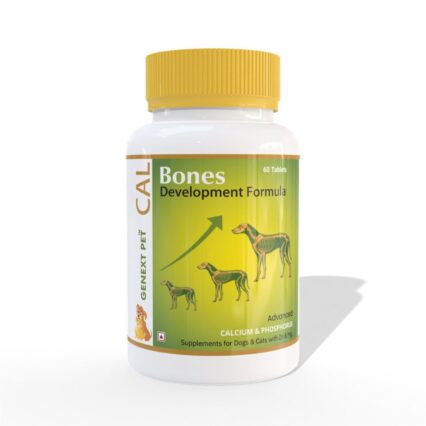
-> GenextPet CAL | Chelated Calcium + D3 2500 IU + Zinc 30mg
-
Sale!
VITAMINA® – Multivitamin for Dogs & Cats | 60 Tabs
Original price was: ₹630.₹585Current price is: ₹585.
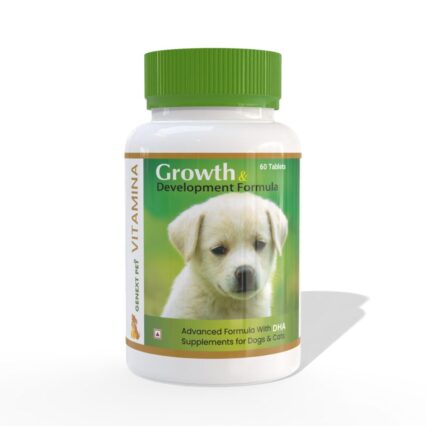
-> Vitamina | 7-in-1 Multivitamin with DHA, Biotin & Taurine
Month 6–12: The Teenage Phase
What Is Happening Developmentally
Growth rate slows significantly compared to the 3–6 month explosion, but it does not stop. Large breeds continue growing until 18 months. Giant breeds may not reach full size until 24 months.
Sexual maturity arrives — most breeds reach it between 6–12 months. In India, spaying and neutering is commonly done between 6–8 months. Post-surgery, metabolism changes: spayed and neutered dogs tend to gain weight more easily, requiring portion adjustments.
Behavioural challenges peak during this adolescent phase. Your well-trained puppy may suddenly forget commands, test boundaries, and develop new quirks like excessive barking, chewing, or selective hearing. This is normal — it is the canine equivalent of teenage years.
What Is Happening Physically
Adult coat development: The fluffy puppy coat gradually gives way to the adult coat. This transition can be patchy and awkward-looking — that is normal. The quality of the adult coat is influenced by nutrition during this period. Biotin, Zinc, Vitamin E, and Omega fatty acids contribute to coat density, shine, and skin health.
Dental maturity: By 7–8 months, all 42 adult teeth should be in place. If baby teeth have not fallen out by this time (retained deciduous teeth), consult your vet — retained teeth can cause alignment problems and infections.
Body composition shift: The gangly, disproportionate puppy body gradually fills out. Muscles develop to match the skeletal framework. Chest broadens, legs become proportionate, and the adult silhouette emerges.
Nutrition at This Stage
Continue Vitamina — the nutritional demands of coat development, brain maturation, and continued growth make multivitamin support just as important as during the growth spurt phase. DHA continues supporting brain development, which is not complete until 12–18 months. Biotin and Zinc support the adult coat transition.
Large breeds — introduce joint protection: If you have a Labrador, Golden Retriever, German Shepherd, Rottweiler, or Doberman, this is when preventive joint support should begin. The rapid growth phase puts enormous stress on developing joints, and the cumulative impact shows up as joint problems in adulthood.
Glumaxx Joint Support provides early joint protection with 14 active ingredients including Glucosamine HCl, Chondroitin, Hyaluronic Acid, and triple herbal anti-inflammatory support (Curcumin + Boswellia + Devil’s Claw). Starting preventive joint care during adolescence is significantly more effective and cheaper than treating established joint problems later.
Also Read: Glucosamine for Dogs in India: Benefits, Dosage & Best Joint Supplement
Month 12+: The Adult Transition
Your puppy is now an adult — at least in terms of daily care routines. Small and medium breeds reach full physical maturity by 12 months. Large breeds may need another 6 months. Giant breeds are still growing.
Food Transition to Adult Formula
Switch from puppy food to adult food gradually over 7–10 days:
Days 1–3: 75% puppy food + 25% adult food
Days 4–6: 50% puppy food + 50% adult food
Days 7–9: 25% puppy food + 75% adult food
Day 10: 100% adult food
Rushing this transition causes digestive upset. The gut needs time to adjust its enzyme production for the different nutrient profile of adult food.
Adult Supplement Maintenance
Your puppy becoming an adult does not mean supplement needs disappear — they shift:
Daily foundation: Vitamina — continued multivitamin support for immunity, coat, heart, and overall wellness. One tablet covers what would otherwise require 2–3 separate supplements.
Gut maintenance: Neobiotic DFM — especially during dietary changes, monsoon season, or after any illness or medication. Daily use is safe for long-term gut health.
Breed-specific additions: Joint support (Glumaxx) for large and giant breeds. Calcium support (CAL) for pregnant or lactating dogs.
Also Read: Daily Pet Care Routine for Dogs & Cats
Stage-by-Stage Supplement Mapping: The Complete Guide
Here is the master reference for which nutritional support matters at each growth stage — and why:
| Growth Stage | Age | Key Nutritional Need | Recommended Support | Why It Matters |
|---|---|---|---|---|
| Weaning | Week 3–8 | Complete nutrition to replace mother’s milk | Lact-O-Cent | 4 amino acids + full minerals + full vitamins + probiotic. No other weaning formula in India matches this coverage. |
| Vaccination Period | Month 2–3 | Immune system support during vaccine response | Neocleotide | Nucleotides support rapid immune cell production. MOS 110mg binds pathogens. |
| Food Transition | Month 2–4 | Gut flora stabilisation during diet changes | Neobiotic DFM | Spore-forming Bacillus strains survive Indian heat. MOS + Beta-glucan for pathogen defense. |
| Growth Spurt | Month 3–6 | Calcium + minerals for rapid bone development | GenextPet CAL | Chelated calcium (2–3x absorption) + D3 2500 IU + Zinc 30mg. |
| Overall Development | Month 3–12 | Multivitamin + DHA + Biotin for brain, coat, immunity | Vitamina | 7-in-1: immunity + skin/coat + brain + heart + bones + energy + amino acids. |
| Joint Protection | Month 6+ (large breeds) | Preventive joint and cartilage support | Glumaxx | 14 ingredients including triple herbal anti-inflammatory + Hyaluronic Acid 70mg. |
| Adult Maintenance | 12+ months | Continued wellness support | Vitamina + Neobiotic DFM | Foundation supplements for lifelong health. |
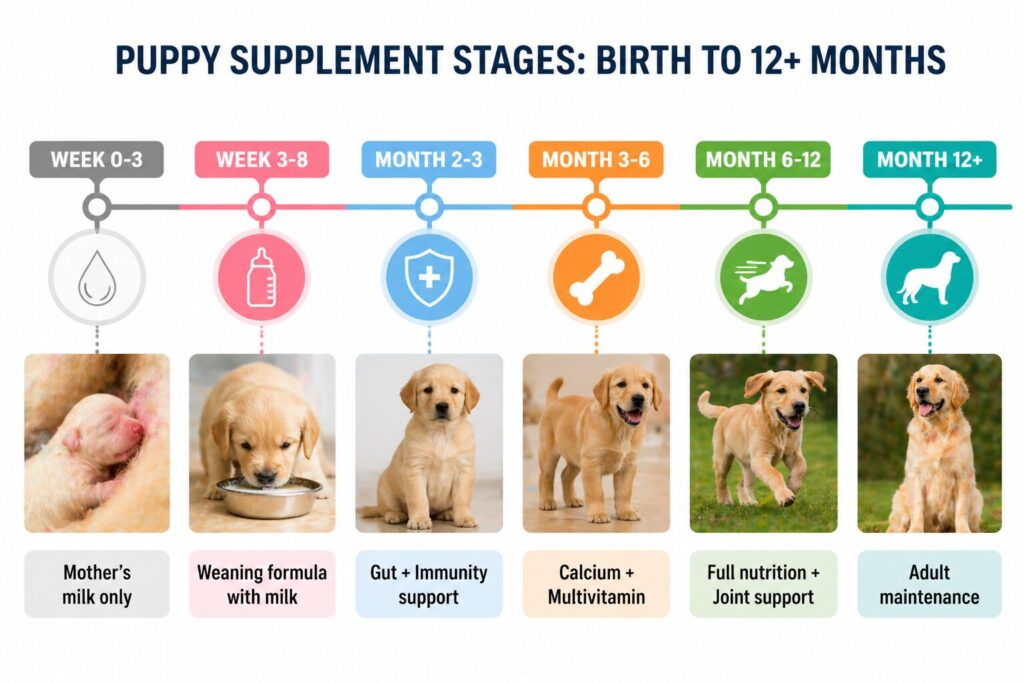
The Puppy Starter Kit: Essential 3
If budget is a consideration, these three supplements cover roughly 80% of a growing puppy’s nutritional gaps:
- Lact-O-Cent — Weaning and early growth (Week 3–8)
- GenextPet CAL — Bone development during growth spurt (Month 3–6+)
- Vitamina — Overall development and daily nutrition (Month 3–12+)
Puppy Feeding Schedule: How Much and How Often (India Guide)
| Age | Meals Per Day | What to Feed | Portion Guide |
|---|---|---|---|
| Week 3–5 | 5–6 small meals | Weaning formula (Lact-O-Cent) + slightly softened puppy food | Start with formula, gradually mix in softened kibble |
| Week 5–8 | 4–5 meals | Softened puppy food + weaning formula supplement | Puppy should eat until satisfied, not until gorging |
| Month 2–3 | 4 meals | Puppy kibble or home-cooked puppy food | Follow package guidelines; adjust based on weight gain |
| Month 3–6 | 3 meals | Puppy food (increased quantity for growth spurt) | Large breeds need 2–3% of expected adult weight daily |
| Month 6–12 | 2 meals | Puppy food (gradually reducing quantity as growth slows) | Monitor weight monthly; adjust to maintain healthy body condition |
| 12+ months | 2 meals | Transition to adult food over 7–10 days | Follow adult feeding guidelines |
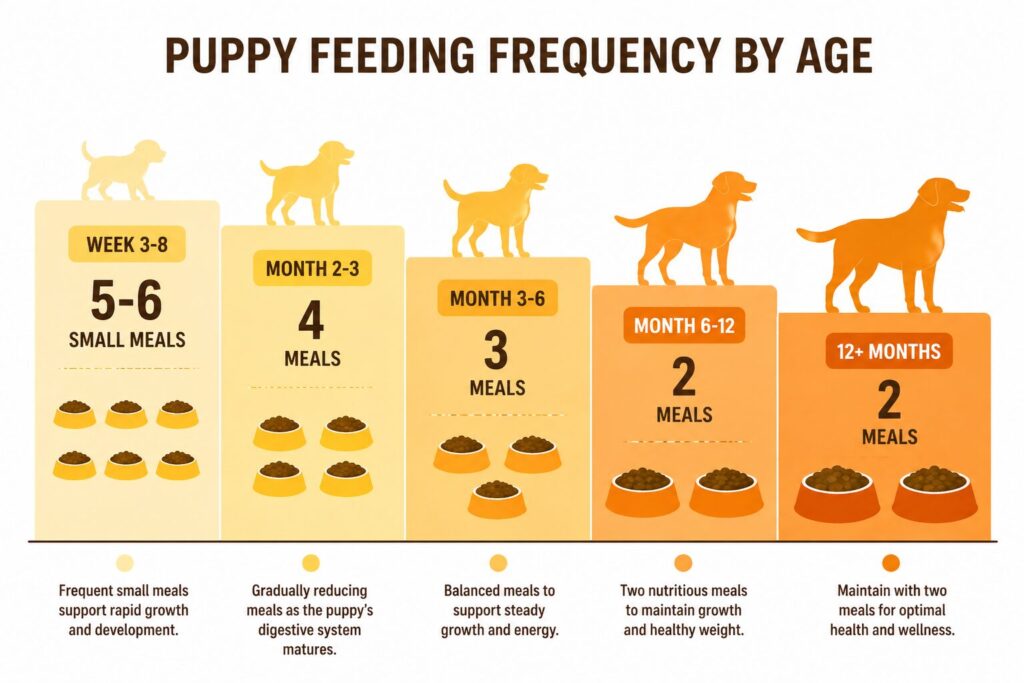
What Indian Pet Parents Commonly Feed — And What to Watch For
Commercial Kibble (Dry Food): The most convenient option. Quality brands provide balanced nutrition. Choose a puppy-specific formula — adult kibble has different calcium-to-phosphorus ratios that are not suitable for growing bones. Premium brands available in India: look for those specifying breed size (small breed puppy, large breed puppy) for optimised nutrient density.
Home-Cooked Food (Rice + Chicken / Roti + Curd): Very common in Indian households and culturally preferred by many pet parents. Home-cooked food is safe and often well-tolerated, but it has consistent nutritional gaps: typically low in calcium, vitamin D3, zinc, and essential fatty acids (DHA, EPA). If feeding home-cooked meals, supplementation is not optional — it is essential to prevent deficiencies.
Mixed Feeding (Kibble + Home Food): Also common. Works well if balanced — but creates the most complex gut environment. Puppies on mixed diets often benefit from probiotic support to manage the varied inputs.
What NOT to Feed Puppies (Common Indian Mistakes):
Cerelac or Bournvita — Surprisingly common. These are human baby foods with added sugar and inappropriate nutrient profiles for dogs. They taste good to puppies but provide empty calories.
Regular cow or buffalo milk — High in lactose, which most puppies cannot digest properly after weaning. Causes diarrhea and bloating.
Leftover human food with spices — Onion, garlic, and heavy spices are harmful to dogs. Plain, unseasoned cooking is fine; seasoned food is not.
Adult dog food — Wrong calcium-to-phosphorus ratio for growing bones. Can cause developmental skeletal problems in large breeds.
10 Common Mistakes Indian Puppy Parents Make
1. Bringing the puppy home too early (30–45 days) Many Indian breeders sell puppies at 30–45 days. Puppies separated this early miss critical maternal antibodies, gut colonisation, and social learning from the litter. If you must bring a puppy home before 8 weeks, compensate with proper weaning formula and structured socialisation.
2. Feeding Cerelac, Bournvita, or baby formula These are not substitutes for puppy nutrition. They contain added sugar, insufficient protein, wrong mineral ratios, and no amino acid support. Use a veterinary-grade weaning formula instead.
3. Giving cow or buffalo milk as a milk replacer Dog milk contains roughly 2x the fat and 3x the protein of cow milk, with different sugar and mineral profiles. Cow milk causes diarrhea in most puppies. Use a species-appropriate formula.
4. Using human calcium tablets Human calcium supplements use calcium carbonate (poorly absorbed by dogs) at dosages calculated for adult human physiology. They often include additives that are unnecessary or harmful for puppies. Use a pet-specific chelated calcium supplement.
5. Over-bathing during Indian summers Many Indian pet parents bathe puppies weekly to combat heat and smell. This strips natural oils from the developing coat and skin, leading to dry, itchy skin and poor coat quality. Puppies need bathing no more than once every 3–4 weeks. Use a mild, puppy-specific shampoo.
6. Skipping deworming schedule Indian puppies almost always carry intestinal worms from birth — acquired from the mother in utero or through nursing. Deworming should begin at 2 weeks and continue every 2 weeks until 12 weeks, then monthly until 6 months. Missed deworming means the puppy is sharing its nutrition with parasites.
7. No socialisation between 8–14 weeks The socialisation window closes around 14 weeks. Puppies that do not experience varied people, animals, surfaces, and sounds during this critical window are more likely to develop fear-based behaviour problems as adults. Do not wait until vaccinations are complete — controlled, safe socialisation can begin earlier.
8. Assuming all breeds grow the same A Pomeranian and a Labrador have completely different growth trajectories, nutritional needs, and health risks. Breed-specific care is not optional — especially for nutrition, exercise, and joint health.
9. Over-supplementing without vet guidance More is not always better. Excessive calcium in large breed puppies can cause skeletal developmental problems. Excessive vitamin D can lead to toxicity. Follow product dosage guidelines and consult your vet if combining multiple supplements.
10. Ignoring dental care Puppies need chew-appropriate toys during teething. If baby teeth have not fallen out by 7–8 months, a vet visit is needed. Retained deciduous teeth cause infection, misalignment, and long-term dental problems.
When to See the Vet: Warning Signs by Age
Regular Vet Visit Schedule for Indian Puppies
| Age | Visit Type | Purpose |
|---|---|---|
| 6–8 weeks | First visit | Health check, first vaccination, deworming |
| 10–12 weeks | Vaccination visit | Second DHPP booster, deworming |
| 14–16 weeks | Vaccination visit | Third DHPP booster, Rabies vaccine |
| 6 months | Health check | Growth assessment, dental check, discuss spaying/neutering |
| 12 months | Annual check-up | Full health evaluation, booster vaccinations |
Warning Signs That Need Immediate Vet Attention
No weight gain for 2 or more consecutive weeks (or weight loss). Chronic diarrhea lasting more than 48 hours, especially with blood or mucus. Persistent vomiting — more than twice in 24 hours. Lethargy — puppy that is normally active becoming suddenly withdrawn. Loss of appetite lasting more than 24 hours. Limping, swelling, or reluctance to move — could indicate bone or joint development issues. Bloated abdomen — especially in large breed puppies (can indicate worm load or more serious conditions). Delayed teething — no adult teeth emerging by 5 months. Seizures, loss of coordination, or unusual behaviour.
Supplements support health — they do not replace veterinary care. Regular vet visits and prompt attention to warning signs are non-negotiable parts of responsible puppy parenting.
Also Read: How to Boost Your Dog’s Immune System Naturally
Final Word
Your puppy’s first year is not a trial run — it is the foundation. Every nutritional decision, every supplement choice, every feeding schedule you follow during these 12 months shapes the adult dog your puppy becomes.
The good news: it is not complicated. Feed appropriate food in the right amounts. Supplement the gaps that food cannot cover — especially calcium during growth spurts, gut support during transitions, and broad-spectrum vitamins for overall development. Follow the vaccination and deworming schedule. See your vet regularly. Socialise early and train consistently.
The puppies that thrive as adults are not the ones who had the most expensive food or the fanciest lifestyle. They are the ones whose first-year nutrition was complete, consistent, and stage-appropriate. That is the advantage you can give your puppy starting today.
FAQ
When does a puppy grow the fastest?
Most puppies experience their most rapid growth between 3 and 6 months. Large and giant breeds grow particularly fast during this period, gaining 2–3 kg per week. This stage has the highest nutritional demands — especially for calcium, phosphorus, and vitamin D3 for bone development.
What should I feed my puppy during weaning?
Start with a high-quality puppy weaning formula that provides complete nutrition — proteins, amino acids, minerals, vitamins, and probiotics. Lact-O-Cent by GenextPet provides 4 amino acids, full mineral and vitamin profiles, and S. boulardii probiotic in one formula. Gradually introduce softened puppy food alongside the formula over 3–4 weeks.
Is calcium supplementation necessary for growing puppies?
Yes, especially for medium to large breeds during the 3–6 month growth spurt. Regular food — even quality kibble — may not provide therapeutic-dose calcium in a bioavailable form. Chelated calcium (like in GenextPet CAL) absorbs 2–3 times better than calcium carbonate, ensuring your puppy’s body actually uses the calcium for bone building.
How do I know if my puppy is underweight?
Use the rib check: you should feel ribs with light pressure but not see them prominently. Also compare against breed-specific weight charts — if your puppy consistently falls 15–20% below expected weight for its age and breed, consult your vet. Early-separated puppies and those from backyard breeders may need nutritional catch-up support.
Can supplements help with puppy immunity during vaccinations?
Yes. Nucleotide-based supplements like Neocleotide support rapid immune cell production — providing the raw material for stronger vaccine responses. MOS (Mannan Oligosaccharides) binds pathogens, adding an extra layer of defense during the vulnerable vaccination period.
When should I switch from puppy food to adult food?
Small breeds: 10–12 months. Medium breeds: 12 months. Large breeds: 12–15 months. Giant breeds: 15–18 months (they need longer growth support). Always transition gradually over 7–10 days, mixing increasing proportions of adult food with decreasing puppy food.
What is the best weaning formula for puppies in India?
Look for a formula that provides complete nutrition — not just milk replacement. The best weaning formulas include amino acids (especially Methionine, Lysine, Arginine, Taurine), a full mineral profile with optimised calcium-to-phosphorus ratio, complete vitamin coverage including D3 at therapeutic levels, and a probiotic for early gut colonisation.
How much should a Labrador puppy weigh at 3 months?
A healthy Labrador puppy at 3 months should weigh approximately 10–14 kg. Males tend to be at the higher end. If your Labrador puppy weighs significantly less, ensure nutrition is adequate — growth spurt supplementation with chelated calcium and a multivitamin can help puppies reach their genetic growth potential.
Is Cerelac safe for puppies?
No. Cerelac is formulated for human infants with different nutritional needs. It contains added sugar, wheat-based carbohydrates, and nutrient ratios inappropriate for canine development. While it will not cause immediate toxicity, regular feeding leads to nutritional gaps, inappropriate sugar intake, and potential digestive issues. Use a veterinary-grade puppy formula instead.
Can I give adult dog supplements to my puppy?
Not recommended without vet guidance. Adult supplements have different dosages and nutrient ratios. Large breed puppy-specific concerns — like the delicate balance of calcium-to-phosphorus for growing bones — are not addressed in adult formulations. Some adult supplements may provide excessive amounts of certain nutrients that can cause developmental problems in puppies.
How do I know if my puppy’s growth is normal?
Track weight weekly during the first 6 months and compare against breed-specific growth charts. A healthy puppy should show consistent, steady weight gain — not dramatic fluctuations. Growth plateaus of 1–2 weeks are normal, but prolonged stalls or weight loss require vet attention. Also monitor energy levels, coat quality, appetite consistency, and milestone achievements (teeth, coordination, socialisation).
When should I start giving my puppy calcium supplements?
For most puppies, calcium supplementation becomes important at 3 months when the growth spurt begins. Large and giant breed puppies especially benefit from chelated calcium support from month 3 through month 6–8. Always use a pet-specific calcium supplement with proper vitamin D3 for absorption — not human calcium tablets or generic calcium powders.