

Here is a number that should concern every Indian pet parent: your dog may be absorbing only 30-40% of the calcium you are giving it. The rest passes straight through — unused, wasted, and flushed out.
This is not because you are giving too little. It is because of the form. The vast majority of calcium supplements available for dogs in India — whether from pet stores, veterinary pharmacies, or online marketplaces — use calcium carbonate. It is cheap to manufacture, easy to tablet, and technically contains calcium. But calcium carbonate has poor bioavailability in dogs. Their digestive systems do not break it down efficiently, especially in puppies with immature gut acids and senior dogs with declining digestive function.
The result: you think your dog is getting enough calcium. The blood work might even look adequate. But the bones tell a different story — they are not getting what they need, and the gap compounds over months and years.
This guide explains how calcium actually works in your dog’s body, why the form matters more than the amount, what chelated calcium is and why it absorbs 2-3 times better, which dogs need supplementation most urgently, and how to choose a calcium supplement that actually delivers results.
Why Calcium Matters More Than Most Pet Parents Realise
Calcium is not just about bones — although that is its primary job. It is involved in virtually every system in your dog’s body:
Skeletal Structure: 99% of your dog’s calcium is stored in bones and teeth. Calcium provides the structural rigidity that allows bones to support body weight, absorb impact, and protect organs. Without adequate calcium, bones become porous, brittle, and prone to fractures.
Muscle Function: Every muscle contraction — from your dog’s heartbeat to its ability to walk, run, and play — requires calcium signalling. Calcium ions trigger the molecular machinery that makes muscles contract. Chronic deficiency leads to muscle weakness, tremors, and cramping.
Nerve Transmission: Nerve signals travel through your dog’s body via calcium-dependent channels. Low calcium disrupts this signalling, potentially causing anxiety, restlessness, or in severe cases, seizures.
Blood Clotting: Calcium is an essential cofactor in the blood clotting cascade. Dogs with severe calcium deficiency may bruise more easily or bleed longer from minor wounds.
Heart Function: The heart is a muscle — the most important one. Its rhythmic contraction depends on precisely regulated calcium levels. Significant deficiency can cause cardiac arrhythmias.
This is why calcium deficiency does not just cause weak bones. It affects your dog’s entire body — muscles, nerves, heart, and immune system.
Signs of Calcium Deficiency in Dogs: What to Watch For
Calcium deficiency develops gradually and silently. By the time obvious symptoms appear, the deficit has usually been building for weeks or months. Early detection requires knowing what to look for:
In Puppies (3-6 months): Bowed or bent legs, especially in large breeds. Reluctance to walk or play — the puppy sits more than it should. Delayed or poor-quality teeth eruption. Stunted growth compared to breed-standard weight charts. Visible rib cage with poor muscle development. In severe cases, rickets — a skeletal deformity caused by extreme calcium and vitamin D3 deficiency.
In Adult Dogs: Muscle tremors or twitching, particularly in the legs. Stiff, reluctant movement — often misdiagnosed as laziness. Frequent minor fractures or slow healing from injuries. Poor coat quality — calcium supports keratin production. Panting or restlessness without obvious cause.
In Pregnant and Lactating Dogs: This is the highest-risk group. A pregnant dog in her final trimester or a lactating dog feeding 6-8 puppies depletes calcium reserves at an alarming rate. Eclampsia (puerperal tetany) — a life-threatening condition caused by acute calcium drop — kills dogs every year in India, often in breeds like Pomeranians, Shih Tzus, and other small breeds with large litters relative to body size. Symptoms: panting, stiffness, fever, inability to stand, seizures. This is a veterinary emergency.
In Senior Dogs (7+ years): Progressive bone density loss. Increased fracture risk. Joint stiffness that worsens over time. Slower recovery from normal activity. Dental problems — loose teeth, gum issues.
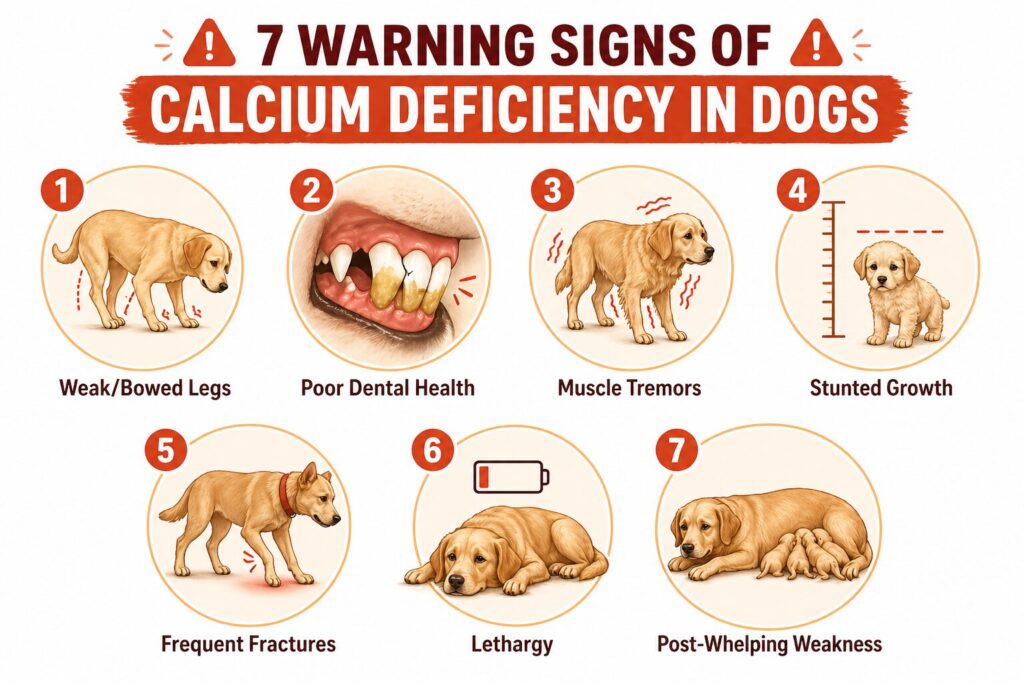
An important note for India: Many Indian dogs — especially those on homemade diets — have subclinical calcium deficiency. They do not show dramatic symptoms, but their bones are not as strong as they should be, their recovery from injury is slower, and their long-term skeletal health is compromised. You do not always see deficiency. Sometimes you only feel its consequences years later.
Also Read: Puppy Growth Stages Month by Month: Complete India Guide
Chelated Calcium vs Regular Calcium: The Difference Your Dog’s Bones Can Feel
This is the most important decision when choosing a calcium supplement — and the one most pet parents never think about.
What Is Calcium Carbonate (Regular Calcium)?
Calcium carbonate is the most common form of calcium in supplements — both human and pet. It is derived from limestone, marble, or oyster shells. It is cheap to produce and contains a high percentage of elemental calcium (about 40%).
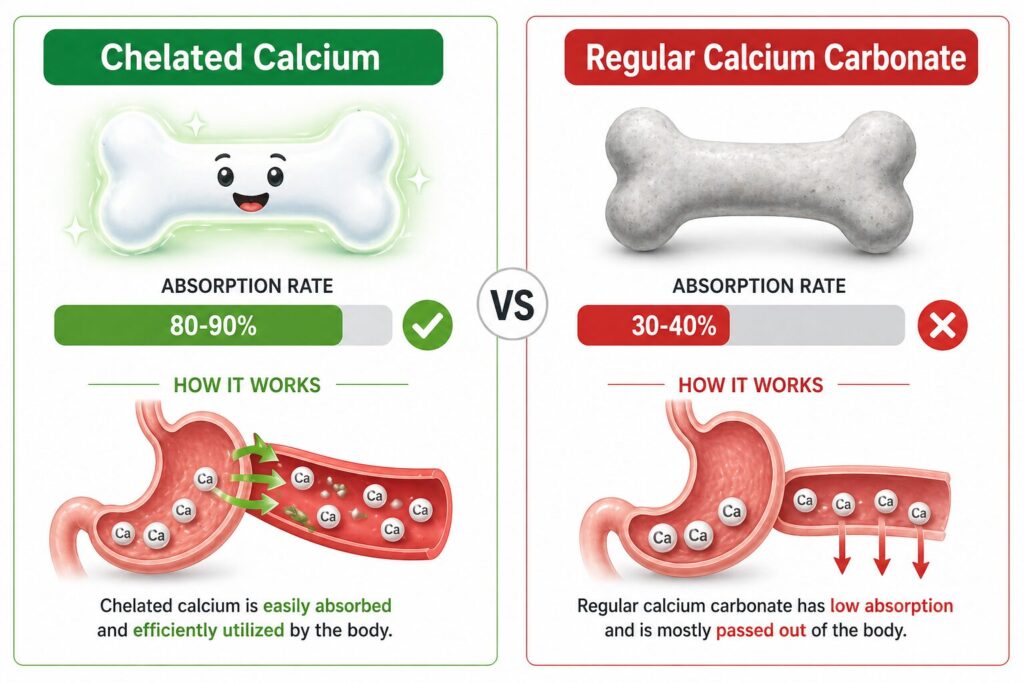
The problem: calcium carbonate requires strong stomach acid to break down and absorb. Dogs — especially puppies, senior dogs, and dogs on antacids or digestive medications — often do not produce enough stomach acid for efficient absorption. Studies indicate that calcium carbonate bioavailability in dogs ranges from 25-40%, meaning 60-75% of the calcium you give your dog is literally wasted.
What Is Chelated Calcium?
Chelated calcium is calcium that has been chemically bonded to an amino acid or organic molecule. This bond creates a “shield” around the calcium ion, protecting it from digestive interference and allowing it to be absorbed through amino acid transport pathways in the intestine — pathways that are far more efficient than the mineral-absorption pathways that calcium carbonate depends on.
The result: chelated calcium has a bioavailability of approximately 70-90% — roughly 2-3 times higher than calcium carbonate.
What This Means in Practice
If you give your dog 450mg of calcium carbonate, their body absorbs approximately 135-180mg.
If you give your dog 450mg of chelated calcium, their body absorbs approximately 315-405mg.
Same dose on the label. Double to triple the actual calcium reaching the bones.
This is not a theoretical difference. Over weeks and months of supplementation — during a puppy’s growth spurt, a pregnant dog’s final trimester, a senior dog’s bone maintenance phase — the cumulative gap between chelated and non-chelated calcium becomes significant.
But Calcium Absorption Requires One More Thing
Even perfectly absorbed calcium is useless if it does not reach the bones. Calcium needs Vitamin D3 to be deposited into bone tissue. Without adequate D3, absorbed calcium circulates in the blood but gets excreted through urine rather than building bone.
This is why the D3 dosage in a calcium supplement matters as much as the calcium itself. Most basic calcium tablets include D3 at 200-500 IU — enough to prevent outright deficiency but not enough to optimise bone deposition, especially during high-demand periods like growth spurts, pregnancy, and senior bone maintenance.
The effective threshold for robust calcium deposition is approximately 2,000-2,500 IU of Vitamin D3 daily for dogs — far above what most supplements provide.
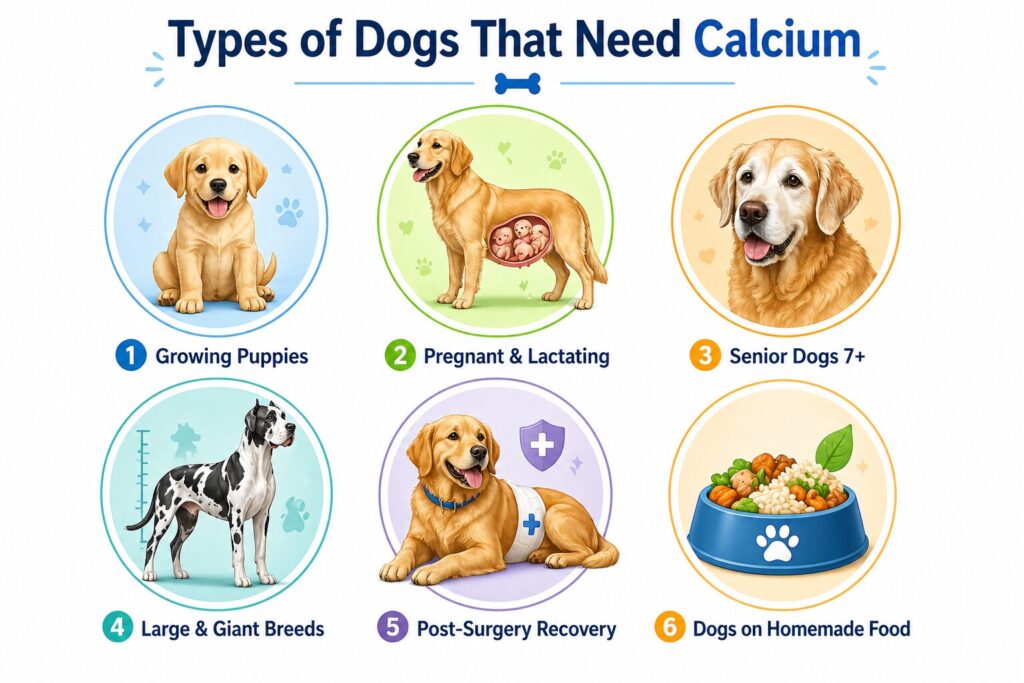
Which Dogs Need Calcium Supplementation? 6 High-Priority Groups
Not every dog needs a calcium supplement — dogs on high-quality commercial kibble formulated for their life stage often get adequate calcium from food alone. But several groups face consistent deficits that food alone cannot reliably address:
1. Growing Puppies (Month 3-8) — Especially Large and Giant Breeds
During the growth spurt phase, large breed puppies need approximately 3 times the calcium per kilogram of body weight compared to adults. Their bones are growing at explosive rates — a Labrador puppy gains 2-3 kg per week between months 3 and 6. This skeletal construction requires massive calcium input that even quality puppy food may not fully provide.
2. Pregnant and Lactating Dogs
Calcium demand during late pregnancy and lactation is extreme. A lactating dog feeding 6-8 puppies can deplete her calcium reserves to dangerously low levels within days. Small breeds are at highest risk for eclampsia — a potentially fatal condition. Calcium supplementation should begin in the final trimester and continue throughout lactation.
3. Senior Dogs (7+ Years)
Bone density naturally declines with age. Senior dogs absorb calcium less efficiently from food due to declining digestive function and reduced vitamin D3 activation. Supplementation helps maintain bone strength and reduces fracture risk — especially important for large breeds prone to age-related joint and bone issues.
4. Dogs on Homemade Diets
This is the largest group in India. Home-cooked meals — rice with chicken, roti with curd, boiled vegetables, dal-chawal — are culturally common and often well-tolerated by dogs. But they are consistently low in calcium. Rice and chicken provide protein and energy but minimal calcium. Roti provides carbohydrates but negligible minerals. Even curd, which contains some calcium, does not provide therapeutic doses.
If your dog eats primarily homemade food, calcium supplementation is not optional. It is essential.
5. Post-Surgery and Post-Fracture Recovery
Bone healing requires significant calcium mobilisation. Dogs recovering from orthopaedic surgery or fractures benefit from supplementation to support the repair process — especially when appetite is reduced during recovery.
6. Dogs on Long-Term Medications
Certain medications — particularly corticosteroids (prednisolone) used for allergies and inflammation — accelerate bone density loss over time. Dogs on long-term steroid therapy should receive calcium and D3 supplementation to counteract this effect.
How Much Calcium Does Your Dog Need? Dosage Guide
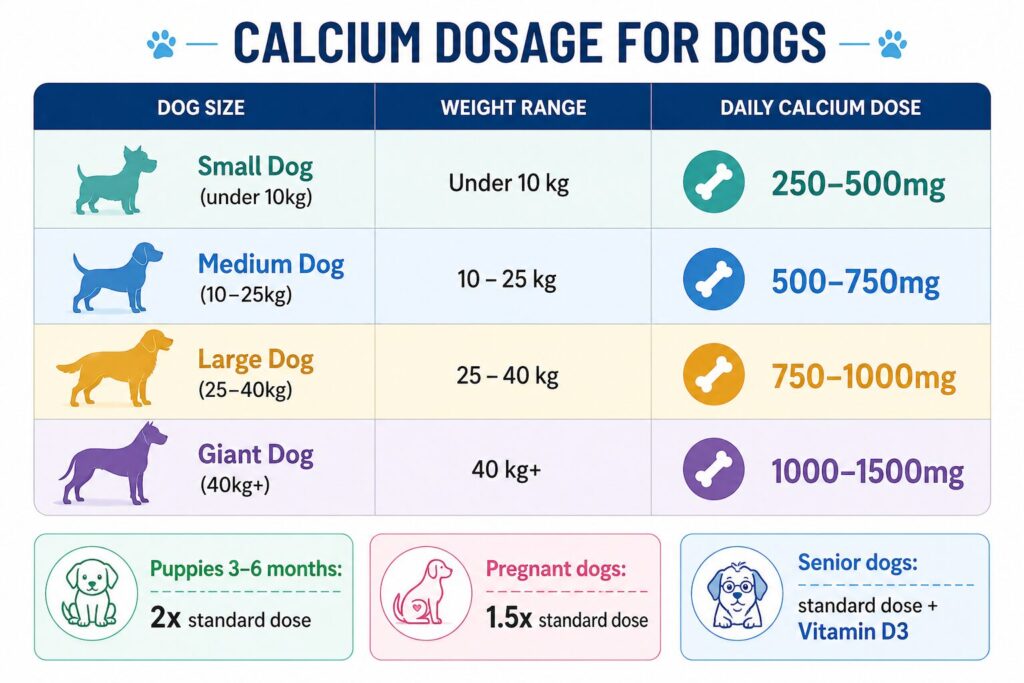
| Dog Size | Weight | Daily Calcium (Maintenance) | During Growth Spurt / Pregnancy |
|---|---|---|---|
| Small | Under 10 kg | 250-500 mg | 500-750 mg |
| Medium | 10-25 kg | 500-750 mg | 750-1000 mg |
| Large | 25-40 kg | 750-1000 mg | 1000-1500 mg |
| Giant | 40+ kg | 1000-1500 mg | 1500-2000 mg |
Important Dosage Notes:
Growing puppies (3-8 months): Use the higher end of the range for their weight category. Growth spurt demands are temporary but intense — this is not the time to under-dose.
Pregnant dogs (final trimester): Increase to 1.5x the standard maintenance dose. Continue elevated dosing throughout lactation until puppies are fully weaned.
Senior dogs: Standard maintenance dose is usually sufficient, but ensure vitamin D3 is included at therapeutic levels (2000+ IU) for proper absorption.
Dogs on homemade food: Add 1g (1000mg) of calcium per 500g of fresh food as a general guideline. Adjust based on the food’s natural calcium content — meat is low in calcium, dairy is moderate, bone meal is high.
Always consult your veterinarian before starting supplementation, especially for puppies of giant breeds where excessive calcium can cause developmental skeletal problems (though this risk is primarily associated with calcium carbonate oversupplementation, not chelated calcium at recommended doses).
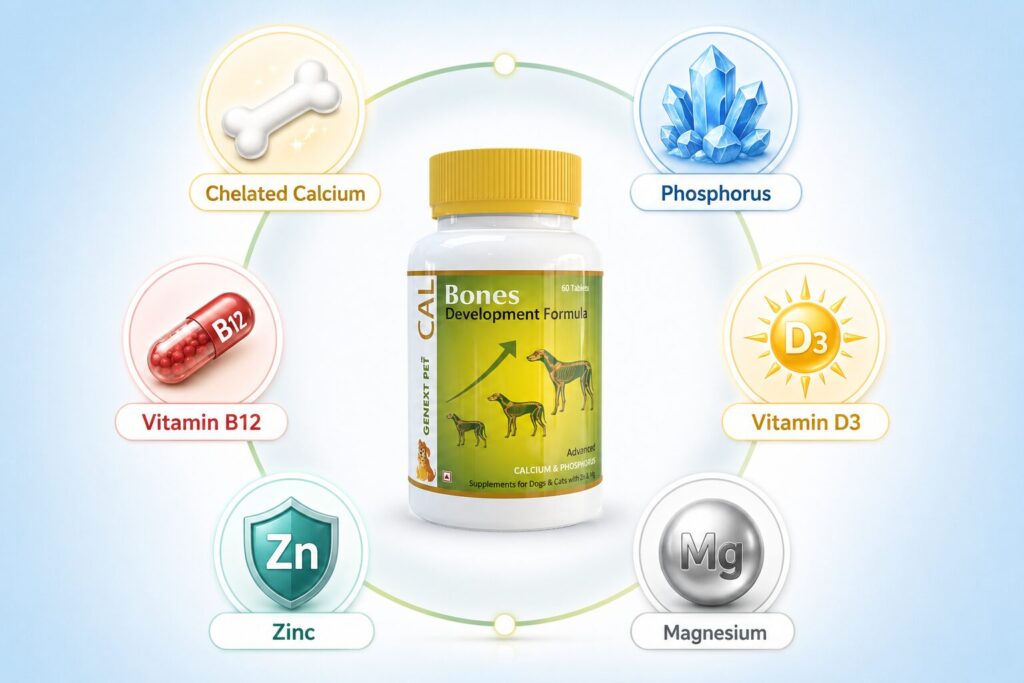
GenextPet CAL: Full Composition Breakdown
GenextPet CAL was not designed as just another calcium tablet. It was formulated as a complete bone-support system — addressing not just calcium supply but calcium absorption, calcium deposition, and the supporting minerals that make the entire process work.
Here is exactly what is inside — and why each ingredient earns its place:
| Ingredient | Amount | What It Does | Why This Dose Matters |
|---|---|---|---|
| Chelated Calcium | 450 mg | The primary building material for bones and teeth. Chelated form absorbs through amino acid pathways — 2-3x more bioavailable than calcium carbonate. | 450mg chelated delivers ~350mg actual absorbed calcium. You would need 900-1000mg of calcium carbonate to match this. |
| Phosphorus | 270 mg | Works with calcium in a critical ratio (Ca:P approximately 1.7:1) for proper bone mineralisation. Too much calcium without phosphorus, or vice versa, creates imbalanced bone development. | The 1.7:1 ratio is optimised for dogs. Many supplements provide calcium without matching phosphorus — causing imbalanced mineralisation. |
| Vitamin D3 | 2,500 IU | The gatekeeper of calcium. D3 controls whether absorbed calcium gets deposited into bones or flushed out through urine. Without adequate D3, even perfectly absorbed calcium is wasted. | 2,500 IU is a therapeutic dose — 5-12x higher than most competitor supplements (which typically include 200-500 IU). This is the dose that actually drives bone deposition. |
| Zinc | 30 mg | Supports osteoblast activity — the bone-building cells. Also essential for immune function, wound healing, and coat quality. Zinc deficiency impairs bone formation even when calcium is adequate. | 30mg is a therapeutic dose, not a token amount. Most calcium supplements either skip zinc entirely or include 2-5mg. |
| Magnesium | 20 mg | Supports calcium metabolism and muscle function around bones. Prevents calcium from depositing in soft tissues (arteries, kidneys) instead of bones — a real risk with high-dose calcium without magnesium. | Ensures calcium goes where it should (bones) rather than where it should not (soft tissues). Safety nutrient. |
| Vitamin B12 | 10 mcg | Supports red blood cell formation and nerve function. B12 deficiency — common in dogs on homemade vegetarian diets — impairs bone metabolism indirectly by reducing nutrient transport to bone tissue. | Addresses a common deficiency in Indian dogs, especially those on vegetarian or low-meat homemade diets. |
What Makes This Formula Different From Basic Calcium Tablets
Chelated calcium — not calcium carbonate. This single difference means your dog absorbs 2-3x more calcium from each tablet. Over months of supplementation during growth, pregnancy, or senior maintenance, this compounding advantage is significant.
Vitamin D3 at 2,500 IU — not 200-500 IU. Most calcium supplements include D3 as an afterthought at token doses. GenextPet CAL includes it at a dose that actually drives calcium into bones. This is the difference between calcium circulating uselessly in the blood and calcium building strong skeletal structure.
Zinc at 30mg — therapeutic, not token. Zinc is not optional for bone health — it directly supports the cells that build new bone tissue. At 30mg, GenextPet CAL provides enough zinc to make a measurable difference, unlike the 2-5mg found in most alternatives.
Optimised Ca:P ratio. Calcium and phosphorus must be provided in the right ratio for proper bone mineralisation. Too much of either without the other creates problems. The 1.7:1 ratio in GenextPet CAL matches what veterinary science recommends for dogs.
Price: Rs.399 for 60 tablets. For chelated calcium with therapeutic D3 and zinc — this is significantly more cost-effective than buying three separate supplements (calcium + D3 + zinc) to achieve equivalent coverage.
-
Sale!

CAL® – Calcium Supplement for Dogs & Cats | 60 Tabs
Original price was: ₹405.₹379Current price is: ₹379.
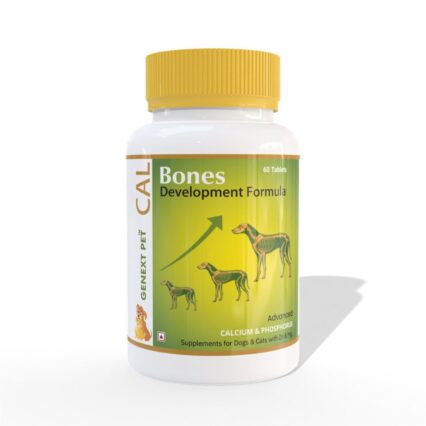
-> Buy GenextPet CAL | Chelated Calcium + D3 2500 IU + Zinc 30mg
How GenextPet CAL Compares to Typical Calcium Supplements in India
| Feature | Complete Bone-Support Formula (e.g., GenextPet CAL) | Typical Calcium Tablet (Rs.150-300 range) |
|---|---|---|
| Calcium form | Chelated (2-3x absorption) | Calcium carbonate (30-40% absorption) |
| Vitamin D3 | 2,500 IU (drives bone deposition) | 200-500 IU (minimal impact) |
| Zinc | 30 mg (therapeutic for bone cells) | Absent or 2-5mg (token) |
| Phosphorus | 270 mg (optimised Ca:P ratio) | Often absent or unbalanced |
| Magnesium | 20 mg (prevents soft tissue calcification) | Usually absent |
| Vitamin B12 | 10 mcg (bone metabolism support) | Absent |
| Actual calcium absorbed per tablet | ~315-405 mg | ~135-180 mg |
| Price | Rs.399 (60 tablets) | Rs.150-300 (60 tablets) |
The Real Cost Analysis
A basic calcium carbonate tablet costs less per bottle — typically Rs.150-300. But you need nearly double the number of tablets to match the absorbed calcium from one chelated tablet. Additionally, to match GenextPet CAL’s complete profile, you would need to separately purchase D3 drops (Rs.200-400), a zinc supplement (Rs.200-300), and ideally a phosphorus source.
Total for equivalent coverage with separate products: Rs.550-1000. GenextPet CAL complete formula: Rs.399.
The cheaper bottle is not always the cheaper solution.
Calcium for Indian Dogs on Homemade Diets: A Special Section
This deserves dedicated attention because homemade feeding is uniquely prevalent in India — and uniquely problematic for calcium.
The Numbers
A 25kg adult dog needs approximately 750-1000mg of calcium daily. Here is what common Indian homemade foods provide:
| Food | Calcium Content (per 100g) | Amount Needed to Meet Daily Requirement |
|---|---|---|
| Cooked rice | 10 mg | 7.5-10 kg per day (impossible) |
| Chicken breast | 15 mg | 5-6.5 kg per day (impossible) |
| Roti/chapati | 26 mg | 3-4 kg per day (impractical) |
| Curd/dahi | 83 mg | 900g-1.2 kg per day (excessive) |
| Paneer | 208 mg | 360-480g per day (too much fat/protein) |
| Egg (with shell) | 50 mg (without shell) | 15-20 eggs per day (absurd) |
The math is clear: no practical combination of common Indian homemade foods provides adequate calcium for a dog. Not even close.
The Solution
If you feed your dog homemade food — whether by choice or culture — calcium supplementation is not a luxury. It is a necessity. One tablet of GenextPet CAL (chelated calcium 450mg with D3 2500 IU) provides what 3-5 kg of rice and chicken cannot.
This is not about replacing homemade food. Homemade food has real advantages: you control the ingredients, there are no preservatives, and many dogs thrive on it. But it has one consistent, unavoidable gap — and that gap is calcium.
Also Read: Best Dog Breeds for Indian Families (2026): Complete Guide
Calcium for Pregnant and Lactating Dogs: Preventing Eclampsia
Eclampsia (milk fever or puerperal tetany) is a life-threatening emergency caused by acute calcium depletion in lactating dogs. It kills dogs in India every year — often in small breeds like Pomeranians, Shih Tzus, and Lhasa Apsos that have large litters relative to their body size.
How It Happens
During late pregnancy and especially during lactation, the mother’s calcium is being drained to produce milk. Each litre of dog milk contains approximately 1,400mg of calcium. A small breed producing milk for 4-6 puppies can deplete her entire blood calcium reserve within 24-48 hours if dietary intake does not keep pace.
Prevention
Final trimester (last 3 weeks of pregnancy): Begin calcium supplementation at 1.5x the normal maintenance dose. Ensure vitamin D3 is included — calcium without D3 is poorly utilised.
During lactation: Continue elevated supplementation throughout nursing. Monitor the mother for early signs: panting, restlessness, stiff gait, reduced appetite. These are pre-eclampsia warning signs.
After weaning: Continue standard-dose supplementation for 2-3 weeks to allow the mother’s calcium reserves to rebuild.
GenextPet CAL is particularly suitable for pregnant and lactating dogs because the chelated calcium absorbs rapidly (critical during acute demand) and the D3 at 2,500 IU ensures absorbed calcium reaches the bones and milk glands rather than being wasted.
Also Read: Calcium Supplementation for Pregnant Dogs: Complete Guide
Building Complete Skeletal Health: Calcium + Joint Support
Bones and joints are two parts of the same system. Strong bones without healthy joints still lead to mobility problems. Healthy joints on weak bones still lead to structural failure.
For complete skeletal health — especially in large breeds, senior dogs, and working dogs — calcium supplementation works best alongside joint support:
GenextPet CAL strengthens the bones — chelated calcium, D3, phosphorus, zinc.
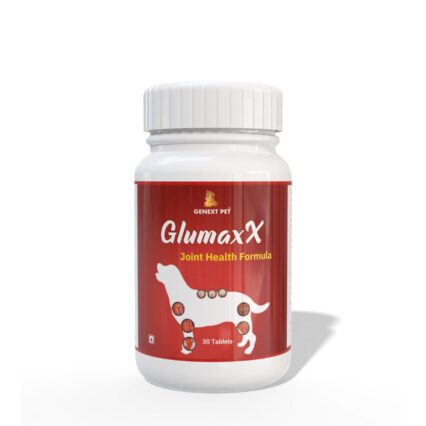
Glumaxx Joint Support protects the joints — 14 active ingredients including Glucosamine HCl, Chondroitin, Hyaluronic Acid 70mg, triple herbal anti-inflammatory (Curcumin + Boswellia + Devil’s Claw), Omega-3.
Bone + Joint Combo: CAL + Glumaxx = complete skeletal protection. The bones carry the weight. The joints allow the movement. Both need support.
For growing puppies: start CAL during the growth spurt (month 3-6). Add Glumaxx from month 6-8 for large breeds as preventive joint protection.
For senior dogs: CAL for continued bone density maintenance. Glumaxx for age-related joint support. Together, they provide the most comprehensive skeletal care available in a two-product combination.
-
Sale!
Glumaxx® – Advanced Joint Support for Dogs & Cats
Original price was: ₹1,440.₹1,339Current price is: ₹1,339.
Also Read: Glucosamine for Dogs in India: Benefits, Dosage & Best Joint Supplement
Side Effects and Safety Considerations
Chelated calcium at recommended doses is very safe and well-tolerated by dogs. However, some considerations apply:
Over-supplementation in large breed puppies: Excessive calcium during the growth phase can accelerate bone development beyond what the skeletal framework can support, potentially contributing to developmental orthopaedic disease in giant breeds. This risk is primarily associated with uncontrolled calcium carbonate supplementation, not chelated calcium at manufacturer-recommended doses. Follow dosage guidelines and consult your vet for giant breed puppies.
Calcium and medication interactions: Calcium can interfere with the absorption of certain medications, including some antibiotics (tetracycline, fluoroquinolones) and thyroid medications. If your dog is on prescription medication, space the calcium supplement 2 hours apart from the medication.
Kidney disease: Dogs with diagnosed kidney disease should not receive calcium supplementation without veterinary supervision. Impaired kidneys cannot regulate calcium excretion properly, creating risk of hypercalcaemia.
Mild digestive adjustment: Some dogs experience temporary mild constipation when starting calcium supplementation. This typically resolves within a few days. Ensure adequate water intake.
Final Word
Calcium supplementation is not complicated, but it does require getting two things right: the form and the supporting nutrients.
The form matters because chelated calcium and calcium carbonate are not interchangeable. One absorbs. The other mostly does not — at least not efficiently enough to make a meaningful difference in your dog’s bone health over time.
The supporting nutrients matter because calcium in isolation is incomplete. Without vitamin D3 at therapeutic levels, calcium does not deposit into bones. Without zinc, bone-building cells do not function optimally. Without phosphorus in the right ratio, mineralisation is imbalanced.
GenextPet CAL addresses all of these requirements in a single daily tablet: chelated calcium for superior absorption, D3 at 2,500 IU for bone deposition, zinc at 30mg for bone cell support, and optimised phosphorus for balanced mineralisation. At Rs.399 for 60 tablets, it costs less than buying the separate components would.
Your dog’s bones are being built or maintained right now — today, with whatever calcium source is available. Make sure what is available is actually being absorbed.
Also Read: How to Boost Your Dog’s Immune System Naturally
FAQ
What is the best calcium supplement for dogs in India?
The best calcium supplement should use chelated calcium (not calcium carbonate) for 2-3x better absorption, include vitamin D3 at therapeutic levels (2000+ IU) for bone deposition, and provide supporting minerals like zinc and phosphorus. A complete bone-support formula costs slightly more per bottle than basic calcium carbonate tablets but delivers significantly more actual calcium to your dog’s bones.
What is the difference between chelated calcium and regular calcium?
Chelated calcium is bonded to an amino acid, allowing it to be absorbed through amino acid transport pathways in the intestine — achieving 70-90% absorption. Regular calcium carbonate relies on stomach acid for breakdown and absorbs at only 25-40%. For dogs, this means chelated calcium delivers 2-3x more usable calcium per milligram.
How much calcium does my dog need per day?
Small dogs (under 10kg): 250-500mg. Medium dogs (10-25kg): 500-750mg. Large dogs (25-40kg): 750-1000mg. Giant dogs (40kg+): 1000-1500mg. Growing puppies and pregnant or lactating dogs need 1.5-2x these amounts. Always use the chelated form for better utilisation.
Can I give my dog human calcium tablets?
Not recommended. Human calcium tablets typically use calcium carbonate with dosages calculated for adult human physiology. They often include coatings, binders, and additives not tested for canine safety. Some contain vitamin D2 (ergocalciferol) instead of D3 (cholecalciferol) — dogs utilise D3 far more effectively. Use a supplement specifically formulated for dogs.
Is calcium supplementation necessary for dogs on commercial kibble?
High-quality commercial kibble formulated for your dog’s life stage (puppy, adult, senior) generally provides adequate calcium for healthy adult dogs. Supplementation becomes important for puppies during growth spurts (3-6 months), pregnant and lactating dogs, senior dogs with declining absorption, dogs on medications that deplete calcium, and dogs on mixed feeding (kibble + homemade).
My dog eats homemade food. Does it need calcium?
Yes — this is one of the clearest cases for supplementation. No practical combination of common Indian homemade foods (rice, chicken, roti, vegetables, curd) provides adequate calcium for a dog. The math simply does not work. If your dog’s primary diet is homemade, a daily chelated calcium supplement with D3 is essential, not optional.
Can too much calcium harm my dog?
Yes, particularly in large and giant breed puppies. Excessive calcium during the growth phase can contribute to developmental skeletal problems. However, this risk is primarily associated with uncontrolled calcium carbonate supplementation, not chelated calcium at manufacturer-recommended doses. Follow product dosage guidelines and consult your vet for giant breed puppies.
When should I start giving my puppy calcium?
For most puppies, calcium supplementation becomes important at month 3 when the growth spurt begins. Large and giant breed puppies especially benefit from chelated calcium support from month 3 through month 6-8. Before month 3, mother’s milk or a complete weaning formula like Lact-O-Cent provides adequate calcium for early development.
What are the signs of calcium deficiency in dogs?
In puppies: bowed legs, stunted growth, delayed teeth, and reluctance to play. In adults: muscle tremors, stiffness, frequent fractures, poor coat. In pregnant or lactating dogs: panting, restlessness, stiff gait, seizures (eclampsia — veterinary emergency). In seniors: progressive bone weakness, increased fracture risk, and dental problems.
Can I give GenextPet CAL along with Glumaxx?
Yes — they are complementary. CAL strengthens bones (chelated calcium, D3, phosphorus, zinc). Glumaxx protects joints (glucosamine, chondroitin, hyaluronic acid, anti-inflammatories). Together they provide complete skeletal support. This combination is especially beneficial for large breeds, senior dogs, and dogs recovering from orthopaedic surgery.
Why does the Vitamin D3 dose matter in a calcium supplement?
Vitamin D3 controls whether absorbed calcium gets deposited into bones or flushed out through urine. Most calcium supplements include D3 at 200-500 IU — enough to prevent deficiency but not enough to optimise bone deposition. GenextPet CAL includes D3 at 2,500 IU — a therapeutic dose that actively drives calcium into bone tissue, especially important during growth spurts, pregnancy, and senior bone maintenance.
Is calcium supplementation safe during pregnancy?
Yes — it is not just safe but strongly recommended. Calcium demand during late pregnancy and lactation is extreme. Eclampsia, caused by acute calcium depletion in nursing mothers, is a life-threatening emergency that kills dogs in India annually. Start supplementation in the final trimester and continue throughout lactation. Chelated calcium with high-dose D3 is the preferred form for rapid absorption during acute demand.